Facets of Grief

by Liz Young

(Based on Luke 24:13-35; Acts 2:14a,36-41; 1 Pet 1:17-23)

Here are my thoughts on grief and visions.

We all grieve differently, and our grief comes and goes in waves, and at different times; and depending on how old we are, and whether we have experienced grief before.
Sometimes for those grieving deeply, especially if a death has been sudden and unexpected, the longing to see someone they love again means that they do see them, at least, a vision of them. But for those of us whose partner’s death has been expected for a while – maybe tchey’ve died slowly of cancer – much of our grieving is done before they die and, while we relive memories, we are less likely to see visions.

The disciples had not understood Jesus’s warnings, that he was going to be killed in Jerusalem, so his death on Calvary was a shock that took time to process. I’m not surprised that they saw him on several occasions. The two disciples on the Emmaus road, had not seen the risen Jesus with Mary, or with Peter and John, but had heard them relate their experiences of seeing the risen Jesus. They were walking and talking together, on a road they’d walked with Jesus, and this would have brought back memories of him, vivid memories – and as they heard Jesus teach, beginning with the story of Moses, he reminded them of those Old Testament teachings, particularly those in Isaiah, that foretold of his death. But it wasn’t until Jesus broke bread that they recognized him.

We all will feel grief at some stage of our lives. Jesus felt grief. He wept at Lazarus’s death. Bishop Bruce wrote, “We cannot deny or hurry the process of grief, the adjustment that leads to acceptance and moving on with our lives. What helps us do this? Facing and naming our loss, letting the pain be fully felt, letting it deepen us, and ignite our compassion for others in pain; above all, knowing we are not alone, that Jesus the Christ also suffered, sweated, wept and bled … and finally triumphed. He stands beside us, his arm around our shoulders as we grieve.”

In your time of pain, put your trust in God. I’d add, it helps to have experienced grief before, and know that peace and acceptance come in time.

We also experience grief differently depending on our age. I was 26 when my mother died. It was my first experience of grief and it was overwhelming. It was exacerbated by my realization that she had masked her pain and hidden it, so that I wouldn’t be distracted while I was taking my medicine finals. Three weeks after she died, I started working on a radiotherapy ward that specialized in breast and testicular cancers and lymphomas. It was not until nine years later as I watched the courage of children dying of leukaemia and cancer, and the care they took to protect their parents, that I healed.  I made sure that as many children as possible were able to die at home. That was something I could do.

Which brings me to ask you, what can we do, to use the insights we gain from experiencing grief, and use the strengths we have gained from our experience of sorrow, to help others?

I looked up how the other great religions honour death and grief. Buddhists have specific funeral rites. Most Buddhists, like Buddha himself, are cremated, though some are buried. Mourning services are held on the third, seventh, forty ninth and hundredth days after a funeral.
Moslems (and the Spanish, interestingly) try to bury their dead as soon as possible, preferably within twenty four hours. Traditionally only men were allowed to attend the funeral, but women have been allowed to attend more in recent years. After the funeral there are three days of mourning, when the family are not allowed to cook and the community feeds them.

Jewish funerals also take place within twenty four hours of the death. Sometimes mourners rip pieces of material off their own clothing and the torn garment is worn for a week after the death. There is a personal remembrance service held annually, and national days of mourning are held on Yom Kippur and at Passover.

There are other causes of grief, besides losing someone to death. There is the loss of having a ‘normal’ child to enjoy, when a ‘handicapped’ child is born to you. Mothers seem to cope with this better than fathers, maybe because they invest more in their care, but there is a lifetime of recurring grief ahead of them. I watched the film I Swear this week. It addresses Tourette’s Syndrome. The mother of the guy affected never moved from her grief of having an abnormal child: but he made a success of his life with the help of two staunch friends – a mental health nurse and his first employer, the manager of a community care centre.
Then there is the loss of a child to addiction.
And many of you will have had your own different griefs to bear. Lay them at the foot of the cross and move on, just as we laid our stones at the foot of the cross recently, on Good Friday.

Having practical supportive friends does help in times of grief. I have been grateful for the mutual support of the staff in the Op Shop.

What can you do?
Learn about grief and its different stages, as we move from being numb or in denial, to being angry, to trying to bargain and, finally, acceptance. Be aware of those who need to grieve in their own way, as they honour their own individual relationship to the person they are grieving for.
Get out for a walk in Nature frequently, and practise Gratitude as you wake in the morning, and last thing at night.

And, finally, let’s use the experience and the knowledge and strengths we have gained in our grief to follow the love of Christ in deed and action. As Peter said, “We are ransomed by Christ’s blood. Love one another, because you have been born anew.”

I have been blest this year by all the love and care you have given me.
What can we do this week that shows our love for each other?

Amen

Emerging from a Locked Room

by Barry Pollard

(Based on John 20:19-31; Acts 2:14a, 22-32; 1 Pet 1:3-9)

[Editor’s note: We normally publish these reflections after they’ve been delivered in our church, by various contributors. On this occasion the service was cancelled, due to an approaching cyclone, so this homily didn’t get delivered. Like the theme itself, it’s emerging from the locked room.]

Researching where I’d like to go with the reflection today, I consulted widely. I have talked on this Gospel reading before, so I thought that would be a good place to start. You know, save a bit of time and check that what I said then applies now. But it turned out that it was several computers ago, and before the logging of reflections on the church website, so that came to nothing. In the process, however, I came across one of the late Chris Ison’s files and he had a reflection on this reading. But his tack was not one I felt confident to emulate, Chris being a very learned and articulate man.

So, it was back to basics for me!
Perhaps the first Holy Spirit moment in my preparations!
I was prompted to go back and look at today’s readings again, more closely. And, I’m sure you’ve experienced it, much more was revealed than at first read. Enough, in fact, to give me a direction and thread to follow.

You, too, may have picked up that there’s a thread that runs through all three readings: the movement from fear and uncertainty to faith and living hope. In each of the readings, people are standing at crossroads. In John’s Gospel, the disciples are locked in a room, afraid. In Acts, Peter is standing up boldly where once he denied Jesus. In 1 Peter, believers are facing trials, yet are called to rejoice. Something has changed. And that ‘something’ is not an idea, not a philosophy. It is a person, the risen Jesus Christ.

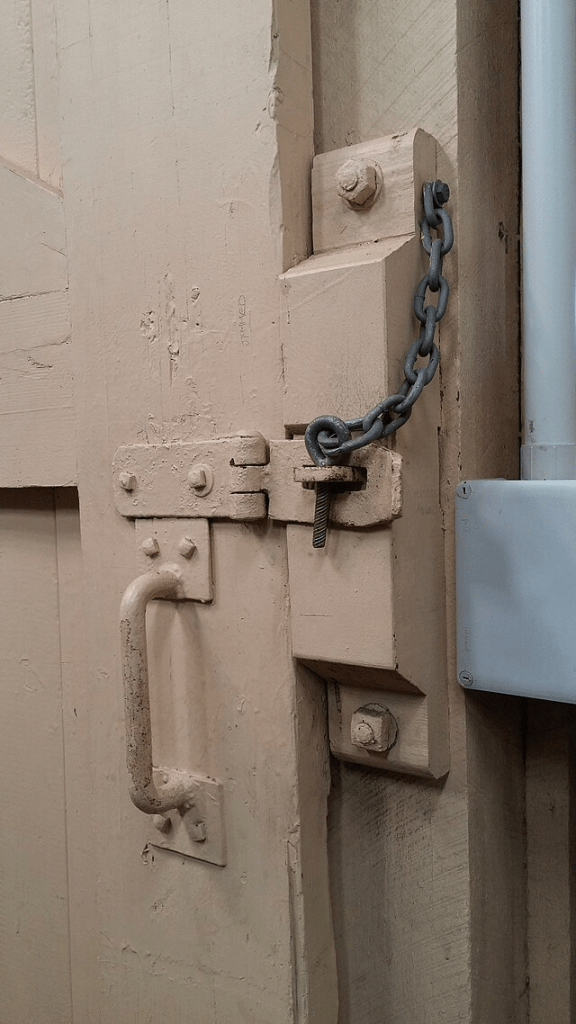
The excerpt from John’s Gospel tells of the disciples in hiding. The doors in their meeting place are locked. They are afraid of what might happen next. What happened to Jesus might happen to them. And then, into that fear, Jesus comes and says, “Peace be with you.” Not once, but twice. You know in Scripture when things are repeated they are important! This is not just a greeting. It is a gift. The peace Jesus brings is not the absence of trouble. It is the presence of Christ in the middle of it.

And the story of change unfolds. He shows them his wounds. He breathes on them, imparting the Holy Spirit, filling them with joy. Then he sends them. Fearful people become sent people.

How often do we live behind locked doors? Fear of the future. Fear of change. Fear of speaking out our faith.
Well, the risen Jesus still comes into our locked places, into our anxious hearts, and says, “Peace be with you.”

Then there is Thomas. He has missed the encounter with Jesus in the locked room. He has heard from the disciples their story, but he doubts it. “Doubting Thomas” we call him; but that’s not his whole story. Thomas is honest. He refuses second-hand faith. “I won’t believe unless I see.” And when they finally meet, what does Jesus do? He does not reject Thomas. He meets him. “Put your finger here … look at my hands.” Thomas responds with one of the greatest confessions in Scripture, “My Lord and my God!”

Doubt is not necessarily the opposite of faith. It can be the doorway to deeper faith, when we bring it to Christ. Many of us struggle with belief. It’s not uncommon. But the invitation remains the same: not, “have all the answers”, but, “come and see”.

Let’s now look at the Acts reading. It’s hard to believe that this Peter, the one standing before the crowd proclaiming loudly, is the same Peter who only a short time before denied Jesus three times. What is he proclaiming so loudly? Jesus crucified. Jesus raised.
And, “… it was impossible for death to keep its hold on him.”

What changed Peter?

He had encountered the risen Christ.

The resurrection is not just a comforting story. It is a world-changing reality. Peter shows that it was foretold in history, that it is proclaimed in eyewitness testimony, and in God’s action. Because Jesus is alive, sin does not have the final word, death does not have the final word, and fear does not have the final word!

And then we hear from Peter again, years later, writing to Christians under pressure. He says, “It is by his great mercy that we have been born again, because God raised Jesus Christ from the dead.”

A living hope.
Not wishful thinking. Not fragile optimism. But a hope that is alive because Jesus is alive. And this hope sustains us in grief, strengthens us in trials, and refines our faith “like gold”.  A living hope that helps us with the uncertainty in the world, with pressures in families and communities, with questions about the future of faith in society. Peter does not deny the reality of suffering. But he is explaining that suffering is not the end of the story.

These readings show us that fear can be changed to peace, that doubt can be changed to faith, that death can be changed to life, and that trial can be changed to hope. And at the centre of it all is the risen Jesus.

We all look for reassurance. My wife Keri accesses her Good Shepherd imagery, I deploy an ‘arrow path’. These are keys to our reassurance. We have someone looking after us. We have a path to follow that will lead us to the best life. So, remember that Jesus always meets us where we are. Whether we are afraid, doubtful or weary, he comes to us. Our faith is not about certainty. It is about trust. Jesus wants us in relationship. He is not expecting us to be perfect.

by marfis75, licensed under CC BY-SA 2.0.

The resurrection changed everything. And it isn’t just about life after death. It is about life now. Just like the apostles, we are sent people. We are sent to carry peace, hope, and good news into our communities.

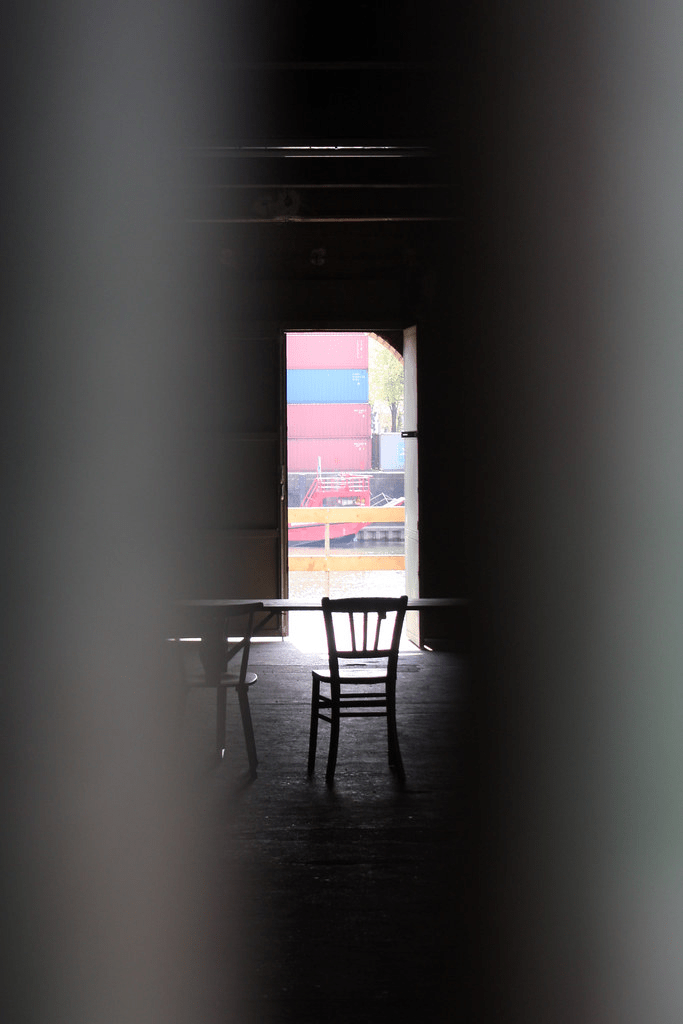
Imagine those locked doors again. Now imagine them opening. The disciples step out, not because the world is safe, but because they have seen the Lord. That is the call for us today. Not to stay behind locked doors of fear or doubt, but to step into the world with peace in our hearts, faith in our Lord, and hope that is alive.

“Blessed are those who have not seen and yet have believed,” Jesus said.

Let’s conclude with a simple prayer:
Risen Jesus help us as we move from fear to peace, from doubt to faith and from death to life. May we live as people of the resurrection today, and every day. Amen.

Dem Bones

By Pat Lee

(Based on John 11:1-45; Ezek 37:1-14)

When I read the story of Ezekiel and the valley of the dry bones, I can’t help thinking back to the fifties and a song that was popular on the radio then. “Dem bones, dem bones, dem dry bones (x3), now hear da Word of da Lord”!

[My thanks to Michael K Marsh for aspects of the following reflection.]

Last week how blessed we were to have Psalm 23 as our appointed psalm. It was exactly what we needed to hear. We needed to be reminded that the Lord is our Shepherd and we shall not want. We needed to be assured that all shall be well.
Last week we stood in the valley of death. This week we stand in the valley of the dry bones. They’re not too different. Look at what is happening in the world today with so many nations at war. Reading about the valley of the dry bones – it’s exactly what we, our country, and our world need to hear. Why?
Because it’s a story of hope. It’s a story of promise. It’s a story about a people who have a future. If ‘all shall be well’ is the theme that runs through Psalm 23, then ‘you shall live’ is the theme that runs through the valley of the dry bones.

Three things came to mind about Ezekiel. The first one was that he saw. The Lord brought him to the valley of dry bones where there were not just a few bones, but thousands. This made me wonder what his first reaction was at seeing them. I think my reaction would have been to weep over seeing so many people who, most probably, had been slain in battle.
Back in 1987 I visited one of the burial grounds in Germany where my father-in-law, who was a pilot during the Second World War, was buried. The sight of thousands of graves of young allied airmen, was so overwhelming that the tears flowed, hence my wondering about Ezekiel. Did he feel emotional about what he saw?

The second one was that he listened. The Lord told him to prophesy over these dead bones so that they would come together and be covered with flesh and tendons. And again, to prophesy that the winds would come and fill the bodies with breath. At this stage he was probably feeling very uncertain and powerless.

The third one was that he obeyed. He prophesied as the Lord had commanded him to do and the bones came to life. Wow! What a sight that must have been. I think it would also have been a great relief.

Then the Lord said to Ezekiel, “Son of man, these bones are the whole house of Israel. They say, ‘Our bones are dried up and our hope is gone; we are cut off.’ Therefore prophesy and say to them: ‘This is what the Sovereign Lord says: O my people, I am going to open your graves and bring you up from them; I will bring you back to the land of Israel. Then you my people, will know that I am the Lord, when I open your graves and bring you up from them. I will put my Spirit in you and you will live, and I will settle you in your own land. Then you will know that I the Lord have spoken, and have done it, declares the Lord.’” (NIV)

There is a link between the story of the dry bones and the Gospel reading, a difference being that only one man was brought back to life this time. But what else is in this reading that links back to the Ezekiel story? It’s another example of a story of hope, promise, and a people who have a future.

Jesus was more than just an acquaintance with this family. He was a family friend. So why did it take so long for him to go to Bethany, less than two miles from Jerusalem, when he knew Lazarus was ill? It was because Jesus had a message that wasn’t just for Martha and Mary, but for all who had come to comfort the sisters in their loss, and for us.
Martha went out and met Jesus when he was still some distance from Bethany. You can hear the anger, bitterness and even admonishment as well as disappointment in her voice when she says to him, “Lord, if you had been here, my brother would not have died.” Perhaps that was her grief talking – a natural reaction when someone we love dies.

Mary went out to meet Jesus too, and fell at his feet, and also said the same thing as her sister. “Lord, if you had been here my brother would not have died.” Unlike her sister though, only disappointment seems to be in her voice. As we all experience disappointment in our lives, especially when things don’t turn out as we expect them to.

They both wanted answers and explanations, just as we do.

Attempting to insulate ourselves from disappointment, and demanding once and for all answers to life’s questions, is to close ourselves to the vulnerabilities that make possible real life, love, intimacy, and relationships with God, and with one another. It limits what we are willing to risk giving or receiving. It leaves the stone in place over Lazarus’s tomb, and refuses to consider God’s question to Ezekiel, “Son of man, can these bones live?”

While we might want to escape our disappointments, life wants to use them. Life will not waste our disappointments, and Jesus always stands in the middle of life. Disappointment calls into question our assumptions about life, ourselves, each other, and God. Disappointment opens our eyes to a different way of seeing.
Isn’t that what he’s doing with Martha and Mary?  “I am the resurrection and life.” “Take away the stone.” “Did I not tell you that you that believed, you would see the glory of God?” “Lazarus come out.” “Unbind him and let him go.” With those words Jesus is holding before Martha and Mary the valley that they are currently walking through. “Son of Man, can these bones live again?” He’s asking them to take a risk; because the body has been dead for four days. He’s asking them to trust, just as Ezekiel had to do.

Did Jesus have disappointments in his life? He sure did. He not only had the disappointment of the death of Lazarus, but the crucifixion, Peter’s drawn sword and violence, Judas’s betrayal, the disciples sleeping in the garden, the way his Father’s house had been turned into a ‘den of robbers’, his disciples arguing about who was the greatest, the disciples’ misunderstanding of who he is, the world’s refusal to receive him … and in myriad other ways.

So, what is the valley that you are walking through right now? A broken relationship with family or friend, a death of someone you loved, a terminal diagnosis of a loved one, of ongoing pain, depression or grief? We all have our valleys. Whatever it is, it’s a place where Jesus has walked and shown the way forward. It is not the dark place we often think it is. We need to take it to him because he is the Shepherd who will lead us out of that valley.

The valley that is the question mark of life becomes the exclamation mark of God: the exclamation mark of love, the exclamation mark of life and light, the exclamation mark of mercy and forgiveness, the exclamation mark of wisdom, beauty, and generosity, the exclamation mark of hope, healing, and compassion, and, ultimately, the exclamation mark of God’s “yes” to you, me and our lives.

“Son of man, can these bones live again?” The answer to that question echoes throughout the valley that we are walking through right now. Yes they can! Yes they do! Yes they will! 

Seeing Truly

by Rev Megan Means

(Based on John 9:1-41)

“Who truly sees?”
Do we really see?
Here are a few quick pointers into this story: Firstly, let us reject the notion that this man’s blindness was caused by sin; rather, let us be cautious about assuming we know why people suffer.
Let us note that in the Hebrew prophets, blindness is often symbolic. It is more about spiritual perception rather than focussing on physical healings, as saliva and clay were commonly used in ancient healing practices.

The man here was not just blind, he was also a beggar, and socially marginalised and, ironically, after healing he faced interrogation and continued exclusion.
And remember that Jesus, the disciples, and the Pharisees are all Jewish. Which should lead to self-examination, not blaming another religion.

So, “Who truly sees?”

[I am using some Lent material from The Desert and the Garden by Sarah Lea West https://sarahleawest.art/?v=c97b334ffd41]

A man born blind meets Jesus and sees for the first time. However, the miracle of restored sight is really not the conclusion of this story. This man’s healing disturbs the established order of things. The neighbours debate, the leaders are cynical, and the parents distance themselves in fear. Seeing, it seems, is more threatening than blindness.

Light in John’s Gospel follows a theme of revelation. Light reveals things as they truly are. When the man begins to see, his sight strengthens his voice and he begins to speak out. His witness unsettles those who prefer a narrative that fits inside a neat and predictable box. As the man continues to speak, even Jesus’s disciples are forced to question their own assumptions about sin … worth … and who God favours.

Faith in Jesus is the focus, and the story tells us something about what that means.
Faith includes willingness to see and do the truth, rather than to find false meaning in the hard circumstances of others. Suffering or social location, and whatever else may define people in the world’s eyes, do not reveal anyone’s actual inner truths.

The light of Christ exposes injustice as much as it illuminates beauty. It shows what is hidden in plain sight: those rendered invisible by poverty, disability or exclusion. In every age, institutions have found shelter in darkness because light tends to hinder control. Yet liberation begins with the courage to see things as they really are.
To follow Jesus is to learn to see again, to allow God’s light to touch our illusions and revolutionise them. The light that healed one man still moves through the world, challenging us to live as people who refuse to look away.

Where in our own lives and communities do we resist seeing what is right in front of us because it might unsettle what feels comfortable or familiar?
How does Christ’s light challenge the stories or assumptions we have about who is worthy, who is to be included, or who is whole?

Prayer
Light of the world,
You open our eyes to see what is real,
to that which is beautiful,
but also the wounds we would rather ignore.
Give us courage to face what your light reveals.
When truth unsettles our comfort,
keep us from turning away.
When we glimpse injustice or pain,
teach us to respond with love and resolve.
Let your light restore our sight
where fear has kept us blind.
May we learn to see what is real,
and choose truth,
even when it unsettles us. Amen.