Wheat and Weeds

by Barry Pollard

(Based on Ps 139:1-11, 23-24; Ro 8:12-25; Matt 13:24-30,36-43)

As I prepared, and read through each of our passages, one simple thought kept returning to me: We live imperfectly in an imperfect world.

That may sound profound, but it is hardly a new insight. The Psalm we heard was written thousands of years ago. Paul’s letter to the Romans and Matthew’s Gospel are nearly two thousand years old. God’s people have wrestled with the reality of a broken world for generations upon generations.

The question is not whether the world is imperfect. We all know that. The question is: What does Scripture teach us to cope with that imperfection and live faithfully within it?
A common response today is to blame someone else for our difficulties and problems. We could simply point to the Evil One and say, “It’s all his fault,” and stop there. But as children of the living God, we are called to something deeper than assigning blame. We are called to trust, to persevere, and to hope.

Our first reading, Psalm 139, reminds us that God knows us completely: “O Lord, you have searched me and known me.”
God knows when we sit and when we rise. He knows our thoughts before we think them and our words before we speak them. There is nowhere we can flee from his presence.

Having spent last weekend with family, including two energetic grandsons, watching brothers only three years apart negotiate life together, I was reminded that it is easy to imagine God watching us – like a policeman waiting for us to get things wrong.
But that is not the picture the Psalm gives us. God watches us as a loving parent. Just as my daughter and son-in-law lovingly guide their boys: stepping in to settle arguments, teaching them better ways to behave, comforting them when everything reaches ‘custard point’, so God patiently guides us.
“I can never escape from your Spirit. I can never get away from your presence,” says the psalmist.

Whether we find ourselves on life’s highest mountain or in its darkest valley, God is already there. What reassurance that gives us.

Many people spend enormous energy pretending. Pretending their faith is stronger than it is. Pretending life is under control. Pretending they are not anxious or struggling. God is not fooled. He knows our doubts, our fears, our failures and our hopes, and he loves us still. That is why the Psalm ends with such a courageous prayer: “Search me, O God, and know my heart … Point out anything in me that offends you, and lead me along the path of everlasting life.”
God is not standing over us to condemn us. He searches us in order to heal us. Like every loving Father, he leads his children onto better paths.

Paul continues that same theme in Romans. “All who are led by the Spirit of God are children of God.” We have not received a spirit of fear but the Spirit of adoption. We can call God “Abba, Father”, a deeply personal expression of love and trust. As God’s children we are also his heirs. But Paul adds an important reminder: if we share Christ’s glory, we also share his suffering.

Then Paul speaks repeatedly about groaning. Creation groans. Believers groan. The whole world longs for restoration. Even with the Holy Spirit living within us, we still experience sickness, disappointment, injustice and death. We long for the day when God completes what he has begun, when sin and suffering cease to have a hold over us. For now, we live between Christ’s resurrection and the fulfilment of his Kingdom. We live with hope, but we do not yet live in perfection.

We live imperfectly in an imperfect world.

And that brings us naturally to Jesus’s parable in Matthew. A farmer sows good seed, but during the night an enemy sows weeds among the wheat. The farm workers want immediate action. “Shall we pull out the weeds?” they ask. The farmer replies, “No . . . Let both grow together until the harvest.” It is a surprising answer.
We often want God to remove everything evil immediately. We want every injustice corrected now, every hardship ended today. But instead, Jesus teaches patience.

The world remains a place where wheat and weeds grow together. Good and evil exist side by side. As followers of Christ, we continue living in a world that has not yet been fully redeemed. Are we despairing? Because the weeds and wheat grow side by side, we must always be aware of which crop we belong to. I trust you know that we are holy wheat, eh? So, we must be mindful that we don’t get too mixed up with the weeds.
It is so easy to be conformed to the world and its thinking. Do you, like me, take it for granted that advertisements distort, contracts contain fine print that no one draws our attention to, and professionals conceal one another’s malpractice. There are few areas of life that are uncompromised, few social structures that are not tainted, few relationships that retain any semblance of honesty and wholesomeness. We live in an age which, generally speaking, evades truth.

But Jesus said (John 14:6), “I am the way, the truth and the life. No one comes to the Father except through me.”  The way, the truth and the life! Jesus is the absolute embodiment of God’s truth, the only path to salvation, and the ultimate source of our spiritual life.

See how far the world has moved away from God’s way.
Anyone who has ever kept a garden knows weeds seem to grow faster than our crops. We prepare the soil, plant carefully, water faithfully even through a hot and dry Tairua summer, and yet the weeds appear almost overnight.
Life often feels like that. We pray. We try to do what is right. We seek God’s will. Yet illness comes. Relationships fracture. Wars continue. Injustice flourishes. Sometimes it feels as though the weeds are winning.

But God has shown us how we are to live, and our response is to shine his light into the dark world. By doing so we actually have an opportunity to influence, for the better, those who fall outside our crop. We can stand up and challenge the truth-evaders. We can lead lives that are honest and wholesome, based on the truth of Jesus. We can show a better way.
Because the wheat and weeds continue to exist, one beside the other, doesn’t mean the farmer has lost control of the field. There will be a harvest. There will be justice. There will be a day when God sets everything right. That is our hope.

One of the oldest questions people ask is, “If God is good, why is the world like this?”
Our readings today don’t offer a neat philosophical answer. Instead, they offer something better. They remind us that God knows us. God is patient with us. God is bringing history towards his promised harvest.

So, yes, we live imperfectly in an imperfect world. But we do not live in it alone. Our loving Father walks beside us. His Spirit strengthens us. Christ has secured our future. The Farmer has not abandoned his field. And one day, the harvest will come.

Anyone with ears to hear should listen and understand!

Liz all at Sea

by Liz Young

(Based on Mark 4:36–41; Acts 28:27-44)

I’m glad to welcome in Matariki, the Maori new year, with a reflection that starts by honouring the reappearance of Matariki, the Pleiades – stars honoured by cultures all over the world, particularly by sea faring nations in the Pacific. Each island nation celebrates certain stars or characteristics of the Pleiades in their own way. Today is also ‘Sea Sunday’, when we reflect on the glory and beauty of the sea, both during the day and at night. I loved watching the movement of the stars when I was on my night watch, 2-4am, and I’ll talk about the seas’ benefits and its dangers.

John and I were moved to sail the South Pacific by reading We, the Navigators, on the epic Polynesian voyages that took place hundred of years ago.  
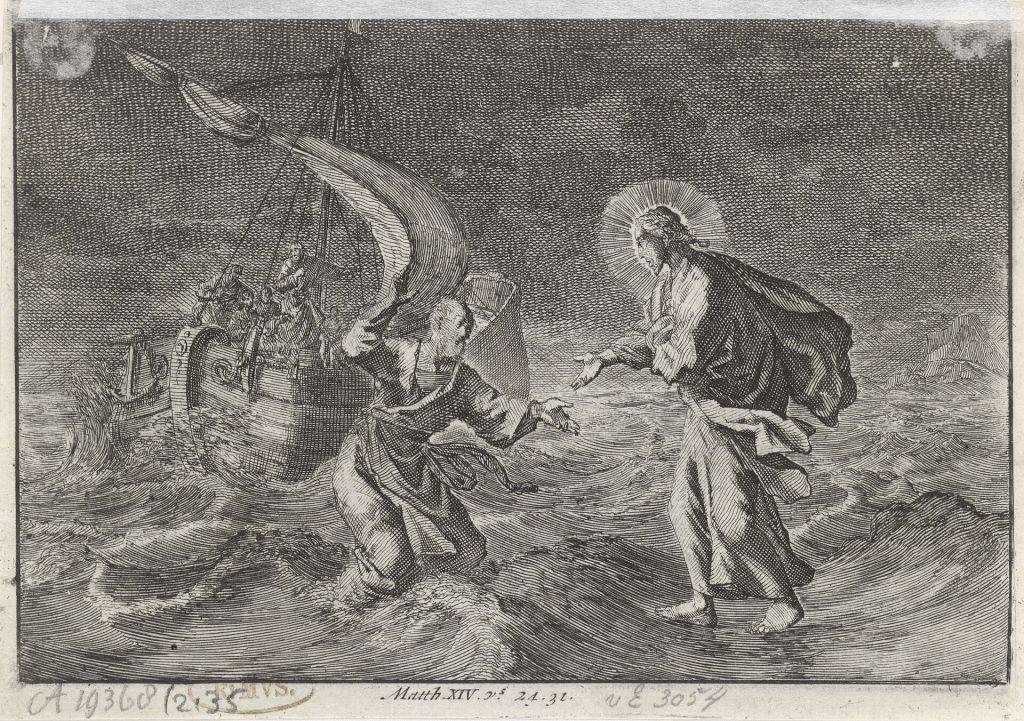
But I’ll start by reflecting on the Gospel reading, which tells us how Jesus calmed a storm on the Sea of Galilee. Galilee is an inland sea, a lake, just over a quarter the size of Lake Taupo. How many of you have been frightened by the weather when you’ve been sailing there?
I was introduced to yachting as a twelve-year-old in Malta (where St Paul was wrecked in the epistle reading). And I happily sailed the River Thames at Oxford, hitting the bank every few metres. I’ve sailed across the English Channel in a clinker built 29 foot yacht, continuously leaking, because it had spent two months on the French canals, and had dried out above the waterline. I was very cross with my father.

I’ve felt most comfortable sailing the whole of the South Pacific with my husband John in a steel yacht, built of steel; as, when you’re sailing in the tropics, it’s not that you might hit coral, it’s when are you going to hit coral? But even so I can remember being anchored in a small lagoon when the wind direction changed 180 degrees, at 3am, and we spent the hours till dawn watching the anchor, with the engine idling, prepared to quickly up anchor if it started to drag: and we had anchors that we could trust.
I don’t know how many of you realise that it wasn’t until the last century that anchors were designed that wouldn’t drag. Have you heard the podcast on the lost anchor in Doubtless Bay? Four anchors had been put out that 18th century night, and still that boat blew ashore. So, no wonder the disciples were terrified during a storm on Lake Galilee.

Putting out to sea requires trust, trust in your boat, trust in the skipper, and trust in yourself and your ability to react calmly and appropriately. You learn to trust in God.
And I could trust John because he was always prepared for the worst; for example, although John had learnt to navigate using a sextant, and we always had a sextant on board in case the electrics failed, we also carried three GPS devices.

When there’s an earthquake, it’s best to be at sea. We were sailing towards Western Samoa when the tsunami struck their west coast, and were able to call in at the Red Cross centre and pick up blankets and supplies to take to Nuie Tongatapu, a small island south of Samoa, although we were surplus to requirement as the Tongan navy sailed in right behind us.

We were at sea off Whangarei heads immediately post the 2019 Kermadec trench event, and watched the sea level rise and fall only by a metre, while five kilometres away boats moored in Tutukaka harbour were pulled from their moorings and smashed against the rocks.

We do benefit from the bounty of the sea. We all know that eating fish is good for us; but what is a sustainable limit for us to eat? Two fish a week? The Marlborough Sounds is the only area in New Zealand with a sustainable catch limit of two fish per person that is adhered to. We all recall the local red fish story when a bus load of immigrants caught huge amounts of unprotected red fish (pink maomao) and were stopped by a local hero. And we know that beaches just north of Auckland have been stripped of all edible life by uninformed immigrants. I think that Air New Zealand should add to their obligatory messaging our fishing limits and why we have them, and other conservation information.

John and I also visited Pitcairn Island – the refuge of the mutineers on the Bounty. Do you remember, at the time of the mutiny, Fletcher Christian put Captain Bligh and six other sailors in a dinghy and Bligh navigated them two thousand miles to safe haven in Java? When we were on Pitcairn the only school-aged child was a girl, and the teacher was a Kiwi male, so a local woman had to be there, the whole school day.

John and I enjoyed diving. There are many beautiful dives around New Zealand. Our favourite was at the Mokohinaus, where there is a beautiful hollow rock pillar which you can enter about three metres down and swim down through to exit about 25m down, near the sandy bottom. (I would only go up and down ten metres on the outside of the pillar, but I still called it my Jacques Cousteau dive.)   We visited Fiordland twice. There is ten foot layer of fresh water on the surface that provides light protection, allowing coral (that is only visible at a depth of a hundred feet at the Poor Knights) to be visible at thirty feet there. Magic!

So we’re blessed in New Zealand to have so many wonders of creation to see. In 2000 we sailed to the Chathams. Two memories stand out from that trip: the first, sailing up huge rollers from the south. I likened it to sailing up four double decker buses, dropping down the other side, before climbing up the next one. The second was visiting the ‘Pyramid’, the southernmost rock, uninhabitable and the southwestern-most point of land in the world outside of Antarctica.  It used to be a rite of passage for young Chatham Islands men to climb up to the cave, twenty metres up, and dive off.

We are so fortunate that Sir David Attenborough and his teams have photographed so many of these wild places, both above and below the sea, so we can experience them in the comfort of our own homes. As I said, you learn to trust God while you are at sea. And also to be thankful to all those boaties who are prepared to join the Coastguard and rescue people who get stranded, or experience some other difficulty.
I would also like to mention The Mission to Seafarers in Auckland and Wellington, who provide places to stay for lonely seamen, along with food, comfort and libraries.
Fifty years ago I was grateful to another yachting family who rescued our son and my nephew, as they were drifting from Slipper to Mayor Island in a dinghy without oars, while we were off walking on the island.

So, when you go down to the sea in ships, be safe and enjoy. Wear your life jackets, listen to the marine weather forecast, be prepared – and trust in God. And I hope and trust that the fish populations of our warming seas will have the time to adapt. While we welcome more tropical fish coming to our local waters, species that thrive in cooler water will hopefully move south and continue to thrive there ….

The Long Wait

by Pat Lee

(Based on Gen 21:8-21)

I have chosen to speak on the Genesis reading today because it’s an example of how not to behave, as people of God’s covenant. It’s also a reminder that God is always greater than we are and can sort us out even when we fail – as Sarah and Abraham did more than once.

First, some previous history. In Genesis chapter 12, God told Abraham to leave his country (Ur and then Haran) and family to go to a land that God would show him, which turned out to be Canaan, but with a detour to Egypt.
God promised him that he would make a great nation of him. Abraham obeyed God and left Haran with his wife Sarah. He was seventy-five years old and had no children.

His first failure was telling the Pharaoh in Egypt that Sarah was his sister! So the Pharaoh took her to be his wife. This caused many problems for Pharaoh. He eventually discovered that Sarah was Abraham’s wife, so sent her back to him.

What happened next? Well nothing much for quite a few years. Sarah got older and still no baby. God spoke to Abraham again in Genesis chapter 15 to affirm his promise, but still no baby, and Sarah continued to age. Eventually she got thinking and wondering if God needed some help to fulfil his promise. Things were very different in those days. It was not uncommon for men to have several wives and a number of concubines, usually their slave girls. They could have children by each of these women, and in their culture it was acceptable that if a wealthy mistress was childless, as in Sarah’s case, the slaves’ children were counted as if they were hers legally.

Chapter 16. Now Sarah decided that she would tell her husband to have sexual relations with her Egyptian slave girl Hagar, so that any child produced would be seen as hers. That was her failure. Foolishly Abraham did as Sarah suggested, another failure, and the result was that Hagar became pregnant. Hagar now felt that she had some status in the family, so she treated Sarah with contempt. So Sarah treated her harshly; and Hagar ran away.

God saw this, and told Hagar (through an angel) to return to her mistress. The angel also told her that God had said that he would enlarge her family by giving her many offspring. So, she returned to Sarah.
I wonder what Sarah thought about that?
There was probably great rejoicing from Abraham, but not for Sarah, as there was still no baby for her. Then Ishmael (whose name primarily represents human effort and the ‘flesh’) was born. Abraham was 86 years old, Sarah about ten years younger.

At one point, Abraham and Sarah journeyed towards the Negev, where they settled between Kadesh and Shur. Abraham had not learnt from his first failure and again passed Sarah off as his sister (to the King Abimelech). But God spoke to Abimelech (in a dream) and told him that Sarah was Abraham’s wife, so he too sent her back.

Some time later while Abraham was sitting outside his tent, God sent three men to him. Abraham gave them refreshments and then they told him that they would return to him in due season, when Sarah would have a son. Sarah was listening at the tent entrance. She laughed. I think I would have laughed too, in the same circumstances.

Isaac was born when the men had said he would be. Sarah (now ninety) said that God had brought laughter to her, and Isaac’s name means “he laughs” or “one who laughs or rejoices”.

Now we get to today’s reading. It was customary in those days for children (hence, Isaac) to be weaned at about three years of age. (!) Abraham gave a feast in celebration, which was also customary. During the feast, Sarah saw Ishmael (who would now be about sixteen, based on ages given in the text) playing with Isaac. ‘Playing’, in Hebrew, can mean several different things; one meaning is ‘making fun of’ or ‘mocking’. Sarah obviously thought that Ishmael was making fun of Isaac, so went to Abraham and demanded that he send Hagar and her son away. Abraham was very distressed because Ishmael had been Abraham’s heir for fourteen years and had grown very fond of him.

God came to Abraham’s rescue and told him to do what Sarah asked, because Isaac was the one through whom his family would have descendants, but that he would make a nation of Ishmael too. So Abraham sent Hagar and her son away. The Hebrew word used in the text is exactly the same as the common phrase for divorcing someone. In other words, he ended all legal obligation between him and Hagar and her son.
That must have been very difficult for Abraham to do, but imagine how difficult it was for Hagar and Ishmael. They were  sent off with some food and water, but not much, and ran out of both before very long. But God saw them out in the wilderness and came to their rescue too.

The next part of the text is a little confusing because it speaks of Ishmael as if he were a little child, crying out in hunger and thirst, but he would have been about sixteen. There may have been other factors at play, which we do not know about.

Anyway, “And God heard the voice of the boy; and the angel of God called Hagar from heaven, and said to her, ‘What troubles you Hagar? Do not be afraid; for God has heard the voice of the boy where he is. Come, lift up boy and hold him fast with your hand, for I will make a great nation of him.’ Then God opened her eyes, and she saw a well of water. She went and filled the skin with water, and gave the boy a drink. God was with the boy, and he grew up; he lived in the wilderness, and became an expert with the bow. He lived in the wilderness of Paran; and his mother got a wife for him in the land of Egypt.”
Hagar and Ishmael are not part of God’s original plan. The plan was always going to be through Abraham and Sarah. However, Hagar was still one of God’s created beings so he speaks to her, assuring her of his provision for the future giving her and Ishmael hope.

So, what does all this mean for us today? In the New Testament Abraham and Sarah are held up as examples of faith, but the birth of Ishmael didn’t come about because of their faith. In fact, their faith failed. God had promised that they would have many descendants and God does not break his promises. It’s easy for us to understand why they decided to give God a helping hand, since they were both getting well on in years, but God does not need our help to do what he promises. He needs us to keep our faith and trust him.

Just like we do, Abraham and Sarah failed on several counts; but God did not write them off and he won’t write us off either. God asked them to believe the impossible, and to believe it for a quarter of a century. He asked them to wait patiently for his promise to be fulfilled and he didn’t tell them how long they would have to wait.
We see doubt and impatience, and harsh treatment of a slave, who actually did what they wanted her to do. When they didn’t need her any more, especially Sarah, she was sent off with very few provisions. Not the way to treat a slave or anyone else for that matter.

God wants us to wait for him to fulfil his promises, no matter how long it takes. If God has made a promise to you, wait. He may not have fulfilled it yet, but he will.

One writer says (of the heroes listed in Hebrews 11), “Are these heroes of faith? Maybe, and maybe they’re also ordinary human beings like us. They’ve been formed by attitudes and beliefs of their own culture. They find it hard to trust God for the long haul. They find it hard to treat slaves as their equal, just as many of us today find it hard to treat people of other races as our equals; we may believe they are in theory, but it’s hard for us to feel it. Does God approve of our attitudes? Absolutely not. Does God refuse to work with us because of them? Absolutely not. There are no perfect people available. God only has imperfect people to work with.”

God had Sarah and Abraham and he fulfilled his promise to them, even though they failed many times before it happened.

On Fostering Hope

by Dr Liz Young

(Based on Matt 9:35-10:23; Ro 5:1-8)

My sermons are often influenced by my current reading: this week’s New Scientist had a great article on why we should improve our mindset, and our book club book for this month is a junior mental health nurse’s reflections on her experience in the United Kingdom. It’s titled The Language of Kindness. Until recently, kindness was the only treatment we could offer the mentally ill: and still the most effective treatment for depression is cognitive behavioural therapy, where the patient learns to talk more positively to themselves and so improve their mood, though psilocybin, from magic mushrooms, can be a one off shot to reset our mood (but no good for schizophrenia).

What can we do to improve our community’s mental health?  How can we use our stress positively?
Offering kindness to others always improves our mood. I have appreciated the many kindnesses I’ve received over the past year, and our Op Shop radiates mutual kindness.

The other book I read (and cried over) – recently been released as a film – was the ultimate act of kindness: the story of the donation of a heart transplant to a terminally ill boy. The donor was brain dead after a car accident, and her younger sisters pushed her father to offer up her heart for organ donation, for transplantation, as she’d always been so giving in life. Because of the publicity about the boy who received the transplant, the donor family realised who their sister’s heart went to, and the families got in touch, although it was not current professional policy, for privacy reasons. The resulting friendship led to joint work on publicising the need for donors for the many parts of the body that we can donate, as we’ve been designed with replacements: something we need to work on.

Our mindset is our mood default button.

What is mindset?
It’s our intuitive, usually unspoken, internal ‘theory’, about how things work; a theory that shapes what we look for, how we make sense of things, that forms our expectations and our subsequent acts. The writer of the article I read in the Listener was a man – his father had Alzheimer’s, his wife was wanting to divorce him, and he’d recently left a steady job to be self-employed. He was stressed. But he wrote of two ways to respond to stress: he could get anxious, ruminate, dither … Or he could use the adrenalin to focus … if you view stress as enhancing, if you complete written exercises on the power of a positive mindset … your depression and anxiety levels can reduce.
Thinking of this made me wonder how to rewrite it in ‘gospel terms’.

Most of Jesus’s miracles involved altering mindset. In the feeding of the five thousand, for instance, everybody was hiding their food for the day from each other, until one small boy shared his loaves and fishes, and then everyone sat down to share with each other. What a lot of leftovers there were!  

Paul, in the reading from Romans, weaves together the themes of faith, love, hope and glory, noting the past work of God helping us, how Christ came to die for us, how we now stand as God’s children. (Jesus charged us to be like little children, and children are usually full of hope, or should be.) These Pauline perspectives give us reason to hope for the future. While we accept that the future for humanity is uncertain, especially at this time, we can trust that God has a plan for us and that he will give us the strength to cope with whatever life sends us. So we can live in hope.  

So, what can we do to improve the hope and happiness of those around us? Don’t moan; don’t let the news get you down; take time to enjoy the beauty around us; give thanks for our daily blessings; for friendship. And do something caring for one another each day. Amen

Romans 5:1-5:
Therefore, since we have been justified through faith, we have peace with God through our Lord Jesus Christ, through whom we have gained access by faith into this grace in which we now stand. And we boast in the hope of the glory of God. Not only so, but we also glory in our sufferings, because we know that suffering produces perseverance; perseverance, character; and character, hope. And hope does not put us to shame, because God’s love has been poured out into our hearts through the Holy Spirit, who has been given to us.