by Barry Pollard
(Based on John 2:1-11; I Cor 12:1-11)
** Since this reflection was posted in January ’22, it has been accessed (read?) hundreds of times – a far greater access than any other posts on this website – from numerous countries all over the world. Even today, it gets one or two views almost every day. I’d very much like to know why. Are you real human readers? If so, what do you all have in common, and what is your particular interest in this article? Or is this some kind of electronic ‘bot’ phenomenon? What is the story?
If you are reading this, please respond in the ‘Leave a Comment’ box at the bottom of the page. I will be very grateful for your feedback, thank you. (Editor … St Francis Webguy)
I shall start with a confession: when I read John’s gospel for the first time, as I started my prep for this, I wasn’t amazed. I had heard it many times before, marvelled at it, and had filed it away as another “truth”. In fact, initially I was wondering what I could actually add by way of commentary. The story speaks for itself, doesn’t it? This is the “kick off” in the public ministry of Jesus. But like all good preparation, we shouldn’t be content with our first impressions. A few more readings had me focus on the statement Jesus makes to his mother Mary, when she tells him that the wedding wine had run out. “Dear woman, that’s not our problem,” Jesus replied. “My time has not yet come.”
What did he mean?
When we use the term describing something as “the right time”, we are really saying that the conditions are good and the right moment has been reached when we can proceed. This is our best chance of success.
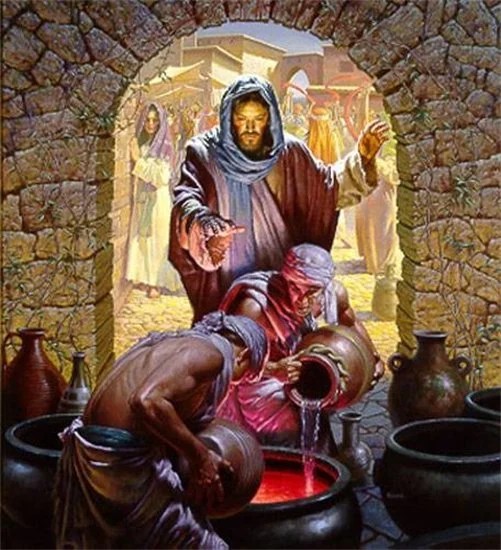
So, the wedding feast at Cana had a lot more to it than the couple on centre-stage! It is the backdrop to the start of the public ministry of Jesus. It is here that he performed his first miracle – an event that showed for the first time the power of Jesus. One might be forgiven for thinking, in John’s telling, that it was a simple and straightforward thing, because John’s version of the story lacks any close-up detail.
Jesus and his growing group of disciples had been invited to the wedding, probably because of Mary’s tie to the couple. One or other of the pair may have been a relative. You know – a bit like when your cousin is getting married and the whole extended whanau come together. John doesn’t name the couple so it is only a guess.
The fact that Jesus was there initially as an observer, rather than participant, I think is important. It was his mum who asked him to intercede when the hosts realised the wine was running out but he responded by telling her that it wasn’t any of his business, as his “time had not yet come”.
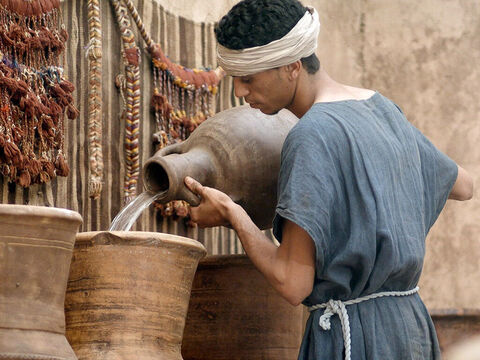
And this is where my problems started. Without explanation, John then reports that Mary tells the servants to do whatever Jesus tells them, and Jesus tells them to fill the stone jars with water, setting the miracle in progress.
Perhaps it was the rush by John to get the miracle out there, that he reported that Jesus stepped up and turned the water into wine. But, what changed his mind? What took him from “I’m not ready” to “mission accomplished”? Was it that Mary had intervened? Did she know more about his readiness than Jesus did himself? Perhaps so: many parents see things their children don’t.
Whatever it was, the miracle performed had a dramatic impact on the master of ceremonies. The hosts were lauded as generous for providing a quality wine so late in the celebrations. But the audience Jesus really performed in front of was far more important. His mother, brothers and disciples witnessed this intervention and John says “they believed in him”!
And then, as he often did, Jesus leaves with this group for a few days’ break. [Remember the account of the bleeding woman touching the hem of Jesus’s robe, and “power leaving him”? These events took a toll, leading to the need for recovery.]
In my experience, the way in which we often deal with the Bible gives us a warped sense of timing of events. We often read it in small segments, as isolated events, and miss the continuity of the real-life pace of what was going on. Perhaps if we read the events told in the next five or six chapters we could get a better idea of the speed at which his public ministry accelerated.
I have mentioned in previous reflections a series we had been watching, called The Chosen. It is a dramatisation of the life of Jesus as he gathered and ministered with his disciples, and available on YouTube. Because it is such an enthralling production/story we were binge-watching, one episode after another, and the events flowed one to another, providing the real-time continuity to the Jesus story. According to John’s Gospel, the baptism of Jesus by John the Baptist takes place and two days later Jesus is at Cana for the wedding, but we don’t often appreciate that acceleration.
As we consider Jesus’s readiness for ministry, recall what we heard in last Sunday’s gospel reading from Luke: John the Baptist proclaimed that he was clearing the way for the Messiah. When Jesus appeared, to be baptised, and “aligned with humanity” as Sharon explained in her reflection, John knew, when the manifestation of the Holy Spirit in the form of a dove settled over Jesus, that this was truly the Messiah they had all been waiting for. He surely knew that Jesus’s time was very near.
Despite Jesus saying his time wasn’t yet here, we can assume his mother Mary knew it had arrived. And after the miracle of the changing of the water into wine, his disciples knew it had too! They all believed!
Mary, the mother of Jesus: she had miraculously given birth to Jesus, had raised him, and now accompanies him as he sets off into his public ministry. She surely knew him.
John the Baptist: the cousin of Jesus. He had grown up alongside Jesus, presumably had spent time with him, and he too could claim to know him. He certainly did, when the confirmation came from God that Jesus was the Messiah!
The disciples: they had been drawn to Jesus by the things he said, the things he knew. They were getting to know him.
And what about Jesus himself? Presumably he knew who he was his whole life. We have just celebrated his miraculous birth. We have heard the story of a twelve year old Jesus teaching in the temple. We heard about God’s acknowledgement of him at his baptism in the Jordan as he prayed, and now we have heard of his first miracle.
Are we getting to know him?
God has provided us with lessons in all passages of the Bible if we but look for them. The story of what happened at Cana is not just about Jesus. It tells us something that applies to our lives too.
Although scant on the details, the passage is dealing with when Jesus reached the right time to begin his public ministry, for him to step past his previous achievements. After thirty years the preparations were complete. His direction was changing. The life of Jesus was about to intersect with the lives of all around him.
When I reflect on my life, I can see when direction changes were needed and made. I’m probably a slow learner and, for example, I admit that at thirty I wouldn’t have been much of a Principal – inexperienced, self-absorbed, and so on – but at forty I was ready. By then my preparations were pretty well advanced. In that instance my time was right. (I could also give you quite a few more examples of when my time was totally not right!)
Now, I am contemplating the other end of my life. I am thinking about my readiness, my preparations and ability to cope with stopping work and selling our business.
On our faith journey we learn that everything we do should bring God glory. We are not expected to do this on our own. We have been given the model of Jesus to follow. We have been equipped through the Holy Spirit. Spiritual gifts: wisdom, knowledge, faith, healing, miracles, prophesy, discernment, speaking in tongues, and interpreting tongues, as explained in the Corinthians reading today. Fruit of the Spirit: love, joy, peace, forbearance, kindness, goodness, faithfulness, gentleness and self-control, as explained in Galatians. We are encouraged to be discerning and active. Our ‘Collect’ today called us to use this [Cana] story to help us gain, and maintain, momentum to change, “so that we may, more and more, reveal [God’s] glory”.
As I wrap up, I’d like to remind us that when the time is right, great things happen. A down-home Tairua example of this is when our sister Pat spoke out at the conclusion of a service recently, quoting the exhortation from 2 Chronicles 7:14, “If my people who are called by my name will humble themselves, and pray and turn from their wicked ways, then I will hear from Heaven and will forgive their sin and heal their land.” Pat had discerned that this was a call from God that could be heard and attended to. It led to a week of daily prayer in this church, aimed at overcoming the grip of Covid on our nation.
And I reckon those prayers were answered. Our land has experienced healing, with significant drops in numbers of Covid infections and hospitalisations. The pandemic is not over, of course, and more prayer is required!
But it took real courage for Pat to speak out as she did. I am heartened that we responded to her request. I am heartened to hear her respond again to the Holy Spirit and petition us to pray again (this time for water tanks in Fiji). Bless you, Pat.
If everything we do brings God glory, it will be happening in the small and mundane, as much as it was at the Cana wedding. I still don’t know what exactly tipped Jesus from his claim that his “time was not yet” in one breath, to producing the finest vintage wine with his next. Perhaps we just need to focus on the preparations we need to make, minute by minute, every day, to help bring about those positive changes in our lives, those changes that bring glory to God.