(Based on John 14:1-14; Ps 31:1-5; Acts 7:55-60; I Peter 2:2-10)
In today’s readings there are references to stones, mansions and buildings … and, living faith communities of people – the Christian church.
Pat and I noticed when living in – and visiting – Britain, almost every church – Celtic, Saxon, Norman, Gothic, Victorian and contemporary – was made of stone. Westminster Abbey, seen by hundreds of millions this past week, is/was made of stone – in the thirteenth century! Not so here in Aotearoa NZ where most, except our cathedrals, are made of wood.
A church building provides sacred space for the church people to gather to be graced, to worship, to be equipped for service and witness when we are not gathered here – for twenty four/seven discipleship.
Place and People: they go together. From the time of Solomon’s Temple three thousand years ago, hosting the Jewish church, to St Francis Tairua of the Christian church here this morning.
A reflection on all this from today’s readings:
From Psalm 31: the writer – probably David – says God is his fortress and his rock.
In the Acts reading: Dr Luke gives us the end of Stephen’s speech to the Jewish Council, and his prayer, as he dies from stoning, with rocks, a prayer similar to Jesus’s on the cross. Stephen prays, “Lord, do not hold this sin against them.” He then dies, and Saul – later Paul – approves of his killing.
Peter – the ‘rock’ and apostle – the rock on whose faith Jesus was to build his church – speaks of Christ as the “cornerstone” on which people build, or over which they stumble. He then describes in eloquent language the community of faith – the church, God’s divine creation, purposed to carry on the work of the risen Lord. The church, he writes, is “God’s own people, in order that you may proclaim the mighty acts of him who called you out of darkness into his marvellous light.” The church has inherited the calling Israel failed to fulfil. We are chosen not for privilege but for costly service and witness, joyfully offered.
Then John writes of Jesus telling ‘the eleven’, on the night before he died, after the exit of Judas, “not to be troubled”; “to believe”; and that they have places in “the Father’s house”. And he will return to bring them home. ‘Questioning Thomas’ evokes Jesus’s telling statement: * I am the way (to God) * I am the truth (of God) * I am the life (of God) * And, most challengingly, “No one comes to the Father except through me …”
Then he replies (this time to Philip’s question), in essence saying, “God the Father is like me” (I ‘abide’ in him …).
Well … quite a lot to take in here, and ponder about.
The contemporary universal church, across God’s world and in every nation, whether meeting secretly in small groups, perhaps in a persecuting environment, or publicly in great buildings – or one like ours – is called to be a presence of Christ, and to hold and share the Gospel of forgiveness and new life in trust for present and future generations. The church is not something early Christians established: it was divinely established and is divinely sustained.
The church is us. People anchored in God our Rock, and his purposes.
I’ve posted before on shifting scientific paradigms and how long-accepted ‘facts’ change (see here). But, have I got a story for you today, related. Did you know that in the seventeenth century there were serious attempts to turn urine into gold?!
The Village Alchemist Jan Steen (1662)
Throughout the world, alchemy had been a field of serious study and experimentation, from the early centuries CE. So serious, in fact, that even the genius Isaac Newton pursued it at one time, and during the Middle Ages alchemists had to do their work in secret because rulers were afraid their success would undermine the gold standard, and corrupt the gold supply in Europe!
Through those centuries, of course, nothing was known of chemical ‘elements’, as we now understand. Matter was thought to be made up of earth, air, fire and water; and there were mysterious, imagined substances such as phlogiston, caloric and aether. (Aether was conceived as a substance that must exist in space so that light (thought to be a wave) could pass through, not unlike current (mis?)conceptions of dark matter and dark energy that are supposed to exist if contemporary cosmological theories are to hold.)
A ‘scientific’ name for alchemy was ‘transmutation’, the act of changing a substance from one form or state into another. To alchemists, this mainly meant the conversion of base metals such as lead into silver and gold, aided by spiritual and magic ‘arts’.
Well, they were wasting their time (and arts), of course, but Hennig Brand and Karl Scheele are worth a second look. In 1675 Brand fancied that urine – similar in colour to gold – could perhaps be converted. He sourced a lot of it (using contributions from soldiers!), stored it in buckets for months until it dried to a paste. Of course, although it stank, and upset Mrs Brand, it never became gold, but it did glow in the dark, and became spontaneously combustible! [Further incensing Mrs Brand … don’t try this at home.] So leading to the discovery of phosphorus! Which at the time was more valuable than gold anyway.
Scheele (around 1760) found a way to manufacture phosphorus without stockpiling urine. But the more interesting thing about Scheele was that he insisted on tasting all the substances he worked with, including cyanide and arsenic. Such that, “aged just 43, he was found dead at his workbench surrounded by an array of toxic chemicals.” (For this and other fascinating insights into science in the ‘golden era’ – and in many other eras – read Bryson’s A Short History of Nearly Everything.)
Perhaps less astonishing but just as remarkable, transmutation of the elements was finally achieved in 1919 by Ernest Rutherford who, with a group of student scientists, converted nitrogen into oxygen: they bombarded nitrogen in the air with α-particles (actually helium nuclei) to produce oxygen and a proton (a hydrogen nucleus). This reaction can be written as 14N + 4He → 17O + 1H. Actually, similar processes had occurred, unnoticed, since the beginning of time – for example, uranium decaying to lead, a natural process of transmutation now recognised and fully understood.
Science, eh. There are some sensational stories. Hints of the wonder and fascination of our world and universe: the jaw-dropping phenomena of Physics; the magic of chemistry; the mysteries of biology; and the astonishments of all the other -ologies. And around and behind and undergirding them all, their absorbing human histories. The order and predictability of our universe, its design, but its inscrutabilities too. And, ultimately, the great whodunnit. Whence came it all to be, and how?
(Based on Luke 24:13-35; see also Acts 2:14a, 36-41; 1 Peter 1:17-23)
Today’s story occurs on the afternoon of the resurrection.
On the 15th March 2019 we were all shocked by the horrific news of the shootings in two mosques in Christchurch. We were all appalled at this act of violence against people who had simply gathered to pray. It was something that we all talked about with family, friends and anyone else we met; we were all impacted one way or another by this senseless event.
And again, just over a year ago when we heard the news of the Russian invasion of Ukraine, this became the topic of conversation with those we associated with. We all talk about these things and many other events that happen here in our town, country and the whole world. It’s what we do as human beings. We all have an opinion and we love to share them with others. These conversations are part of our ordinary, everyday lives.
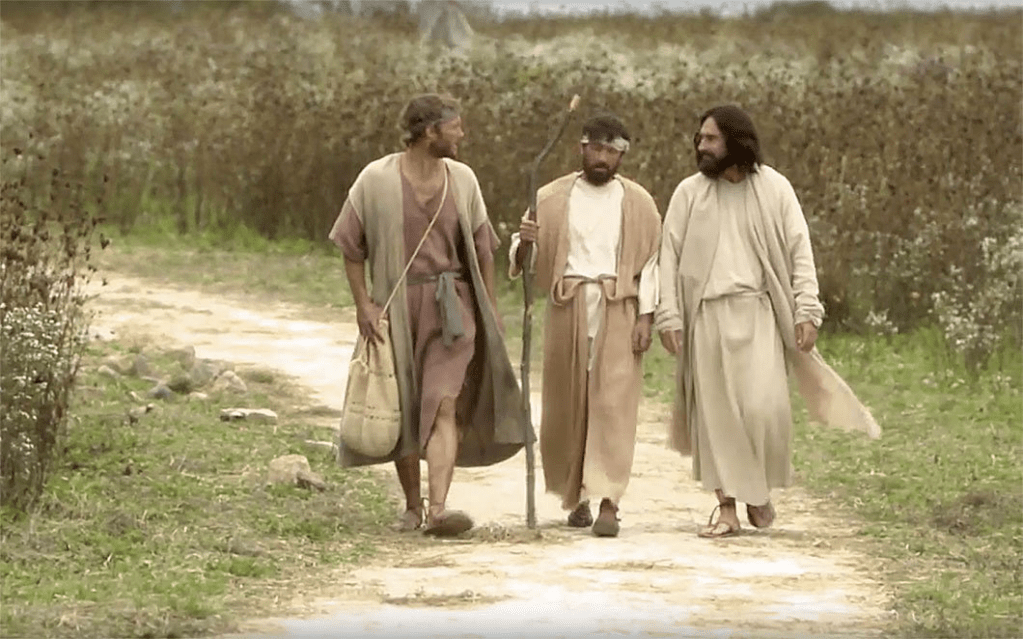
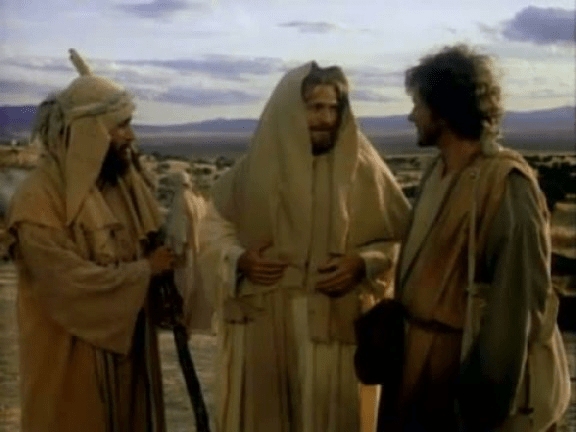
Well, we’ve just heard the story of two men on their way to Emmaus. The Bible doesn’t tell us why they were going to Emmaus, but we can assume that these two, although not members of ‘the twelve’, were followers of Jesus, as inferred in v33.
On first look, this seems to a be an ordinary story about two men conversing about a current event as they walk along. However, as we take a closer look, it becomes obvious that this is no ordinary story, but an extraordinary experience these men would never forget. They were joined by a ‘stranger’ who came and walked with them and wanted to know what they were discussing. They didn’t seem to be at all put out by this stranger. This seems odd to me as I’m sure I would have been thinking, Who is this cheeky fellow pushing his way into our private conversation? We know, but they didn’t, that it was Jesus, because “they were kept from recognizing him”. They were amazed that he seemed not to know anything of the previous few days’ events. He wanted to know what had happened. They told him what had happened, finishing with the women who had been to the tomb early that morning to find it empty. They said that the women had come back to tell them that an angel had told them that Jesus was alive.
It is no surprise to us that the women were not believed, because back then women were not meant to have opinions! So, the men told the stranger that some of the men went to the tomb to see for themselves and found it to be as the women had said.
Now the stranger did something even more astonishing than just asking them about their conversation. He told them how foolish they were and “slow to believe what the prophets have spoken”. Then he explained all the things from the beginning, from what Moses and all the prophets said in the Scriptures about what the Christ would suffer.
When they reached Emmaus, the stranger appeared to be going further on, but they asked him to come and stay with them. It was almost evening, and in those days it was dangerous to walk the roads at night. So the stranger accepted the invitation.
These next few verses are the ones that jumped out to me. There are three main points that are noted. The first is the opening of their eyes in recognition of who it was that was with them when he broke the bread. This made me wonder if these two men had been present when Jesus fed the five thousand and saw him giving thanks and breaking that bread. Was there something about this act of Jesus which was unique and which they saw again now? Maybe this is what triggered their recognition.
The second is that now he suddenly disappeared from their sight. I would love to know what went through their minds when this happened. Who else could have done this but the risen Christ?
The third is when they asked each other, “Were not our hearts burning within us while he talked with us on the road and opened the Scriptures to us?” Did your heart burn within you when you first became a Christian? Mine did. I was so excited I wanted to tell everyone what had happened to me. I think my husband and one of my closest friends, in particular, were amazed at the change they saw in me. But Michael was not convinced that it was real. Lynne, my friend, gave her life to the Lord about three or four weeks later, but my husband took a few months longer. In fact, when he was transferred to another town for his job, he decided to find everything he could to disprove what had happened to me. But God had other ideas. I had stayed behind for our boys to finish the school year, so he had plenty of time without my interference. And, yes, he became a Christian too, and was ordained a few years later!
Verse 32 reminded me of a couple of songs. The first one Lynne had on a record which we played over and over and sang many times. The chorus says this: “So light up the fire and let the flame burn. Open the door, let Jesus return. Take seeds of the Spirit, let the fruit grow. Tell the people of Jesus, let his love show.” The second one has a verse which says, “O Lord, please light the fire that once burned bright and clear. Re-place the lamp of my first love that burns with holy fear!”
These two men’s hearts were burning inside them and they were so excited, they immediately set off for Jerusalem, even though it was night. They would have known the dangers of night travel but their enthusiasm overruled any thoughts of danger. When they arrived, they found the eleven disciples and others gathered together. The excitement was present there too, as these people were saying, “It is true! The Lord has risen and has appeared to Simon.” Can you imagine the scene after the two related their story?
Before Jesus ascended to heaven, he commissioned the disciples to preach the Good News. That commission applies to us today as well. But we need that fire burning in our hearts. We are not all called to be evangelists, but we are all called to tell people about Jesus when an opportunity arises. I had one such opportunity this week. A person said something to me that was not what we as Christians believe. After a slight hesitation, I felt led to say, but not quite as bluntly as this sounds, that I didn’t believe what she had said, and simply explained what my belief was, and just left it at that.
Let us all re-light the fire in our hearts so we can do what Jesus told us to do. I’ll close with a quote I heard on Christian radio last week. The speaker said this: “We need to stoke the fire of our souls. If we don’t keep stoking it with fresh ‘wood’, the fire will go out.”
The seal on the milk bottle I was trying to open was proving stubborn, so I prized a little harder, being ultra careful not to make a mess, when, despite my concentration, the thing flipped in my hand and burst free, spurting milk all over my t-shirt and the infant in my arms. Unsolicited, unsummoned, a vulgar obscenity spurted from my mouth: “Drat!” I said, and felt immediately ashamed. The child giggled and licked drops from his face, wiping his face and spreading the mess . “No, don’t, doggone it,” I swore again, holding his dripping hand with my dripping hand, and he chuckled louder.
But actually – and I share this guiltily – I felt better for having cursed. Why?
Why is it that cursing bursts forth so spontaneously when we whack a thumb with a hammer or bite the inside of our lip? Or someone else bites the inside of our lip? Because it’s not just me, is it? Does it happen to you? I see rugby players on TV do it all the time. They drop a ball with the line open and … you don’t have to hear them. You know what they just said, and you don’t blame them. You’re saying it too, because that clumsy knock-on has just cost you fifty dollars.
But it works, eh. The expletive has cushioned your loss, your pain, your milky t-shirt. Your chagrin must be lanced. Better than punching a hole in the wall or kicking the cat. There’s something of a pressure relief valve in it, releasing some steam before you internally combust or drop the baby. You feel way better than you actually should – for spilling the milk or uttering the unutterable. Something in your frontal cortex (or wherever these psychologies are felt) feels vindicated, assuaged. You can mop up the milk thus pardoned. And the baby won’t tell the wife, so …
That’s the risk, though, nei? It doesn’t pay to be heard. If you cuss, and she hears it, that can usher in all sorts of implications. She thinks your agricultural vocab was purged long ago. Or in front of the in-laws …! [Urghh. That doesn’t bear thinking about.]
If you cuss on the sports field, that’s ok. That’s accepted. But if you curse at the tattooed bikey that just cut you off on the motorway … that could have a rather sorry outcome. In fact, if we all restrained our language and gestures on the road or in the carpark we’d probably see all road rage and bar fights vanish from our streets. Perhaps herein lies the moral of this story. Restraint.
No. On reflection, there is no moral to this story. Let ‘er rip. You’ll feel so much better. If guilty. They say you shouldn’t ‘bottle it up’, so don’t. It’ll only … Hmm… bottle or curse?
Yesterday bit the inside of my lip whilst visiting the in-laws. The word rose in my bloody mouth and I all but let rip, but something in the subconscious part of my frontal cortex forswore me to silence and I did. I stifled it. Bit my tongue, so to speak. Within seconds the lip pain abated, my pulse rate slowed and I felt better. As good as I would have if I had sworn, and without the guilt. Happily I resumed chewing, concentrating now – one bite, two bites – careful now – three … re-joined the polite conversation, when … Wham! Concentration lost, molar jammed down on the existing wound.
“Crap!” I screamed. The room went silent. I dissolved on the carpet in a wet gout of shame.





 stfrancischurchtairuanz