Gems in the Water

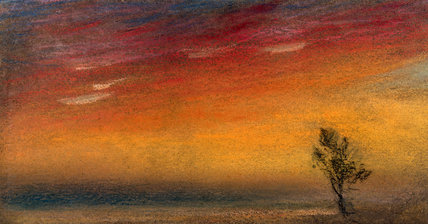
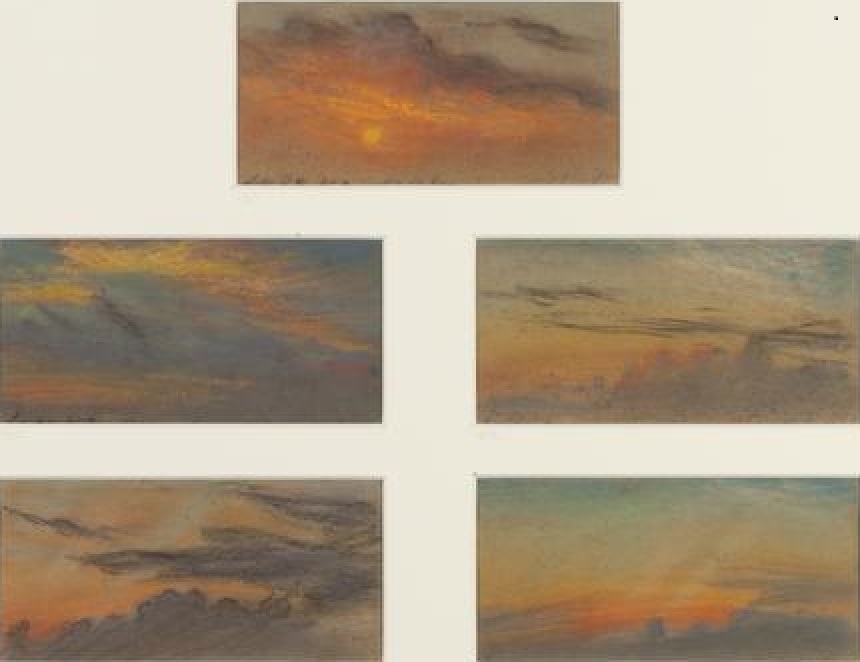
I spent a cold, dark, mosquito-bitten, lonely couple of hours fishing (as opposed to fish-catching) the other night, and as I hauled in yet another empty hook, bereft of catch and bait, I wondered why on earth I was bothering.  I could have been watching The Bachelor.  Just when my line and my patience were tangled beyond hope, the overcast cleared, and not only did the Southern Cross appear, but it was reflected in a flat calm sea, and I saw it mirrored in wondrous symmetry above and below the horizon. 

It struck me that I wasn’t out here for the fish.  I was out here for the spectacle, and it reminded me of the times upon times that I have found myself in grey circumstances, only to see gems most unexpected and fair.

For example … (and obviously, in order to protect the innocent, and the not so much so, I won’t give specific details of time and place) … there was the dreary family 21st.  The MC is trying to encourage us to dance, we who would class dancing as slightly below dental surgery; Stephen (clearly not his real name) clearly came pre-loaded, is talking loudly and insists on swaying into my personal space; Uncle Stan won’t talk to Aunty Margaret or anyone else in her section of the family; cousin twice removed, who hadn’t been invited anyway, is swearing like an online troll; and one would rather be at home (watching the Bachelor) anyway.  (Or even the Chiefs.)  When you find yourself on the outside deck with a paper plate of dry crackers and lettuce stalks, talking to a fellow escapee, who turns out to have a fascinating persona inspired by an inspiring life story.  You find you have much in common with this charming person, who seems to enjoy your sense of humour, and you talk for an hour on enlightening topics punctuated by heady witticisms.

Joy unbounded.  Like stars in the night, reflected on the sea.  Like a bellbird in the back yard tree on a damp autumn afternoon.  Like a $5 petrol voucher at a high-priced petrol station.  Like a melody in the second movement, following a tuneless and cacophonous first movement.  Like a grandchild’s laughter on a day of sad thoughts and memories.  Like a kind word after a cruel rejection from someone else.  Like a smile from a stranger.  Like a … (add, here, your own simile).

Gems are always possible, no matter how grey the setting or the occasion.  Go into these inauspicious occasions with eyes open.  Expect gems.  You’ll find them if you know how to look.  Expect to be disappointed … you will be.  Expect to be surprised by joy … you will be.  Expect to hate the party … you will.  But look expectantly for the overcast to clear and the stars to emerge …

The fish might even come to play.

Ken F

Worship and the walnut

by Bruce Gilberd

(Based on John 2:13-22, and Exodus 20:1-7, Psalm 19, and I Corinthians 1:18-25)

Greetings!

What an abundance of truths and themes there are in today’s readings.

  • In Exodus the arresting reminder from God to the Hebrews, recently freed from Egypt: “I am the Lord your God, who brought you out of the land of Egypt, out of the House of Slavery; you shall have no other gods before me.”
    And, six hundred years later, Isaiah declares there are no other gods!
  • We have the psalmist accenting the glory of God visible in the created order, and emphasising this bounteous holy God requires holy living from his people, and the awareness that it is the “meditation of our hearts”, our inner life, that ultimately counts.
  • We have St Paul telling the Corinthian Church, and us, that God’s second great action, ‘the second exodus’, the Jesus episode, is not accessed by knowledge, or convincing signals, but by faith in the crucified and risen Divine Man Jesus.
  • And fourthly we have John’s vivid description of Jesus’s dramatic actions to cleanse the temple of corrupted worship in Sacred Space.  Not only this … the first hint of his death and resurrection – using the language of ‘temple’ with reference to his risen body of incorruptible physicality.  And use of the word ‘temple’ of Creation, our bodies, and of buildings.

I now offer you (only) three points that, for me, have emerged from these four enriching readings.

  1. There is such a thing as Sacred Space.
    • Creation itself.
    • In Hebrew history: the Ark of the Covenant, containing the Ten Commandments.  (And I’m thinking of how men died just touching the Ark unwisely; and King David danced naked before the Ark in exultant worship!)
    • The Temple of Solomon and in its rebuilt form.
    • Then, after house churches, Christian buildings down the centuries, where believers gather.
    • Places of great spiritual significance: I think of Haggia Sophia, for example, in Constantinople; Iona Abbey; Oihi and Waitangi, perhaps.
    • Here – this very building – is Sacred Space, where with joy we, together, celebrate the presence, beauty and mystery of God – beyond us and amongst us.
    • And, as Christ regarded his own body, our bodies are and shall be temples of God … Sacred Space.
  2. There is an outer and an inner reality in our own worship.
    • Here is a walnut (from Sue’s property in Whenuakite).
    • The outer shell protects the inner edible and tasty nut.  I am reminded of Julian of Norwich’s meditation on a hazel nut:
      1. God made it
      2. God loves it
      3. God keeps (protects) it
    • The inner nut – our hearts and on whom they are fixed – is the core of worship.  Jesus’s action in the Temple was to keep that primary, not the outer form.
    • Christian churches have many liturgies and forms of worship – and that is of great help, because we are sensate beings.  We need external handrails, clothing, for our worship.  But it is the inner life of believers, and the church, that is what ultimately counts.
      Jesus gives absolute primacy to the spiritual and prophetic conception of worship … priority to motive, intention, the heart.  Any form or liturgy must feed that – otherwise we are left with only a shell!
  3. Worship: that is what all today’s four readings, and my reflections, lead to.  Worth – the worth of God provokes our joyful, awe-filled, self-giving, profound thanks and praise – worship!  Worship of God is not about us … although true worship does transform, bestow grace, and equips the worshipper.
    Because, ‘True worship disinfects our egos’.  So our humble service of God in the wider community becomes the only true service.

True worship is about recognising God, and God’s disclosure of himself in Jesus, being of ultimate worth, and worthy of worship.  It is about abandoning ourselves to this vision of truth.  And, as said, this also expresses itself in humble service, in offering costly love to others – knowing Christ is always with us and everywhere – this is also our worship.

So …

  • Sacred Space
  • Inner and outer aspects of worship and service
  • Worship, epitomised in this selfless and joyful exclamation:

Holy, holy, holy,
Lord God of Hosts.
Heaven and Earth are full of your glory.
Glory be to you, O God Most High.
Amen

Quelling the Lions and Demons

There’s so much more to be said about tribalism.  (For Part 1, refer to previous Blog on Tribalism.)  Superficially, it seems a good thing to be proud of one’s tribe, to own it as choice.  But there is hidden a cancer.  The pride that arises is at the expense of the mana of other tribes.  The greater the pride in one’s own, the more diminished the ‘other’.  Leading subconsciously and often overtly to excess.  The lionising of one’s own has the (sometimes unintended) effect of demonising the Other.

Tribalism is rarely quoted as a root cause of anything, war least of all.  It should be.  Because a crucial part of pre-war posturing and propaganda (and, indeed, of justifying aggression or provocation) is to demonise the other guys.  For they have said this, done this, they’re responsible for this … and therefore our tribe is going to … or, was justified in doing …  These are the usually identified causes of conflict, but they’re consequences.  Tribalism is at the root of them all.

Myanmar generals, for example, demonise the protesters in the streets; and the Rohingya.  China demonises the Uighur; and the Hong Kong protesters in the streets.  Iran demonises “the Great Satan” (America); Hitler (and Goebbels) demonised Jews; Israel and the Palestinians demonise each other; Houthi demonise established Yemeni leadership, and vice versa; Tutsi and Hutu demonised each other in Rwanda; as do various factions throughout Africa currently … and South America … and, indeed, throughout the world.

In the prevailing conspiracy theories and cultures, QAnon demonises “the Swamp” while lionising themselves; Trump lionises himself and demonises the media.  And endlessly so on.  Magnified infinitely on social media.

Even here in New Zealand we’re inclined to demonise the Other: conservatives liberals and vice versa; Greens and farmers; women and men … endlessly on and on.  All Blacks and Wallabies.

Within this madness hides a more subtle, less recognisable mindset, called naïve reality.  It’s the unspoken but fallacious notion that my ‘reality’ should be everyone’s reality.  “The … viewpoint that my perception of the external world is a direct copy of it”, according to Merriam-Webster. (My emphasis.)

Yes, everyone should see the sense and logic of my position.  It’s actual reality.  (This is naive realism.) Anyone not holding this reality is misguided, possibly delusional, and Other (than me), and therefore fair game for criticism, challenge and provocation, and (in extremes) doing battle.

The cure?  We acknowledge that all people are people.  Just like us.  There are no substantial differences between people.  Tribal divisions are artificial, even manufactured.  A refugee in the Balkans war in the nineties was quoted as saying, “It makes no sense.  We all want peace, but we’re killing each other.”  Everyone, whether part of my tribe or yours, desires peace, safety, love, respect, and a modest level of basic needs.  Everything else is magnified unduly.

Cultural differences, while not needing to be embraced, may be accommodated without demonisation.  Racism is non-existent in a climate of mutual respect and self-restraint.  If only we could all recognise this.

Because it takes two.  There’s no point one tribe recognising the tumour in tribal pride if the other guy doesn’t.  It’s like a contract or a covenant.  Let us both agree that we’re human beings, adrift in the same waka, and let us embrace and both benefit from our sameness.  Different, perhaps, but the same.  We bleed the same, hurt the same, need the same things; I am no better than you, nor you than me.  Let’s agree on that and move forward together.

This blog is too long, but, as I said, there’s so much more to be said about tribalism. 

Ken F

Denying self …. and taking up ..

by Pat Lee

(Based on Mark 8:31-38)

Mark does not waste words. In these 8 verses he has packed a lot.
Until this time Jesus has been healing people, calming storms, feeding thousands of people with few provisions, and teaching them in parables. But, suddenly, he tells them the most shocking thing they have ever heard from him so far.
In the preceding verses Jesus asked his disciples who they thought he was, and various answers were given. Peter had just declared, “You are The Christ.” (Meaning, ‘the anointed one’.)

Jesus now proceeds by telling them that he is going to suffer many things at the hands of the elders, chief priests and the teachers of the law. He is going to be killed and rise on the third day.
Just imagine yourself as one of those disciples. Remember, they think it’s menacing; but we know it’s hopeful. We have the aid of hindsight. So just think about what they would have experienced hearing that kind of news ….

Peter had just declared that Jesus was the anointed one. He, and the other disciples, were expecting that Jesus was the promised deliverer of God’s people, Israel, from the Romans. He was to be their King and rule over them, and “everything in the  garden would be rosy”. Now Jesus had shattered that dream.

Don’t you just love dear Peter. He takes Jesus aside and  starts to rebuke him (The Christ, by his own declaration). How could he? We don’t know exactly what Peter said, but Jesus then rebukes him. What Jesus says to Peter is one of the important statements in this passage. He rebukes Peter by telling him that he does not have the things of God in his mind but things of men. We need to take special note of that. Do we have the things of God in our minds, or the things of people?

Jesus then turns to the rest of the disciples and calls the crowd, who were already gathered, to come closer. He then makes another, even more important statement.  He tells them that if they want to follow him, they must deny themselves and take up their cross and follow him. We, you and I, must “take up our cross and follow him”.
Does that mean that we should wander round the streets of Tairua carrying a cross? Of course not, but it does mean that our minds need to be on the things that God wants us to do, in his service. Last week in the intercessions I said: “Help each of us to be open to the promptings of the Spirit and willingly follow those promptings to do whatever is required of us.” This fits well with today’s gospel passage.

I recently read a most interesting book. It was called Hospital by the River, written by Dr Catherine Hamlin, an Australian married to a New Zealander. Both of them were obstetricians and gynaecologists, as well as Christians. In 1959 they felt God call them to leave Australia, where they were living at the time, and go to Ethiopia, for three years, to start a School of Obstetrics, as there was a great need for one in that country.
What they discovered when they got there was shocking and appalling. They found that young women, some as young as 14, were giving birth to dead babies after five or six days in labour, suffering terrible injuries themselves from the birth process, and some even dying from their injuries and the lack of maternity care.
Through many trials, heartaches and lots of prayer, they were able to care for these women, change their lives by healing injuries and giving them back their dignity, and for some, the birth of a healthy baby. Over the period of time the books spans, thousands of young women were saved from being outcasts from their families and villages because of the terrible consequences of their injuries, and given  their lives back.

This book is heartbreaking, but at the same time gives the most wonderful feeling that these lovely Christian people were willing to do what God wanted them to, even although it was not what they originally went to do. They did eventually start the School of Obstetrics, and things have now greatly improved with many hospitals now equipped to help young Ethiopian women. Catherine’s husband died some years ago, but she carried on the work they were called to do. She was 92 in 2016 and still working, along with some of the many people she and her husband had trained to do this work. I think this is an excellent example of denying oneself and taking up one’s cross.

Lent is a time for us to face the challenge of what it means to be a disciple. Are we prepared to give up things which we love doing and do what God wants instead? Do we have the courage to follow his direction for our lives instead of own agendas, fearing what others may think of us? Jesus’s charge is an invitation for us to imagine living a life of concern for others, a life of true compassion for suffering, a life of giving to those in need, as Catherine and her husband did.

Fr Almquist in his commentary on today’s gospel passage says, “Every time we open ourselves to the needs of those around us, every time we actually take time to love someone who desperately needs our love, every time we get out of ourselves a little and seek not what we want but what the world needs, we get a little closer to what Jesus was talking about when he spoke of ‘taking up your cross and following me’.”

To conclude, let us use what St Francis wrote as a prayer:
Lord, make me an instrument of thy peace; where there is hatred, let me sow love; where there is injury, pardon; where there is doubt, faith; where there is despair, hope; where there is darkness, light; and where there is sadness, joy.
O Divine Master, grant that I may not so much seek to be consoled as to console; to be understood, as to understand; to be loved, as to love; for it is in giving that we receive, it is in pardoning that we are pardoned, and it is in dying that we are born to eternal life. Amen