This is such an appropriate reading for today, the 5th Sunday in Lent. Holy Week is approaching and the passion and death of Jesus lie immediately ahead; – both for the characters in John’s Gospel – and for us here today in this world and time.
We are reading about and considering the Love Jesus has for us; that costly love he is walking in as he journeys towards the cross. We consider too the costly love of Mary, who flouts society’s mores as she accompanies Jesus through these times.
Six days before the Passover, Jesus has come again to Bethany. Here is a lovely domestic coming together of friends: Jesus with his disciples is welcomed into the family home where he experiences as much or more of ‘being home’ as he has had anywhere else in his ministry.
His three friends give this dinner. Lazarus sits with Jesus, while Martha serves the meal. And then Mary comes forward and the scene changes dramatically. She anoints Jesus’s feet with a pound of costly perfume, then wipes them with her hair … and the fragrance fills the room.
There is disbelief all round. There is wonder, and anger too.
Mary’s action is an extravagant act of wordless devotion. Counting no cost, she anoints Jesus.
‘Not counting the cost’ can be dangerous: it can have extreme consequences. What matters is the motive behind it, the why of it. That’s what might justify or condemn the act. Mary’s understanding of Jesus’s situation is far beyond the other disciples’ understanding.
And, her anointing of Jesus feet is a kind of prophetic action, signalling Jesus’s imminent death, anointing him beforehand for burial. She can comprehend, and accept, what Peter and the other disciples cannot: the death of their master and Messiah.
The disciples don’t understand. The majority of them are men of their time, and they stand, too sure of themselves to feel the ache which Mary feels. This is a legacy of their time, this assumed superiority in their ‘maleness’, which in their own minds and their society’s values rates them above Mary. They are walking the days with Jesus, stoically, fearful for his safely but oblivious of that inexorable nearing of his earthly end time, and all that that means.
Here is Costly Love: Jesus’s love for us and for the world is so amazingly wonderful. Mary’s act of anointing in that time speaks to us here in our time. It speaks in the midst of a world of treachery and betrayal, both in the world that was, among Jesus followers, and in our world of today.
Today, we live our lives in the shadow of the cross. But, we also live in the presence of the Risen Christ, in whose love we endeavour to reach out in acts of compassion and generosity, and in moments of worship. And we live all of this in a world which lives in a mind-set of scarcity, rather than a mindset of abundance, in a world that tempts us to close in and to give little.
We are individually called to open up to costly love.
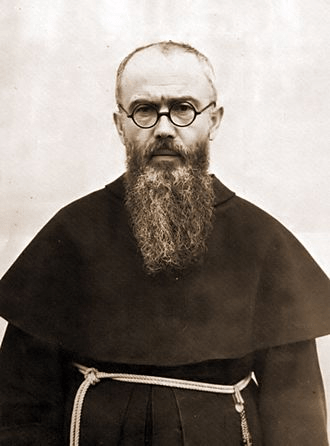
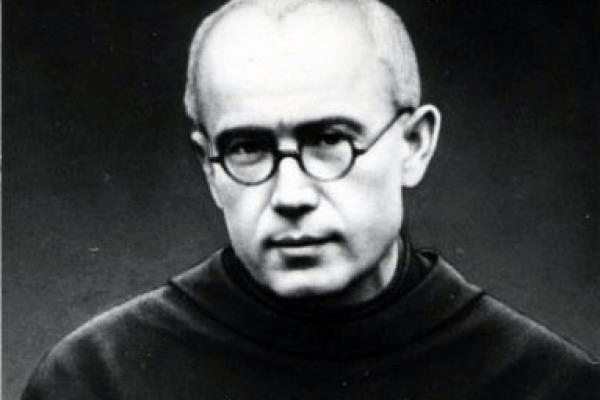
Mark the name, Maximilian Maria Kolbe. Have you heard of him? Mark the name: he’s worth remembering.
The world has just marked the death of Shane Keith Warne, Australian cricketer of fame and legend and now, in death, memorialised, his name on an MCG stand and to be remembered and celebrated for … a hundred years at least. Prematurely gone, only 52, now feted by Michael Jordan, Ed Sheeran, Liz Hurley, Alan Border, Elton John and many other celebrities, his memorial service beamed around the world, hyperbolically accoladed and lionised.
No one would say his honouring was undeserved [although, was it?]. Awesome spin bowler, personality larger than life, and latterly famous for being famous. Everyone loved Warnie.
Kolbe’s death was utterly unaccoladed. He died of starvation, thirst and carbolic acid, aged 47, in an Auschwitz cellar. What makes his death remarkable is that he died voluntarily in the place of another man.
Kolbe was a Catholic priest, Polish. In May 1941 he and four others were taken to Auschwitz, where they, along with other prisoners, were slowly and systematically starved. In order to discourage escapes, Auschwitz had a rule that if a man escaped, ten men would be killed in retaliation. In July 1941 a man from Kolbe’s hut ‘escaped’. [The dreadful irony of the story is that the escaped prisoner hadn’t, but was later found drowned in a camp latrine.]
“The fugitive has not been found!” commandant Karl Fritsch screamed. “You will all pay for this. Ten of you will be locked in the starvation bunker without food or water until you die.”
The ten were selected, including Franciszek Gajowniczek. On hearing his name he cried out in anguish. “My poor wife!My poor children! What will they do?” When he heard this cry of dismay, Kolbe stepped silently forward, took off his cap, stood before the commandant and said, “I am a Catholic priest. Let me take his place. He has a wife and children.”
Others looked on in horror, expecting the commandant would be angered, and would order the death of both men. He remained silent, however … before granting the request. Gajowniczek was returned to the ranks, and the priest took his place.
We know the story because Gajowniczek survived the war and told it. He recalled: “I was stunned and could hardly grasp what was going on. The immensity of it: I, the condemned, am to live and someone else willingly and voluntarily offers his life for me – a stranger. Is this some dream?”
Kolbe was thrown down the stairs of Building 13 along with the other victims and simply left there to starve. For the next long days he encouraged the others with prayer, psalms, and meditations on the Scriptures. After two weeks, he was one of only four still alive. The cell was needed for more victims, and the camp executioner came in and injected a lethal dose of carbolic acid into the arm of each man. His wait was over …
Apparently Kolbe’s heroism echoed through Auschwitz. Another survivor Jozef Stemler later recalled: “In the midst of such brutalization … never before known, into this state of affairs came the heroic self-sacrifice of Father Kolbe.” Another survivor Jerzy Bielecki described Kolbe’s death as “a shock filled with hope, bringing new life and strength … It was like a powerful shaft of light in the darkness of the camp.”
Shane Warne was a wonderful cricketer, gone too soon. But Maximilian Kolbe gave his life for a stranger; his name truly deserving of honour and memory.
(Based on Luke 15:11-32; Ps 32; 2 Cor 5:16-21; Josh 5:9-12)
This theme is water-marked in all of today’s readings. This theme we know well from our experiences of life:
Infancy to childhood to adolescence to adulthood to middle and older years
For many, single to married life – and perhaps single – or married – again!
The transition into parenting and grandparenting
Moving house, transiting to other towns, even countries …
Transitions of work, health, finances, relationships
Transition from non-faith to faith
And so on – some transitions we choose, and some we cannot avoid.
Do we need to locate our inner disposition to such transitions? Do we resist them? Tolerate them? Do we endure them? Do we embrace them? Do we trust God with them?
Looking at today’s readings.
Psalm 32 dramatically describes the transition from resistance to God, an unwillingness to front up and be honest with God, to not hiding, to fronting up, to acknowledging the need for forgiveness – and finding God’s steadfast love, and so shouting for joy … Here indeed is a fundamental transition.
In Joshua 5, God speaks: “I have rolled away from you the disgrace of Egypt” – [slavery]. Nations, communities, churches, believers, all of us need to check from time to time whether ideologies, inappropriate rules and laws, our own habits, are enslaving us. What we need to do is travel to freedom! Also in Joshua there is another transition – the Israelites on the plains of Jericho – the oldest city in the world, I’m told – ate the produce of the land, and the desert manna provided by God ceased. So this nascent nation transitioned from just being receivers from God, to being co-workers with God – eating the produce of the land they worked on.
II Corinthians 5: the core transition from knowing about Jesus the Christ to knowing and being befriended by him. His gracious reconciliation gives us the ministry of reconciliation, healing and bridge-building. Again … receivers transition to givers. We are ambassadors for Christ. That is our primary identity … we do any little thing we can to represent him. We are a new creation, and we are to pass that on. Old transitions into new.
Luke 15: I expect the Good Samaritan and the Prodigal Son are the best known parables of Jesus. The first illustrates that Kingdom life is unexpectedly found in the heretical Samaritan’s kind action. Another transition. And the in parable of the two lost sons, or the prodigal son, or the waiting father, there are many transitions:
From isolation to community
From a far country to home!
From vulnerability and sin to protection
From foolishness to welcome, and a party
From grief to joy, and
From death to life.
So –
Are there transitions happening to us? And, how are we handling them? Who can help?
Are there transitions we need to make, but are resisting? Who can help, and give us courage?
Are we aware of others making transitions? Can we be of help?
And, yes, again, will we trust God with all our transitions?
I suggest that what makes transitions enhancing are these:
When we address them with a sense of adventure;
when we let go what needs to be let go of;
when we are anchored in the guiding good God;
when we reach out for reliable advice;
when we pray expectantly – trusting God;
when we make unhurried and informed choices.
And in these uncertain days, may our constant and heartfelt personal and corporate prayer be that there are transitions from European war, to peace; from Covid, and all disease, to health and wholeness; and from indifference and unbelief, to belief.
This Gospel reading is certainly a reading for today isn’t it. We find just as we avidly follow the news today and try to make sense of it, the folk here are addressing the news of the day and are asking Jesus to make sense of their news: why did the Galileans suffer? why were the eighteen killed when the tower fell on them? they asked Today we would ask … why is the Covid pandemic gripping our world? why is there war in Europe, causing deaths and devastation? Why? Why? Why?
Many years ago, or perhaps just the other day, when I was a child of about seven and my brother was three, he went through a stage of … Why? “Come inside, Marty, it’s time for your bath,” called Mum. “Why?” “Because it’s nearly tea time.” “Why?” “Because dinner’s ready to go on the table.” “Why?” “Because that’s where we all eat.” “Why?” By this time Marty was directed, smartly, by an exhausted mum, to the bathroom. This stage of “why” was not fleeting … and doggedly went on for many months until one day in response to yet another “Why” from Marty, Mum turned around and said, “Just, ’cause.” And silence reigned. Marty, apparently satisfied with this, did as he was asked and “why” was put to bed, at least for a while.
Why do bad things happen to good people? seems to be the question asked of Jesus. This is an age-old question, isn’t it. I suppose to ask “why” is to be human. We can’t help ourselves; we want to understand. We want to make sense of the world. We want our lives to be logical, reasonable, orderly, sane. Of course, not all the whys of the world are bad; some can lead to really positive outcomes – an example being Sir Alexander Fleming’s discovery of penicillin. When Fleming returned from a vacation to find that a mould had developed on an accidentally contaminated staphylococcus culture plate, he noticed that the culture prevented the growth of staphylococci, and thus the “why” of this became life saving penicillin. But … mostly the whys are because we try to protect ourselves with rationalizations and false assurances. We still crave a Theory of Everything when bad stuff happens. We still look for formulas to eradicate mystery, and make sense of the senseless.
When the unspeakable happens, what default settings do we find we revert to? “Nothing happens outside of God’s plan.” “God is growing your character through this tragedy.” “Don’t worry, the Lord never gives anyone more than they can bear.” “Nothing is ever lost.” “Buck up — other people have it worse.”
The problem with every one of these answers is that they distance us from those who suffer. They keep us from embracing our common lot, our common brokenness, our common humanity, and also within these answers we tritely give, it is somehow implied that God was responsible in the first place!
The Good News is here in this reading from Luke: we find Jesus firmly opposes the widely held belief that God punishes sinners with suffering. In fact, as we read on he says that God is like a patient gardener who will give an unfruitful tree another year to produce. Not a mention of a chainsaw here! God does not punish sin, Jesus says, but gives life. The difference between an image of God as a law-giver and God as a life-giver is huge. Jesus seems to strongly prefer the image of God as a life-giver. The law-giver demands obedience, and rewards or punishes our performance. It’s a relationship based on demand and fear. The life-giver certainly wants us to love one another (as described in God’s laws) but our love is a fruit of our being loved. It’s a relationship of gratitude and trust. God’s response to our disobedience is not punishment but more love, until we bear fruit.
Repentance is a matter of allowing God to love us out of our sinful ways. When our daughter Lissy was very little she had, as most small people do, a great passion for my pretty bits of jewellery. She loved to put them on and pretend she was a princess or a queen or perhaps even just her mum. Lissy knew, however, she had to ask before she played with my trinkets. One day I came home from work and found a favourite cross in pieces with a note attached. The note said, “I am so sorry about breaking your necklace Mum. I didn’t mean to I was just playing with it. It is the one with the golden cross. Please forgive me. WILL YOU?” (‘will you’ in capital letters) … and a picture of a face with tears coming from the eyes.
Now, who thinks at this time I should have sat Lissy down and reminded her about Number 5 of the Ten Commandments (Honour your father and mother) and follow that swiftly with the rod suggested in Proverbs 13? Or even ask why it had happened? Well, I didn’t, and I didn’t need to. Lissy at her tender age had realized she had transgressed, she had confessed and she had asked forgiveness, and I with my heart filled with love, gave cuddles and kisses to my darling daughter and the longed for forgiveness. I still have the note from my very loving daughter, laminated, a reminder of many things. It reminds me, firstly, that because Lissy put into words her wrong doing, I was able to forgive easily and with love, a life-giving moment for both of us. And, secondly, most importantly for me, that this is all God requires when we transgress. A contrite heart. God loves us unconditionally, with an extraordinary, absolutely, overwhelmingly unreasonable love that … never ends … it is the only thing that will last.
Why? Just, ’cause.
Pastor Steve Garnaas-Holmes writes this of today’s reading: Why do bad things happen to good people? Because things happen. God is not an algorithm. Did the eighteen people crushed by the wall deserve their death? No. Does the struggling tree deserve to be cut down? No. Jesus dispenses with the idea — the demonic lie — of deserving. There is no such thing. God is not bound to the past and our performance in it; God is in the present moment. God is not a cashier, dispensing what we’ve earned. God is life, and the giving of life, and nothing else. No compromise. No conditions. There is no “deserving”. It is the lie of Satan, luring you into the past, into fear, into bondage. It does not give life. God’s will is not what you deserve, but what you need. Regardless of the accidents that befall you, regardless of evil you do or the evil you suffer, God’s will is to offer what you need to live fruitfully, which is always mercy. A tree that is not fruitful needs nourishing. A person who is not righteous needs healing. A son who has distanced himself needs family. People who crucify need forgiveness. A Beloved who has died needs resurrecting. Dare to abandon your calculations and its illusion of control. From Life there is only the giving of life. Receive, and you will have fruits to give.
Why do terrible, painful, completely unfair things happen in this world? I don’t know either – it is mystery. But I do know we can respond by sharing this God-given gift of life with the ‘what happens next’ for others … if we go and weep with someone who’s weeping. If we fight for the justice we long to see. If we confront evil where it needs confronting. If we learn the art of patient, hope-filled tending. If we cultivate beautiful things. If we look our own sin in the eye and repent of it while we can. Time is running short. The season to bear fruit has come. Repent. Do it now.
With thanks for thoughts, clarifications and words from my fellow pilgrims on the journey, Debie Thomas of Journey with Jesus, Pastor Steve Garnaas-Holmes, and the Working Preacher website.




 stfrancischurchtairuanz
![[John 15:12-13]](https://stfrancistairua.com/wp-content/uploads/2022/04/love-4.jpg?resize=438%2C438)