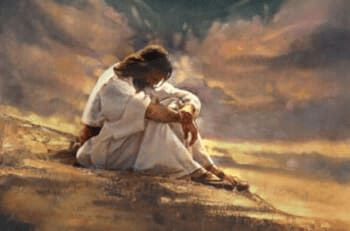
Easter is now!

by Joan Fanshawe
[with thanks to Jim Friedrich for some inspiration:  jimfriedrich.com]

(Referencing John 20:1-8; Acts 10:34-43)

We have come through a very interesting Lent season – each week meeting a different character involved in the last days of Jesus’s life and ministry before the crucifixion. We’ve heard the bluster and excuses, the ‘official speak’, self-justification, the contempt – but also questions, fear, regrets and sorrow.

Some of these narratives hit home to us in our own lives. These human behaviour traits are surprisingly little changed and still very much experienced in lives today. It’s been very real and often quite moving. We have been immersed in the Easter story in a new way.

Today – Easter Day – we are picking up the excitement of the Resurrection.

I love this quote by the late Sebastian Moore, a well known Dominican monk: “The original disciples were shocked into bliss by the Resurrection – and they never recovered.”

If we’ve been moved by the accounts of those characters through Lent, how are we moved by the Resurrection? Shocked into bliss?

Not us – we’re Anglicans!

But are we changed at all? Are our Alleluias genuinely heartfelt?
Can our lives be transformed today – continual transformation, perhaps?

Easter isn’t something we remember. Easter is now, for people of the Way. Something we live and breathe. Ours is an Easter faith.
However, since it only occurs once a year, Easter Sunday is sometimes mistaken for a commemorative anniversary of a past event.
I’ve read that the earliest churches treated the ‘Paschal mystery’ of Christ’s death and resurrection as the timeless (or timely) subject of every eucharistic liturgy. The establishment of an annual observance of ‘Easter Day’ was a later development.

The Resurrection, although breaking into history on a specific occasion, is not the property of the past. As God’s future, showing itself in our present, it belongs to all times and seasons. Jesus is alive, still showing up as a transforming presence in a world that feels filled with absences. Jesus is not over, and his story is not over.

The central question of the resurrection is not about belief, however – as in, what did happen to Jesus way back then? But, rather – where is Jesus now – for us? We need to allow the resurrection to question us – who are we now – in this time and this place – in the light of the risen Christ? An Easter faith affirms the continuing presence of the living Christ among us, now and always.

That presence is not always clear or obvious. Even the saints wrestle with doubt and absence. Sometimes our awareness of God seems to withdraw for a time. Sometimes it is we who are absent — distracted, inattentive, looking in the wrong place, using the wrong language. Divine presence can’t be switched on, or grasped possessively. It is elusive. And it is fond of surprise.

But we are not left without clues. Jesus tells us, “If you want to keep experiencing me, love one another. Forgive one another.” That’s where we meet the risen Christ – in the life of forgiveness, reconciliation, peace, justice, love. Where love and charity abound, there God is, there Christ is. It’s not enough to proclaim resurrection. We need to embody it.
As Rowan Williams (recent Archbishop of Canterbury) explains: “The believer’s life is a testimony to the risen-ness of Jesus: he or she demonstrates that Jesus is not dead by living a life in which Jesus is the never-failing source of affirmation, challenge, enrichment and enlargement.”

In John’s account of that resurrection morning, there’s lots of running. Lots of amazement! It feels so current!
We too must hasten (maybe not running!) to share the gift and the challenge of the resurrection – both in our lives in this community of faith, and in our own private selves.

Then may the whole world will one day see and know a church which has been shocked into bliss – and has never recovered!

Alleluia, Christ is risen; He is risen indeed.

.

Take a Risk

You’d think we’d take greater risks as we get older.  Young people take risks.  They have their whole lives ahead of them, so much potential, so much to live for, and yet seem willing to take inordinate risks with their time and choices and fitness and health.  Older people, not so much.  Yet, having completed a substantial part of their lives, having (perhaps) achieved their goals, having seen their children out of the nest … you’d think that would be the time to step out, do something radical or outrageous.


But it doesn’t seem to happen that way, so much.  Why not?

Well, there are some obvious reasons: there are brain development factors for a start!  The young brain lacks … well, most things.  The older brain is more cautious and conservative (perhaps because the older person has acquired more, has more to conserve).  Perhaps the closer we get to end-of-life, the more tenacious our survival instincts become, so more risk-averse.  Or perhaps we just get more chickenhearted.

Whatever the reason, what about it?
I saw a thing on TV (yeah, I know, younger people don’t watch TV either; older ones do) presented by a middle-aged guy called, appropriately, Guy.  Guy Martin, actually.  A blue-collar likely lad (from Grimsby).  For the programme, he was training with the Royal Marines for a re-enactment of the World War Two D-Day landings, by parachute – training for something he’d never done before and had no obvious aptitude for.  He did pull it off, magnificently, and my heart was stirred.  How wonderful to recapture those adrenaline-filled moments of crazy, no-limits youth!

Those days of adventure, of testing yourself against the unknown, of challenge and comradeship.  Making your way in the world against all odds.

As we age, to be sure, we acquire responsibilities – and we become more responsible human beings.  As well, our physical capacities decline and adventure opportunities lessen, so doors close to us.  Some have a fling.  Some buy a motor bike.  Some get a camper van and go touring or travelling.  Some take up a hobby.  Well and good.  All of these fill some of the need, but … do they really?  Youthful joys still fade and wither, figments now of a rosy memory, inflating in the telling.  (“The older I get, the better I was”!)

Well, life is to be lived, surely, at every stage, in every context.  The cards in front of us, even if they’re a poor hand, need to be played for all they’re worth, with energy and enthusiasm and gratitude.  Get your camper van, by all means, if you can afford it; or join a club, or travel.

Or, for the really cautious, conservative or financially challenged, here are a couple of ideas for stepping out:

  1. Learn something new.  Pick something – anything – preferably something that will stimulate you.  Eg, astronomy, the laws of gridiron, Spanish, juggling or uni-cycling, military history, chess, dancing …  Even better if you can do it with a friend, or a group, or a club. Learn JavaScript coding. Buy a drone.
  2. Write your legacy.  Document what you want people to know about you when you’re gone; what you’d like your grandchildren and descendants to know or be; your reflections on things that were important to you; things you did or thought in your earlier life that you’ve never shared …  If you’re not really a writer, enlist someone who is, to help you, or ghost-write for you – therein is the collegial part.  The comradeship of yore.

Go on.  Brainstorm.  Don’t watch TV. Take a risk.

Artist

(dedicated to Jackie)

She stands ….
Focussed and drawn.
Design etched in the lines of her face.
Hair hangs untrained,
Forgotten in the pursuit
Of her art.

She kneels ….
Detail applies.
Drawing forth a pout and a frown.
Her character defined
In the concentration
Of her brow.

She lives ….
Energised by shape,
And an idea half-formed in mind.
Alive within the work:
Extended arm, and
Fist and brush.

She rests ….
Shoulders reflect.
Critic and judge perform their rites.
A wipe and a knife
Brandished till canvas
Is just right.

She turns ….
But lingers, drawn.
Loathe to abandon a work unfulfilled.
Tempted to stay;
Consumed in the art
That beguiles.

She sleeps ….
Face lines relaxed.
Surrendered at last to the night.
But lost in her dream
She stirs in restless grip
Of ideas.

Questions That Really Matter

I feel there’s more to be said about dying, but I’m unsure what (following my previous blog here).  There are many views, and so many have no views at all, and it’s a sensitive subject.  It’s something so many dare not think about.  Yet, it’s the most important question anyone can ask: “What happens when I die?  What happened to Grandpa when he died?  What happens to anyone after they die?”
Such important questions, but questions, really, without answers.  So, what is there to be added here?

At the risk of getting it wrong, here’s a stream of thought:
Humanity has always had an expectation of life after death.  Many – most – First Nations and indigenous people buried their dead with tools, weapons, utensils … things they presumed they’d need in their next life. Where does this expectation come from?
Whence comes that oft expressed hope and comfort that a loved one is now ‘one of those stars up there, looking down on us’, or ‘Mother is still with me – I feel her presence all around’?  Or other fanciful notions, fashioned to explain the unthinkable – that Grandpa has really gone forever.

There’s something in the heart of men and women which rejects the notion that death is a full stop.  Like, there must be something more, right? Something after death.

Trouble is, no one has ever returned to tell us, confirm it, that there is something more.  Except Jesus Christ, if you subscribe to that hope.

Actually, if we dare to face the issue in a measured way, the claims of Jesus have to be confronted.  We ignore them at our peril.  We can’t afford to unthinkingly take on the common but uninformed opinions and fancies of people who deny any life hereafter.  What do they know?  They know nothing, have no evidence, no authority.  Yet that’s the opinion we mostly go with, because what else can be true?  Surely this is all there is, here and now, because the alternative conclusion carries profound implications, which we don’t dare buy into.

It’s not for me to say.  I have no authority either.  But Jesus’s claims need to be assessed.  He was undoubtedly a historical figure.  (There is more documented evidence for his existence in history than for most other historical figures whose existence we never question.)  And this Jesus claimed to be the portal to eternal life.  A wild claim! Scorned and spurned by an increasing majority in our world.  But he claimed it and, if you accept the truth of it, he rose to life again after his execution, asserting and evidencing an after-life.

Truth or fiction?

There’s a simple test: that historical Jesus was either mad (yet, read his teachings – surely not the wisdom of a madman), or he deliberately lied (yet it was a lie he willingly and without recanting or trying to escape it, went to the Roman cross for), or he spoke the truth. Mad, lie or truth?

Dying is a bewildering, scary mystery for we on this side of it, but one for which there are clues if we have the wit and courage to soberly evaluate them.

Start with John 14:1-6 and Psalm 23:6.