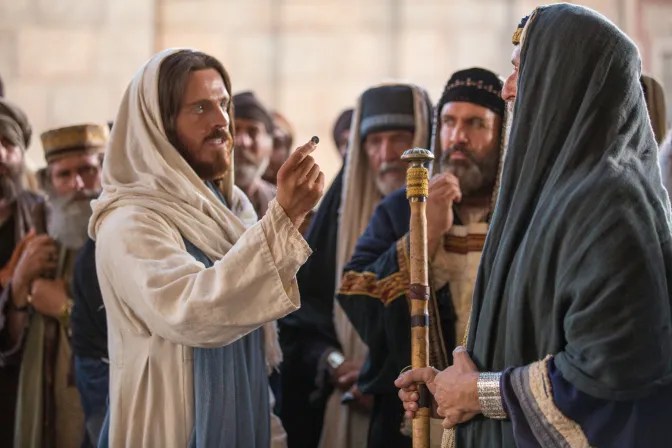
Render unto Caesar the things that are Caesar’s and unto God the things that belong to Him.
As well as proposing the readings for today, the lectionary reminds us to honour, well, Cyrus the Great, emperor of Persia (now Iran), and Alfred the Great who burnt the cakes – leaders who were also great thinkers. Tuesday is the day set down for praying for the United Nations. So, let us pray that our newly elected leaders have the grace and wisdom to govern wisely. We each of us will have our own heroes of this age – Mother Teresa and Desmond Tutu spring to mind – but we may also have unsung heroes; let’s each honour and thank God for the unsung heroes in our lives.
But back to the Gospel reading. Why did the Romans collect taxes? To pay their army that kept their huge empire, that covered Europe, the Middle East and the northern coast of Africa, at peace. An army whose legionnaires came from all corners of Europe, including the blond Angles whose cheeks were painted blue with woad. And for those legionnaires, the army was their family. Those Roman legionnaires, in Jesus’s time, may have found keeping the peace in Israel a little irritating: the Jews tended to be argumentative. They were a ‘stiff necked’ people who wanted their independence, the echoes of those times resonating now as Jews and Mohammedan Arabs fight over that same narrow strip of land today.
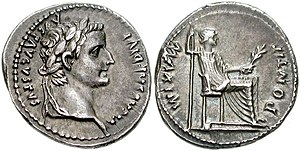
The whole of Matt Chap 22 is devoted to instances where the Pharisees were hoping to catch Jesus out for false teaching. They were the honoured teachers of the Law, and he’d criticized them for honouring the text but not necessarily the Spirit of the Law. Think of the implied criticism of the Pharisee in the story of the Good Samaritan. In Jesus’s day tax collectors were unwelcome among the general populace, but Jesus enjoyed their company, as he enjoyed all peoples. Taxes were paid in coin and when presented with a coin with the Emperor Tiberius’s head on it, Jesus disconcerted the Pharisees with His words, “render unto Caesar the things that are Caesar’s and the things that belong to God to Him”. He didn’t counsel acceptance of political authority; but neither did he incite rebellion. How should we as Christians respond to authoritarian political systems? [Remembering the rise of the Nazi party from 1932, surely we should condemn authoritarian regimes from the moment they emerge.]
Returning to our times, very little of our tax money goes to pay our army, or to protect our borders – though we do have to protect our fishing grounds and those of the islands in the South Pacific. A much higher percentage of our taxes is spent on health and education, and support for the poor. I’d like us to make it clear to our politicians that most of us would like even more spent in these areas. And I, like many others, would be happy to pay death duties, though I haven’t asked my children about this! Being a retired paediatrician, I know that money spent on our children’s future pays off in the long term. I may be wrong, but I feel we have invested far too little on education, and many New Zealand parents do not value good education enough. Why are many Asian children top of their classes? Is it because their parents push them? I and my children were of an era when you decried swotting for intellectual success, attributing it to luck. Today our teachers are paid the minimum; we need to pay them more, and let them know we value them. How many of us would like to spend the day controlling thirty kids, many of whom feel they have the right to act individually? How much easier it would be to be a teacher of a class of NZ Asian children who want to learn, and want to fit in with the group, than to teach thirty unruly individuals, who just want to be outside.
What else do we need to spend our taxes and our rates on? Our roads, our infra structure, our water quality … there’s quite a list. I do acknowledge that the rich, those who can pay for the best legal and investment advice, pay less tax than they should do. But we baby boomers have enough financial support in our retirement, mostly because we had free education and a friendly job market. Let us encourage our politicians to spend more on our youth and the socially disadvantaged. Most people want paid employment, and most of our social support comes from those we work with. Yes, perhaps five per cent of our population are unemployable and we need to accept our responsibility to support them, but let’s also make a pathway to employment achievable for those who want to work, whether they’ve been in prison or made a foolish mistake, or not.
To move on, I’m a great believer in giving ten per cent of my disposable income to charity. Although I do have a standard reply to those annoying 5pm phone calls: that my charitable budget is 90% fixed, so please don’t interrupt my relaxation time!
So, I encourage you, when you pay your taxes, to think of who will benefit from our well earned money. It may make you feel better.
Jesus was being condemned by the Pharisees for upsetting the status quo. (Are we ourselves prepared do that?) But how do we recognize what belongs to God and what we should give Him? Perhaps through a thankful heart. How should we spend our energy, how should we live as Christians? Quoting Marcus Borg (American New Testament scholar and theologian), “We should pay absolute allegiance to our ultimate God, rendering our entire selves to him without preconditions or limits, without hedging our bets. This is a higher and harder calling, that will take us a lifetime.”
We know that when Jesus spoke to his followers he often used parables as a way of communicating challenging ideas in everyday language and context. Bible scholars have counted between thirty and fifty of them (depending on the definition of a parable they have used). Jesus did explain that even though they were simple stories they would be incomprehensible to those who chose not to believe, saying things like, “Though seeing, they do not see; though hearing, they do not hear or understand.” So I urge you today to really open your eyes to see and your ears to hear!
When I started my preparation for this talk, I was initially struck by the harshness of the language used in this parable, and the actions of the King, and wondered how that would be heard today. It got me thinking about the messages I heard in church as a youngster. God in those days was an aloof, vengeful and demanding entity. These days, when the pendulum of portrayal has swung towards love and inclusion, we don’t like to dwell too much on harsh things – perhaps to our peril, I think. All that the Bible contains, the kind and gentle bits and the rough and challenging bits, needs to be considered in context and in relation to all parts.
And on that, last weekend we attended Life Church in Manukau and the preaching was the first in a series on ‘God’s Word’. The pastor used the time to establish the authenticity of the Bible. The Bible, he explained, was compiled over some 1500 years, across three continents by forty-odd writers, but authored by one Almighty God. He showed a pictorial of how the passages of the Bible cross-reference each other. It showed some 63,000 (cross-references) but he said that there could be as many as 300,000! His point was that the Bible was reliable, consistent, and usable.
Then yesterday, the Word for Today reading was titled Finding God in your Bible. It said this: “President Woodrow Wilson said, ‘I am sorry for men who do not read the Bible every day; I wonder why they deprive themselves of the strength and of the pleasure. It is one of the most singular books in the world, for every time you open it, some old text that you have read a score of times suddenly beams with a new meaning. There is no other book that I know of, of which this is true; there is no other book that yields its meaning so personally, that seems to fit itself so intimately to the very spirit that is seeking its guidance.’”
Reliable, consistent, and usable!
Anyway, back to our consideration of the Gospel parable today: I realised that I needed to temper what I had perceived with a clearer understanding of what Jesus had been saying, to whom and why. I think the reading should have started a few verses earlier. The parable before this one was about ‘the evil farmers’. It was about the tenant farmers who refused to share their crops with the landlord. They killed messengers, servants and eventually the landlord’s son, refusing to surrender anything. When Jesus asked the listeners what should happen to these evil men, they responded by insisting they should suffer horrible deaths. The parable was actually about the leading priests and Pharisees and how they were refusing to give way to the arrival of the Messiah. Instead of taking stock of what they had been doing, and paying attention to what they were now hearing and seeing Jesus say and do, they were clinging to enforcing the Law and keeping the people enslaved. They were rejecting Jesus. They wanted to arrest him and do away with him, and the only thing stopping them was their fear of the crowd’s reaction.
So, as we hear today, Jesus adds a little more fuel to this fire by telling today’s story right on top of that about the evil farmers. The story of the great wedding feast, Jesus explains, is another illustration of the Kingdom of Heaven. And he’s directing his message at those same religious leaders to reinforce that they’re rejecting the Messiah. The parable begins with wedding feast preparations being completed and the call for the guests to arrive but, when summoned, the invited ones all refuse to attend.
The King then sends his envoys out again to the invited ones to explain that everything was ready and waiting for them. “Come to the banquet!” was the call! But again they refused, claiming to be busy, some assaulting and even killing the messengers. This really ticked off the King and the army was dispatched to deal to the murderers. Then out go the messengers again to all and sundry, asking them to attend the wedding feast in place of the unworthy originally invited guests. This met with more success and in they rolled, filling the banquet hall.
But when the King arrives at the feast he notices that one of the new guests isn’t dressed for the occasion. When he inquires as to the reason why, the man has no answer. On the King’s instruction the man is seized and bound and thrown into the “outer darkness” – a clear reference to Hell, the polar opposite of Heaven. The King explains his actions with the now famous verse, “For many are called, but few are chosen.”
Harsh?
This parable is another slap in the face to the Pharisees. It should have been a wake-up call. Jesus is pointing at their hardened hearts. They thought they were shoo-ins for the Kingdom of Heaven; after all they regarded themselves as the in-crowd. They thought their lineage guaranteed them a place. But Jesus is making it clear: everyone is invited. No one is there by right or status. It is open to all. No favourites.
Come to the banquet!
Picking up again on the point I made earlier about how we are seeing God. As loving and inclusive as he is, we don’t just march into Heaven. Jesus is pointing out that we have to have manners, and answer the invitation. And we have to make an effort to be prepared, cleaning ourselves up and showing we are ready. And not presume on our status. Jesus pulled no punches. He showed the Pharisees exactly where they stood. Everyone has been called, but they assumed they had been chosen! And, as shown by the treatment of the man not wearing the proper wedding clothes: when given the opportunity to apologise (repent) – and join the party – by the King, he remains speechless. He cannot admit to his error. So the King throws him out. Not because he is unworthy, because everyone (you and me included) is unworthy, but because he refuses to enter ‘worthily’. [And this had/has relevance to the nation of Israel, who wouldn’t admit their faults, refusing to enter the party worthily. That’s what Jesus was getting at.]
What can we take from this into our own lives?
At Life Church the pastor was asking the same question in regard to how we read and meditate on Scripture. He offered an acronym, SPECK, as a possible aid.
SPECK stands for Sin, Promise, Example, Command and Know. Is there a SIN to be avoided? Is there a PROMISE to be claimed? Is there an EXAMPLE to be followed? Is there a COMMAND to be obeyed? Is there something to KNOW about God?
I am always amazed that the Holy Spirit shows me things the way He does. In the Word for Today reading from yesterday, that I mentioned earlier, the writer continued: “If you want to get the most God-stuff out of your Bible, ask these questions: (1) Is there a warning to heed? (2) Is there a promise to claim? (3) Is there a sin to forsake? (4) Is there a command to obey? (5) Is there a lesson to learn? (6) Is there a principle to apply? (7) Is there an example to follow? “As you ask yourself these seven questions, keep a journal to write down the answers God gives you, and you will be amazed at the wisdom you glean. You will be thrilled by the success principles you learn. Your anxieties will begin to lift, your mind will clear and you will experience peace.”
I reckon we were all meant to hear this! In fact, these tools could be a help as you go home to try to figure out what on earth I was talking about today. As I applied the SPECK analysis for my own benefit to the parable I came up with avoiding the sins of pride and arrogance, not following the Pharisaic example, and that God is loving and welcoming always! [This is my personal evaluation, what God wanted me to think about. It may be different for each of us.]
I didn’t always act on such knowledge. I confess that I was one who heard the invitation (many times) and spat on the host! The great thing though is that he reissued the invitation, again and again, until eventually I was no longer busy, no longer distracted by the world, and a little less self-absorbed and could accept the offer! Perhaps now you will understand why I love the song we often have for our offertory hymn, “Come to the Banquet, There’s a Place for You”! There was a place for me. And, if you’re not sure, there is a place for you!
I particularly identified with the call, once the invitation had been accepted, to be prepared – to make the changes necessary to ‘worthily enter’ the feast. I used to have a foul mouth. These days I have an almost natural control over my cussing and swearing. The things of the past that absorbed me and tempted me no longer have a strong hold over me. I learned in Scripture that our hearts are to be found in what we value. To that end, our Philippians reading today has made it to my ‘top of the pops’, with verse 8 an easy one to show what I mean: “Fix your thoughts on what is true, and honourable, and right, and pure, and lovely, and admirable. Think about things that are excellent and worthy of praise.” I endeavour to take this positive approach so that I am not looking back at the past or living with regret, shame and fear.
Let’s look at the concluding phrase from the parable one more time to cement our understanding. “For many are called, but few are chosen.” In the big picture, Jesus is referring to anyone who hears the Gospel. Each person must decide how they will respond; whether they accept or reject the invitation. The Bible says all of us are called, invited, to follow Jesus. No one is excluded. But it’s a choice; following Jesus can’t be forced. “Anyone with ears to hear should listen and understand.” Because we are all chosen, we can all hear. But we must each decide what to do with what we hear.
And if you haven’t been convinced about how the Holy Spirit works: In my readings this morning I read Revelation 3:20 – “Look! I stand at the door and knock. If you hear my voice and open the door, I will come in, and we will share a meal together as friends.” Confirmation that Jesus is seeking that personal relationship with us.
By way of a conclusion, I’d like to acknowledge a key moment in my faith story. Bruce was the priest on a particular day when I attended St Francis to help Keri manage my dear old mum, Win. Win had suffered a couple of strokes before she arrived at Tairua Residential Care as an “inmate” (as she called it). Keri had invited her to attend the services at St Francis and as a dutiful son I attended to help her in and out. Win was a very compliant and obliging woman. Seeing how everyone was assembling at the altar rail for communion, she had to join them. As she started to pull herself up from her seat I moved alongside to assist her. As people gathered at the altar rail, Bruce announced that to receive the bread, hands needed to be held out. If he couldn’t see any hands this would indicate that a blessing was sought instead. Observing the hands being held out to receive the bread, Win too reached forward, forsaking her steadying hand on the rail, and started to rock slowly back and forth. Standing a step below her so as to not obstruct the flow and avoid being mistaken for a communicant, I stepped up to grasp and steady her just as Bruce approached with the bread. Win got her bread and Bruce got to me with no hands visible. He reached out, placing a hand gently on my head and prayed a simple blessing over me. This was my invitation!
My response was to shatter into tears. Taken by surprise, I realised that something major had just happened.
I now realise that the invitation had been offered – and accepted!
Did you notice that Jesus turned his theological question into a personal query? “Who do you say that I am?” So, ‘who do we say that Jesus is?’ Without using any religious or institutional language like what is in the creeds or majestic hymns … take a breath, think, and then share with your neighbour a response to ‘Who do I say that Jesus is?’.
Brilliant. You have all showed that you can express some thoughts about Jesus’s identity, although many of us may be saying that it probably doesn’t do justice to him. Regardless, Jesus commends and blesses Peter … and us for our answers.
Perhaps it is easier to turn the question around and ask ourselves “Who do I say that I am?”. Summarise briefly with your neighbour ‘who you are’!
Who do I say that I am?
He kākano ahau. (I am a seed)
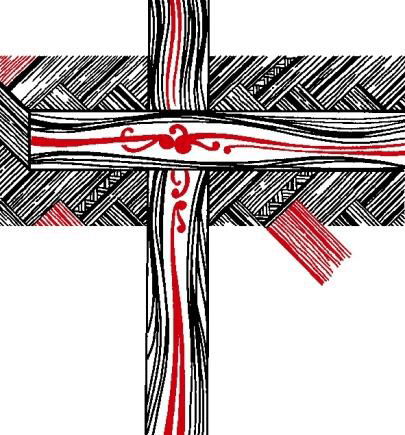
This is a seed pod. It’s a sign and a promise that something has emerged and flourished. He kākano conveys growth, development and expansion, not power nor greatness. Even before a seed is planted or nourished, it has inherent promise to take root, to emerge, and to flourish.
A person, like a seed, is intrinsically linked into generations who have been and are yet to come as we are all part of a life cycle. He kākano, a seed, derives from somewhere, belongs to something, and cannot be isolated or detached from its whakapapa.
He kākano ahau accepts that our existence is accountable to all forms of life, and not to ourselves alone. As a seed, we concede that we must not knowingly cast ourselves above another or to lay claim to what is provided for all, because collectively we grow for the good of all.
He kākano ahau, is about being deeply immersed and connected into the biological diversity of our planet, and is based on a mutual cooperation with all elements of life. [Much of this is from Jacynthia Murphy in her chapter in Awhi atu, Awhi mai.]
In today’s passage the disciples are still struggling to name ‘who Jesus is’ to them, in a lay language. Maybe it’s also because they are struggling to know ‘who they are’, as well. Peter gives it a go, just like we have, and Jesus comments that on him, on us, he will build his church, a faith community.
Peter and the disciples were seeds that grew strong roots; they emerged into society with a message and the message has flourished. As church members today, we know that without the seeds of past members of faith, we would not have what we have built here today. A faith community, with the Scriptures, facilities, being part of an institutional organisation, etc.
What got us to where we are today? I would sum it up in one word: Friendship. [Some of the following is taken from Called to Question, by Joan Chittister.] Friendship is a holy thing, but it is not an easy thing. Love and friendship take us out of ourselves, but if there is nothing in us that is ourselves alone, there is nothing in us to give away. Part of the process of becoming ourselves lies in having someone alongside us whose wisdom assists us to know who we really are. It lies in learning to tell our truth.
“When we have friends and really share our truth with them, it changes the way things are from the inside out,” Donna Schaper writes.
The problem is that once we come to the point where we have a truth of our own, we have to decide when it is right, and when it is safe, to share it. This struggle is a real one, especially in our digital age. Friendship, the kind that develops us, enables us to carry our own burdens by helping us to understand them. It gives us confidence to share our thoughts and our concerns with one another. Friendship enables us to become ourselves, not a duplicate copy of someone else. It provides a measure by which we can assess ourselves: our emotional responses, our physical appearance, our intellectual perception, and our social desirability. Friends are a very necessary part of life. They validate us, they accompany us, they keep us in touch with the world.
Spiritual friendship is meant to be a bridge towards assisting the development of oneself. This type of friendship is when one can bare one’s soul, carefully and reverently. It is about being equal and respectful, open to helpful and wise feedback. This kind of relationship stands by in the midst of any whirlwind and holds out a hand in the hard times. It offers more than presence, more than companionship. It allows one to be supported and free, to be oneself.
“A friend,” Anne E. Carr writes, “is one who remains fundamentally a mystery, inexhaustible, never fully known, always surprising.” I would like to think that Jesus would have been this type of friend in his original context and alongside us now. And my point is that unless we know ourselves we really may not be any good to anybody else.
Local Shared Ministry, team ministry, local leadership, is a model of building the community of faith, here at St Francis, Tairua. It’s a hands on way of putting into action who you are. The Romans reading unpacks and affirms that we all have gifts according to the grace given to us: some in ministering; in teaching; in exhortation; in prophesy; in generosity; in leadership; and the compassionate.
You all have local friendships and you support and belong to local community clubs and activities. You live ‘who you are’ and you ‘know who Jesus is’; therefore, he kākano ahau. You are, I am, a transformative seed which is taking root, emerging, and flourishing.
In this community, it is also our responsibility to notice and name where God is at work and to share it with our friends using a lay language. A language that engages naturally. A language which has a spiritual dimension is able to lift up, to celebrate, and to give thanks for all those things where we sense the presence of the living God in the everydayness of our lives. Whether big or small, obvious or easy to overlook, our living God is at work in our community and in each of our lives.
I hope that the question “Who do I say that Jesus is?” is a question that we can continue to ponder upon this week, to assist us in building up our community of faith and in transforming and befriending people’s lives.
Who do I say that I am? I am a seed. He kākano ahau.
[Taken from the latest edition of Grapevine Magazine, written by a Lynette Scribner, used with the Grapevine Editor’s permission.]
I saw this gentleman, Tim, in Boston’s Logan Airport with the sister he’d been visiting. It appeared he was both deaf and blind, as I observed her signing into his hand for him to feel her words. When he came aboard the plane he had been assigned the middle seat of my row. The kind gentleman who had the aisle seat graciously gave it up for him.
At this point Tim was travelling alone. The flight attendants sincerely wanted to assist him, but had no way to communicate. I watched as they didn’t flinch when he reached out to touch their faces and arms. They took his hand and tried so hard to communicate with him, to no avail. He had some verbal ability, but clearly could not understand them.
The man who had given up his seat did his best to assist him with things like opening coffee creamer and putting it in his coffee. When Tim made the attempt to stand up and feel his way to the restroom, his seat mate immediately was up to help him.
The flight attendants were talking among themselves and someone suggested paging to see if anyone on board knew sign language. That’s when this lovely young woman came into the picture. Fifteen years old, she learned sign-language because she had dyslexia, and it was the easiest foreign language for her to learn. For the rest of the flight she attended to Tim and made sure his needs were met.
It was fascinating to watch as she signed one letter at a time into his hand. He was able to ‘read’ her signing, and they carried on an animated conversation. When he asked her if she was pretty, she blushed and laughed as the seat mate, who had learned a few signs by now, communicated an enthusiastic yes to Tim.
I don’t know when I’ve ever seen so many people rally to take care of another human being. All of us in the immediate rows were laughing and smiling and enjoying his obvious delight in having someone to talk to.
Huge kudos to the flight attendants of Alaska Airlines who went above and beyond to meet Tim’s needs. I can’t say enough about this beautiful young woman named Clara who didn’t think twice about helping her fellow passenger. It was a lovely reminder, in this time of too much awfulness, that there are still good, good people who are willing to look out for each other.


 stfrancischurchtairuanz