Today is the fourth Sunday in Advent and also Christmas Eve – it’s not often that happens. Last year these days were a week apart. Such is the way of our calendar year.
However, it is also a very special day this year because we have the great privilege of having Will here with us to be baptised, to be welcomed as a member of Christ’s family. Baptism isn’t something that is earned, or an award as a result what you have learned. There’s a lifetime of learning ahead for you, Will. In requesting Baptism yourself, after quite a lot of thought, I know, you have come to a decision, very similar, but not quite as dramatic, as young Mary’s decision in that very much loved gospel passage read from Luke today.
You have said YES to God. YES in response to that call within you to walk on the way, following the way Jesus shows us and reveals God to us. Those that caught the Jesus flame at Pentecost and took up that life, the very earliest Christians, called themselves ‘Followers of the Way’. Many are using that term again these days, wanting to follow the teaching of Jesus – leading them to know God, to experience God more deeply in their lives.
One of Jesus’s teachings, possibly the most important, is contained in that extract from Matthew read this morning: When asked by one the Pharisees – they were great sticklers for the law in Jesus’s time, by the way – “Which commandment in the law is the greatest?” – Jesus replied, “You shall love the lord your God with all your heart, and with all your soul and with all your mind. This is the first and greatest commandment. And the second is like it: You shall love your neighbour as yourself. On these two commandments hang all the law and the prophets.”
Love! One of the most over-used words in our lexicon, it can be as light as a feather and as deep as the deepest pool. Easy to say, but a lifetime’s work learning to live it; love can be hard, love can often involve personal sacrifice, love means considering others’ needs, others’ feelings, others’ situations ahead of our own.
Does anyone remember that Sunday school song – which is still as true as it is simple?
J-O-Y, J-O-Y … This must surely mean, Jesus first, yourself last, and others in between.
This heart [that I’m holding] was given to me by my daughter-in-law Melissa two years ago as part of a Christmas package sent from Australia. She and I hadn’t always had an easy relationship. There had been hurtful moments. But since then Mel has suffered from an aggressive cancer, which took her life last May. This little heart has been kept on my sideboard – it says “Joy to the World” in the middle – as a reminder to keep the best of Mel foremost. In her last months we were able to exchange messages and comments in a small Facebook group, often on things we mutually enjoyed.
For me the key to this was a consciousness of loving – and this heart has a ‘key’ in the back, which can be used to prop it up. I feel that God is like that key, always there for us if we share our struggle to love, if we confess that we haven’t always been loving, and especially if we wake up each day and start afresh. With God’s help and support we can live lovingly.
Will, your Grandfather Chris would be so proud of you today – as Grandmother Lyndsay is, and all your family – about your decision to join this journey along the Way. It’s not something you can do alone. You will need the company of other travellers. I’m sure that Chris would approve of me quoting that much respected theologian N T Wright, who has this to say about baptism: The story that baptism tells is really God’s own story, from creation and covenant – to new covenant and new creation – with Jesus in the middle of it and the spirit brooding (hovering) over it. In baptism you are brought into that story, Wright says, “to be an actor in the play which God is writing and producing. And once you are on stage, you are part of the action. You can get the lines wrong. You could even do your best to spoil the play. But the story is moving forward and it would be far better to understand where it’s going and how to learn your part and join in the drama … through the water to become part of God’s purpose in the world.”
We in this St Francis Church family welcome you and give you the promise of loving support as you continue ‘on the way’. We also pray that you will find the companionship of good faithful people as you journey.
Friends, we have spent the four weeks of Advent with Hope, Peace, Joy, and now Love, and soon we will be singing out our welcome to the Christ child – Immanuel – that great story of ‘God with us’ – once again and always.
I decided to offer a poem for Christmas, to focus anyone who somehow ends up on this page!
‘Twas a standard street in a standard town, Somewhere south of the Bombay Hills. But at Christmas this street was widely renown For its decorations, its baubles and frills.
The neighbours competed for best in the street: Their rivalry had quite a nasty bite. But on Christmas Day they’d all gather to eat At the pohutukawa – “down the end, on the right”.
On this particular Christmas Day There were two of us strangers, there by the tree. One was a drifter – you could tell by the way He dressed and he spoke – and the other was me.
Well, this drifter seemed to know everyone’s name, Much to the surprise of everyone there. He chatted and nibbled until he became An embarrassing presence, for that time of year.
They ignored me, too, so I sat on my own, Till the drifter came over and chattered to me. It was okay with me – I was so far from home That anyone friendly was good company.
As he talked I noticed a gleam in his eyes; Something mysterious, quite profound. And from one such as he it was quite a surprise To discover such love in this cynical town.
He spoke of the joy of this time of the year, And how he just loved this sharing with friends. Then he touched my arm like a breath of fresh air, And got up to talk to others again.
I watched as he tried to engage one by one The revellers there at that gay barbecue. But none would turn from their fun in the sun, So he just stood and smiled, at the back of the queue.
For a short time I watched as he stood there, ignored, Till eventually he left, and drifted away. And I thought, with sadness, it was as if the Lord Had dropped by to bless, on this special day.
And I fancied – though, sure, it’s hard to believe – That Jesus had joined us, right here in this street, But no one had noticed, and he’d had to leave. And we’d all missed out on a real Christmas treat.
On this second Sunday of Advent, with its focus on peace, I am going to be looking at the man, John the Baptist, who, I imagine, had far from a peaceful existence. I admit from the outset that I have struggled to find “takeaways” from today’s readings, those hints to action that we like to ponder following a time of grappling with Scripture. In fact, today’s reflection may just be a whole pile of questions: let’s see.
John the Baptist, sometimes referred to as John the Baptiser, was a preacher active in the area of the Jordan River in the early first century AD. He is also known as Saint John the Forerunner in Eastern Orthodoxy, John the Immerser in some Baptist Christian traditions, Saint John by certain Catholic churches, and even gets a mention in Islamic literature (according to Wikipedia). And, if you are a follower of The Chosen, he is called Crazy John by the disciples!
John and Jesus were relatives. John’s mother Elizabeth is recorded as being a cousin of Jesus’s mother Mary. I imagine that family ties were such in those days that they likely grew up together. I imagine that they would have been quite familiar with each other. And, I wonder if they each had inklings about their own or each other’s destinies. In several ways John was similar to Jesus. Both had miraculous births. As we journey through Advent our focus is the arrival of the Christ-child, and we are pretty familiar with that miraculous story. But John the Baptist too had a miraculous birth. Luke 1:11-17 tells of the revelation of the angel Gabriel to Zechariah, John’s father. Zechariah and his wife Elizabeth were advanced in years and were childless:
While Zechariah was in the sanctuary, an angel of the Lord appeared to him. Zechariah was shaken and overwhelmed with fear when he saw him. But the angel said, “Don’t be afraid, Zechariah! God has heard your prayer. Your wife, Elizabeth, will give you a son, and you are to name him John. You will have great joy and gladness, and many will rejoice at his birth, for he will be great in the eyes of the Lord. He will be filled with the Holy Spirit, even before his birth. And he will turn many Israelites to the Lord their God. He will be a man with the spirit and power of Elijah. He will prepare the people for the coming of the Lord. He will turn the hearts of the fathers to their children, and he will cause those who are rebellious to accept the wisdom of the godly.
So, Gabriel foretold the birth and life of John the Baptist. And John did grow up to do all that Gabriel said he would.
John was also similar to Jesus in that they both taught others. In a sense, John taught the introduction to the Advent story and Jesus completed it.
John however was different. He chose to hang out in the wilderness, wearing crude clothes made from camel hair, and eating local wilderness fare – locusts and honey are recorded as favourites. His central message to those seeking and following him was the repentance of sin by baptism in water. So a natural place for John to be found was the banks of the Jordan River.
John the Baptist was humble, he was diligent, and he wanted to prepare people for the coming of the Messiah. He taught people what it meant to be a good person, and helped people start their personal journeys to becoming better people. Part of the journey included baptism with water for repentance. But most importantly, he preached of Jesus!
His work was not aimed at having people join the Church of John the Baptist. His work was preparing people to follow Jesus. Not only did John do good things and encourage others to do better too, but he recognised that whatever goodness he put into the world through his actions would absolutely pale in comparison to the good Jesus would do.
Our Old Testament reading today is one of Isaiah’s amazing prophecies, announcing that the Messiah would be heralded by the voice of someone shouting: “Clear the way through the wilderness for the Lord! Make a straight highway through the wasteland for our God! Fill in the valleys, and level the mountains and hills. Straighten the curves, and smooth out the rough places. Then the glory of the Lord will be revealed, and all people will see it together.”
And lo! As Mark reiterates in his Gospel, referring to the imminent arrival of the Messiah, “Look, I am sending my messenger ahead of you, and he will prepare your way. He is a voice shouting in the wilderness, ‘Prepare the way for the Lord’s coming! Clear the road for him!’”
I’ll read that bit again: “Look, I am sending my messenger ahead of you, and he will prepare your way. He is a voice shouting in the wilderness, ‘Prepare the way for the Lord’s coming! Clear the road for him!’”
I read this as God the Father announcing that He was sending the messenger ahead of Jesus to prepare the way. So the voice shouting in the wilderness is John, who is calling out, “Prepare the way for the Lord’s coming! Clear the road for him!”
Who is he calling out to?
I don’t know about you but when I am reading Scripture and Israel is mentioned – often negatively: sinful, unseeing, unhearing, and so on – I substitute “Barry”. You might be surprised how many times the sin being attributed to Israel matches mine! Or maybe you won’t.
If Israel is being exhorted by John to prepare the way for the Messiah then we should take note. But what could constitute preparations for the Messiah?
The fact that John was offering water baptism to show that those being immersed were repenting, being washed clean of their sin and turning to God, is a good starter. Remember we have heard many times that Jesus was concerned with our hearts. A change and softening of hearts leads to eyes being opened and ears unblocked. So being publicly and ceremonially washed clean is a great indication that the ‘dip-ee’ is preparing for transformation, ready for that change of heart.
Isaiah said, “Make a straight highway through the wasteland for our God! Fill in the valleys, and level the mountains and hills. Straighten the curves, and smooth out the rough places.” Can you think of the places in your life that need straightening, filling in and levelling? What about the rough places? I certainly can! See, these instructions are still for us.
John the Baptist attracted a large and loyal following. He was initially mistaken as Messiah by many in the crowds he attracted. Several of the disciples of Jesus were initially followers of John. So you can see that he was having a huge impact on those who listened to and followed him, all the while trying to point ahead to the coming Messiah!
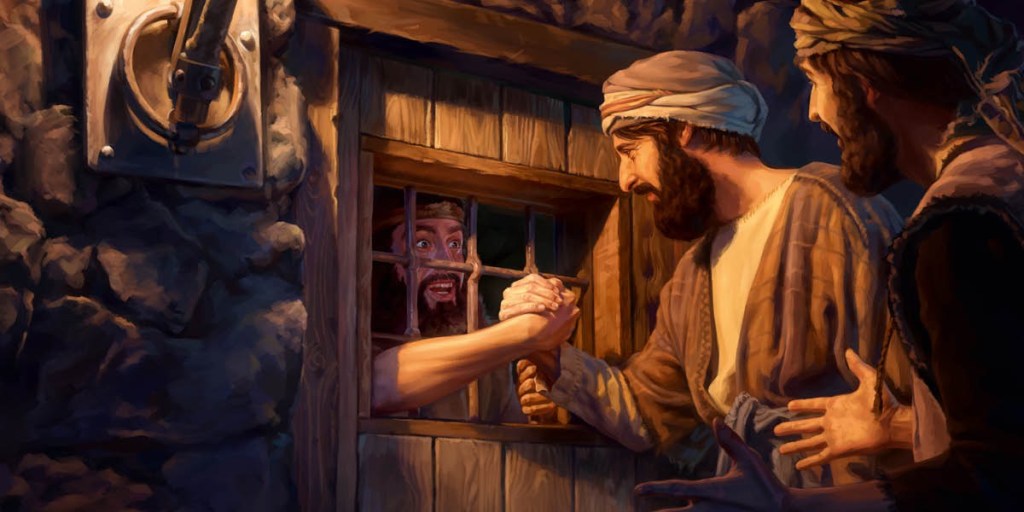
To fully appreciate John’s impact, it is worthwhile delving into the account in Matthew’s Gospel (Chapter 11) when John was imprisoned. Hearing all the things Jesus was doing from afar, John sent his disciples to ask Jesus, “Are you the Messiah we’ve been expecting, or should we keep looking for someone else?” Jesus told John’s disciples to ‘report what they had heard and seen; the blind seeing, the lame walking, those with leprosy cured, the deaf hearing, the dead raised to life, and the Good News preached to the poor.’
As John’s disciples were leaving, Jesus began telling the crowds about John. “What kind of man did you go into the wilderness to see? Was he a weak reed, swayed by every breath of wind? Or were you expecting to see a man dressed in expensive clothes? No, people with expensive clothes live in palaces. Were you looking for a prophet? Yes, and he is more than a prophet. John is the man to whom the Scriptures refer when they say, ‘Look, I am sending my messenger ahead of you, and he will prepare your way before you.’
“Of all who have ever lived, none is greater than John the Baptist!”
That is some impact!
When I read today’s alternative Collect: God, for whom we wait and watch, you sent John the Baptist to prepare for the coming of your Son: give us courage to speak the truth even to the point of suffering. This we ask through Christ our Saviour. Amen. I note that its author has focused on John’s truth telling, the cause of his imprisonment and eventual demise, as a key element that we can take away from today’s reading. This prayer, which we would have all “amened” I’m sure, should lead us to straightening, filling in and levelling our lives, and sharing that experience with others.
Speaking truth is often the hardest thing to do!
How then are we going to prepare the way for the Lord’s coming this year?
The Prayer of Confession in Advent is a great place to start our rethinking: O God, you search us out and know us, and all that we are is open to you. We confess that we have sinned:
[This is our admission that we are disposed to transformation. Are you disposed?]
When we long for your coming to change the world, and yet are unwilling to change even our own hearts: When we reduce our preparation for your coming to reckless expense and trivialities …
[These are examples of our shortcomings.]
Are we going to continue to be stubborn and worldly? Or is there a better way for us?
In the New Testament reading, Apostle Peter was reflecting on things that are to come. He was perhaps cognisant of the words of Mark’s account of John the Baptist’s work. He stated that the Lord is patiently waiting for us all to have the change of heart He seeks. Whether it is a day or a thousand years, He is waiting. Peter tells us that the world we know is going to noisily end and judgment will be passed on it. His exhortation is that while we wait, because we don’t know when this will occur, we should lead peaceful and righteous lives. Another prompt to examine how we are living, I think!
And, if you think about it, God is pretty generous! Think about how much time we have been given to come to our senses and turn to him. Think about how many opportunities we have been given to repent of our old ways. Think about how many piercing examples we have been given to model our lives on.
So the season of Advent isn’t just four Sundays focusing on candles (the candles of hope, peace, joy and love). Collectively it pulls us up and has us rethink how we live, how we interact with each other, and how much better things can, and should, be.
Let’s use our time wisely this season. Let’s prepare our hearts for the full acceptance of what Jesus came to bring. Let’s accept that baptism of the Holy Spirit that fills our mind with a genuine understanding of truth, takes possession of our abilities, and imparts gifts that qualify us for service in the body of Christ. Amen?
(Based on Mark 13:32-37; I Cor 1:3-9) Take heed, watch for you do not know when the time will come so be prepared.
One of the things I like about ‘Local Shared Ministry’, and being one of seven different preachers, is that we all bring our different experiences to our sermons. So today you will have to listen to a homily with a paediatric perspective. 🙂
In the Old Testament, the watchmen were on the lookout for an attack from the inevitable foe. Here in New Zealand the dangers we and our children face are very different. Most children, except the autistic, are inherently aware of danger and can read evil people’s body language. Even the subterfuges of sexual predators. If we make a point of trusting their judgement in little things, then they will have the self confidence to trust their own judgement when they face false blandishments. [Why do you think predators approach those children who feel unloved?] Of course, there are real dangers we have to protect our children from: for example, before the age of eight they’re not able to accurately assess the speed of oncoming cars, and can easily be distracted, so adults need to supervise them crossing the road. We need to alert them to real dangers, but not pass our anxieties on to them.
We all need to be prepared for the inevitable trials in life. Many of us dislike the over-protectiveness of the current educational system. If every little thing we do is praised, then praise becomes meaningless. If we fail at a Maths test, but get over it, then we start to build resilience and the ability to cope with other future failures.
Now, as many of us approach our deaths or dementia, we need to summon up the courage to be prepared. I want to thank Pam and Lyndsay for their recent ‘Dying Matters’ workshops. If we act on the advice we’ve been given there we should be prepared for the inevitable future. I find I’m being prepared to say “Goodbye” as my body stiffens up and my brain starts to let me down. I have to shorten my walks, and allow others to help me when I become confused. Part of our preparation is acceptance, taking joy in the things we can still do, giving thanks, and not becoming irritable with our increasing failures and limitations.
In the epistle for today Paul gives thanks for the grace of God, enabling him to enrich the Corinthians’ lives with the knowledge of Jesus and His teachings. Today, we can give thanks for living in a peaceful country, far away from the wars in the Middle East, an area that has been fought over for thousands of years. But we mustn’t be smug: when I read about how much land was taken from Maori by the church in the nineteenth century, I can understand and accept that we need to redress that wrong; and be clear when we’re talking to others, that we of European descent were invited to share the riches of this land, and take care of it – not to grab it and potentially despoil it.
We should also give thanks for the ways our life has been enriched by living here in the Coromandel. I give thanks for walking up the Kauaeranga, and for a tramp from Coroglen to the Pinnacles Hut, where we overnighted, and woke early, to climb to the top of the Pinnacles, where we saw the view from the Aldermens to Raglan. Unforgettable. I give thanks for being able to sail in the Louisiade Archipelago, islands south-west of Papua New Guinea, where we saw a five-year-old school classroom with not a single desk marked, because the furniture was valued. And a whole village had worked to provide the finance to send one of the children to secondary school . We were lucky to meet the Islanders before cell phones arrived, and people needed ready cash to top them up. We did experience a petty theft of a purse, and when we told the local councillor, the purse was returned within two hours. Such experiences make you think. Finding out that the local teacher had not been paid for a year; realizing that these children who had worked so hard at school had very little chance of paid employment …
These experiences made us value the opportunities we’d had. My mother died of breast cancer when I was 29, and I was horrified when I felt a lump in my left breast in the identical place that I’d felt her lump thirty years earlier. But time had passed, treatment had improved, and forty years later I worry more about my vague brain than my surgical scars.
So, be prepared to enjoy each little moment of happiness to the full and share that joy with others when you can … as we look towards Christmas.




 stfrancischurchtairuanz