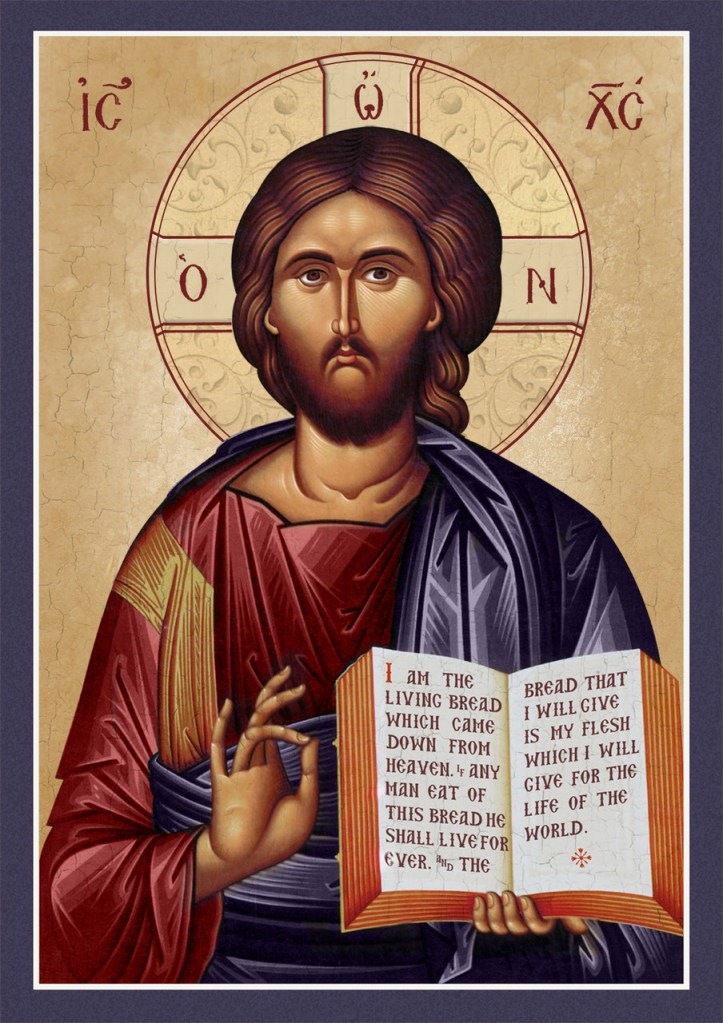
Gut-wrenching Compassion

by Pat Lee

(Based on Mark 6:30-34, 53-56; Jer 23:1-6; Eph 2:11-22)

The Gospel reading set down for today is two smaller texts put together. The first one comes after Herod’s promise to Herodias resulting in the beheading of John the Baptist, and the second one follows ‘the feeding of the five thousand’, and is immediately before the text on Jesus walking on the water, when they eventually arrived at Gennesaret.

Reading the other texts for today, and researching on the internet, I found a connection between the two ‘smaller texts’ that I had previously missed. God is always so patient with us when we fail to see what he is wanting us to see! Today, that connection is compassion.
The (unnamed) author of one sermon I read says, “On most occasions, the texts for today are seen as an introduction and an afterthought. But today’s lectionary calls them into focus, and for good reason, as they reveal to us in an intimate way a Jesus who is compassionate and overflowing with power.”

“As he went ashore, he saw a great crowd; and he had compassion for them, because they were like sheep without  a shepherd; and he began to teach them many things”.

There are many references in the Bible to our being like sheep. Some of them say that we are like sheep without a shepherd or that we have been scattered by those who were meant to be our shepherds. There are a lot of people who don’t like being compared with sheep, but I’m sure that God knew exactly what he was doing by making the comparison.
I decided to look up the traits of sheep and this what I found …
Sheep are intelligent, with impressive memory and recognition skills. They build friendships, stick up for one another in fights, and feel sad when their friends are sent to slaughter. Sheep are able to feel emotions such as fear, anger, rage, despair, boredom, disgust and happiness.  How like us! I thought.


However, sometimes sheep are quite obstinate and stupid. If you have ever been on a muster, you will know that they will try to run all over the place instead of getting into a group and going where the musterer wants them; hence the need to use plenty of good dogs who will bring them under control. And, sometimes they will also turn and stamp in defiance. Don’t these things sound much like us? And just like sheep, we need a good shepherd too.

When Michael and I were on our honeymoon in the South Island in 1964, we went on the Earnslaw on Lake Wakatipu. It didn’t go just to Walter Peak Station in those days, but went right down the lake delivering mail, groceries and – as on the day we went – sheep. We stopped at several private piers along the way, eventually coming to the one where the sheep were to get off.
All the passengers stood along the deck watching the procedure. I think the crew thought it was going to be an easy exercise, but the sheep had a different idea. There seemed to be no way that they were going down that gangway. As they got close, looking as if they would go, they would turn, jumping over each other and going back as far as they could. However, eventually one brave sheep decided to go, and then the rest followed, and two or three went into the lake in their haste to get back on dry land.

Isn’t that a just like humans? Have you ever been to a function when food is offered and everyone hangs back waiting for some brave soul to make the first move.

The prophet Jeremiah lived about six hundred years before the birth of Christ, but we hear him (in today’s reading) talking about shepherds who have scattered the sheep and that the Lord will gather the remnant of his flock and bring them back into the fold. That shepherd was Jesus. He would not only bring back the ones who had been scattered, but also bring others into the fold, those who were once strangers and aliens (as the writer to the Ephesians puts it).

Returning to the Gospel, let’s take a closer look at the disciples. They have just returned from their ‘sending out’. In fact, the word used to describe them, apostles, means ‘the ones sent’, and this is the first time they were given that title. They were telling Jesus all about the things they had been doing and teaching, but Jesus saw immediately that they were weary and worn out, needing time away from the hustle and bustle, as they had had no leisure or even time to eat. So Jesus suggested they get into the boat and go to a deserted place where they could rest. (A reminder to us we still need today.)

However, people in the crowd had recognized them and saw them going, so they hurried on foot and arrived ahead of them. If you’d been one of the weary disciples, seeing this assembled crowd, how would you have felt? Disappointed? Probably a little angry and upset.

Another unnamed author asks, “What would you have done? Would you have turned the boat around and looked for anther quiet place to be alone with your friends? Would you have told the crowds to go away and let you have some time for yourself? Or would you have laid down in the boat and hidden your head under a blanket until everyone had gone away?”
All very human responses, I think.

But Jesus saw the crowd too and instead of anger, he had compassion. This word compassion is not a word synonymous with pity, as it is sometimes used in our language. The word for compassion in this text means that Jesus felt it, literally translated, in his bowels, or, as we might say, gut-wrenching. This is the kind of compassion that suffers alongside those who are tired and worn down by oppression, sin and illness. Jesus sacrifices his own need for rest, for the sake of others finding rest. The passage forces us to believe simultaneously in a God who calls us to rest, yet willingly gives up his own rest for others.

The unnamed author adds, “What surprises me about this story is what Jesus did to help the people he saw. When people are moved by compassion, we might expect them to cook someone a meal, make a donation to a charity or something else just as practical. Jesus didn’t do any of these. Instead, moved with compassion towards this crowd of people, he began to teach them.”

We are not told what he taught them, but we are told that he healed many of them as well, even when they only touched the fringe of his garment.

Whatever is happening in our lives, this story tells us that Jesus looks at each of us with gut-wrenching compassion, and teaches us a better way of life. Maybe we need to stop for a bit, recognize that despite our best efforts, we’re all a little lost, and listen with fresh ears to the teachings of Jesus.

Faith and Pharmacy

By Dr Liz Young

(Based on Mark 5:21-43; 2 Cor 8:7-15)

The worship team decided I should preach today as the Gospel reading has two medical themes: prolonged menstrual bleeding and dying.  The words Jesus spoke to the woman with prolonged bleeding, “Your faith has made you whole,” are heart-warming; and they resonate with me because although discoveries in the past hundred years have changed our thoughts about doctors, from potentially being quacks to being miracle workers, I am all too aware that pharmacy can only do so much.  Unless a person wishes to be well, and trusts that they can heal, they won’t heal. Antibiotics are marvelous and cure 90% of an infection, but the body has to do the rest.

As a medical student at the end of the seventies, I spent six weeks in the Transkei in South Africa where it was accepted that if a witch doctor wanted you to die, you would, frightened to death. This belief was very effective, and I can’t help but compare it to our contemporary unbelief, our cynicisms and our rationalisations.  And then, with a twist, my thoughts move to the faith of the bleeding woman, who knew that if she could only touch Jesus’s garment, he would heal her. This story prompts me to ponder on how all our intellectual knowledge has diminished our ability to believe in irrational miracles. I find I often look for a rational explanation of Jesus miracles: like the feeding of the five thousand: did everybody who could, snatch up a snack as they hurriedly packed up to follow Jesus into the countryside?  For me the miracle was that everyone joyfully shared their picnic on that hillside. But the bleeding woman – did Jesus melt away her fibroid?  Or was it a hormonal problem such as hypothyroidism, that having been mentally restored to health her body automatically restored itself?

What links our readings today?
The importance of faith.
The phrase from Corinthians that intrigues me is, “the one who gathered much did not have too much and the one who gathered little did not have too little,” which got reflected in my commentary to, “Christ gave out of nothing, not from abundance”.  I’ve been blessed with abundance, both mentally and materially, and I try to be truly thankful everyday.  It’s a practice I use to stave off depression, and it works. As I wake I lie in bed and look out and marvel at the dawn, the sun rising out of the ocean – the point of which will be moving south each day from now on. In the evening I come in from the garden, relax with 100mls of wine and water (following Socrates and the breast cancer society’s recommendations) and watch The Chase on TV, all enjoyable habits.

When you’re down, you tend not to say thank you, because you’re so immersed in feeling sorry for yourself.
I recommend when you are feeling down, stop doing your duties for a moment.  Go outside and praise God for the beauty around you, and work out what you can do for someone else today, such as providing company, phoning someone to say you are thinking of them … this isn’t expensive.

But, to move on from thoughts of daily living to what Jairus’s daughter was doing: dying.  My most rewarding reading this month, was Elisabeth Kubler Ross’s biography. She was a highly trained Swiss surgeon who followed her husband to the States, but could only get a job in a psychiatric hospital, as she’d spent time as a student caring for refugees in Poland. And it was the McCarthy era. There, she listened to the stories of many who had probably been inaccurately diagnosed, and were dying without the support of their family, and they needed to talk. Later she wrote her book on death and dying, which I found very helpful when I was looking after children dying of cancer, when I was working at Waikato Hospital in the eighties. This experience of mine, seeing their bravery, how they looked after their parents, healed me, helped my grieving after my own mother had died of breast cancer. Grief I’d had no time to deal with, as she died a month before my first house job on a radiotherapy ward.

Jesus raised Jairus’s daughter from death: again I wonder at the true diagnosis, and what Jesus did; and how this experience affected Jairus’s daughter’s life after that. My reading and thinking left me with one message for today: if someone who is close to you is dying, make sure you go to see them, and have that final conversation. Don’t visit with your mind clouded with grief, but open to what they need to say, so they can die in peace. I will always be grateful to my mother’s friend who stayed with her while she was dying, while I stayed looking after my much younger brother, Will, as in the UK at that time it was thought that one should shelter the young from the reality of death.

So, I’ve given you a homily based on my personal experiences which may have stirred up painful memories for each of you, but please leave here today aware of the power of faith, trusting that God will be with you through the hard times of life, as well as the enjoyable moments.

AI Reflects on Faith

by Barry Pollard

(Based on Mark 4:35-41; I Sam 17:1-50; Ps 9:9-20)

There are many useful tools that we can access to keep us abreast of the world in almost every way, even to the point of being able to run our business remotely, if we choose.
Last weekend we were in Wellington, the nation’s capital, famous around the globe for the fact that it has the highest average wind speed of any city anywhere (according to Air New Zealand). In preparing for the trip Keri researched how one travels on public transport in the Windy City. If you don’t know, they use a prepaid ‘Snapper’ card that you use by tapping on when you board your transport and tapping off on leaving. The trip cost is deducted each time. A great system that the city has great faith in!
We learned that when you travel at weekends and off-peak, the fares are ridiculously low. We travelled from the city centre to Otaki, a small town once driven-through as part of SH1, a distance of 73 kilometres away, on a train and bus for less than $16 return. We too developed faith in their transport system!

As great as their transport system is, there was a downside. If you don’t have a decent knowledge of a system you are at a disadvantage. On our last day of travelling across and around the city we noticed an older woman simply flashing her Super Gold Card at the conductor, receiving a ticket, paying no money and travelling free. The next ride, I tried mine and it worked! I could have been travelling the whole time with the most ridiculous low fare, zero!

These experiences, along with things I had been reading and browsing, have had quite an impact on my reflection this morning.
Being a relatively diligent bloke I started work on this reflection on the 14th of May, knowing that we were likely travelling out of and around the country in June. I started by reading and reflecting on the Scriptures set down in the Lectionary, choosing the three readings for today and starting to ponder what the Spirit was saying to me. The issue of faith stood out immediately. In the Samuel reading I highlighted part of verse 45: “but I come to you in the name of the Lord of Heaven’s Armies”. Which explained pretty much how David the shepherd boy was able to even consider taking on the giant warrior Goliath. He had faith that God would be with him; that he was acting with God’s authority. And, too, in today’s Psalm, verse 10 drew my attention: “Those who know your name trust in you, for you, O Lord, do not abandon those who search for you.” And of course the Gospel reading today is focussed totally on faith.

We have all heard preachers explain how they go about the process of coming up with a reflection, and most admit to its not being an easy task. When I first came to the role, I remember explaining that I learned so much more from the Scriptures I had to work with, because my knowledge and understanding was generally limited and I was always under stress. I had to go deeper and deeper, using the analogy of the onion that we keep peeling away, to make coherent sense out of the Word and how it could apply to our lives here in Tairua today.

But I thought this time I’d try a different and modern approach. Being an enthusiastic member of the newly reformatted Tairua Business Association, I have been paying a bit more attention to business stuff. One thing that caught my fancy was a promotion by the local Council of seminars on getting to grips with AI – artificial intelligence – in business. The focus of the offered seminar was a look at an AI tool that is available for all: ChatGPT.
Artificial intelligence at this stage of development is probably still in its infancy, yet it already provides many new and useful tools. At the same time, the spectre of technology taking over the world and relegating us humans to servant status is impacting workforces around the world.

So against this backdrop, I bravely opened ChatGPT on my computer and typed in “Write a sermon on Mark 4:35-41″. The results were instantly remarkable. So, sit back and hear what artificial intelligence was able to come up with [produced here word for word – Editor]:

“Finding Faith in the Storm”

Dear congregation
Today, let us delve into the powerful passage from the Gospel of Mark, Chapter 4, verses 35 to 41. This narrative recounts the moment when Jesus and his disciples embarked on a boat, and a great storm arose while they were at sea. As the winds howled and the waves crashed against the vessel, the disciples were filled with fear and panic. But in the midst of the chaos, Jesus was there, calmly sleeping in the stern of the boat.
This story is not just a historical anecdote; it holds profound significance for us today. It speaks to the storms of life that we all encounter—those moments of trial, uncertainty, and fear that threaten to overwhelm us. Just as the disciples faced a literal storm at sea, we face metaphorical storms in our lives: illness, loss, financial troubles, relationship challenges, and so much more.
In the face of these storms, it’s easy to feel like the disciples did—terrified and helpless. We may wonder, where is God in the midst of our struggles? Why does He seem silent while we suffer? But the beauty of this passage lies in what happens next.
The disciples, in their desperation, woke Jesus and cried out, “Teacher, don’t you care that we’re going to drown?” Their words echo the cries of our own hearts when we feel abandoned by God in the midst of our storms. But Jesus, in His infinite love and mercy, responded by rebuking the winds and the waves, saying, “Silence! Be still!” And immediately, the storm ceased, and there was a great calm.
Through this miraculous act, Jesus not only demonstrated His power over the forces of nature but also revealed a profound truth: He is with us in the storms of life. Even when it seems like He is asleep or indifferent to our struggles, He is there, ready to calm the raging seas of our hearts.
But the story doesn’t end there. After calming the storm, Jesus turned to His disciples and asked, “Why are you so afraid? Do you still have no faith?” These questions cut to the heart of the matter. In the face of adversity, do we trust in God’s goodness and sovereignty, or do we allow fear to overpower our faith?
Brothers and sisters, let us learn from the disciples’ experience. Let us not allow fear to dictate our response to life’s storms. Instead, let us anchor our faith in the unwavering truth that Jesus is with us always, guiding us through the darkest of times.
As we navigate the tempests of life, may we find comfort and strength in the knowledge that we serve a God who can calm the storm with just a word. May we cultivate a faith that is resilient in the face of adversity, knowing that nothing is impossible for our Lord.

Let us pray.
Heavenly Father, in the midst of life’s storms, help us to trust in Your unfailing love and power. Give us the faith to believe that You are with us always, guiding us through the darkest of times. Calm the storms in our hearts, and grant us the courage to face whatever challenges come our way. In Jesus’ name, Amen.

May the peace of God, which surpasses all understanding, guard your hearts and minds in Christ Jesus. Amen.
God bless you all.

There you have it! What did you think?

To be honest, I was impressed, especially when it spat out the prayer and blessing at the end. I would not be offended if you asked me to use AI to write all my reflections in future, whenever you see my name on the roster. It was certainly faster – about 1.75 seconds versus my usual two to three weeks! And its grammar is better than mine! And if Betty Moss was still with us, she would have approved of its brevity! (“No longer than seven minutes, Barry! That’s the perfect length for a sermon.”)

But just like the Wellington transport system, AI has a downside! As clever as it is, AI can’t supply the human touch. It can’t reveal its weaknesses, or speak from personal experience. It lacks ‘soul’. We can’t trust it will provide what we need. If anything, it has added doubt to the ‘reality’ that we perceive.

We still need humans to fill in some of these gaps, and it’s my turn today . . .

I started out saying that today’s readings were all about faith. The Gospel account highlighted two things to me. The first: if I was in that boat I know I would have been terrified too, and wondering how Jesus could be asleep in such turmoil. My faith would certainly have been tested. And second: the amazing things the disciples had witnessed and been part of in their time with Jesus suddenly were forgotten in a testing situation. How often is this true for us?
What shape is my faith really in?
The disciples were just like me! Frightened and doubting! Yet they were able to overcome these weaknesses with the right tools, and the power of the Holy Spirit.

The two verses I acknowledged earlier in the Samuel and Psalm readings offer some direction. “But I come to you in the name of the Lord of Heaven’s Armies,” is an anchor point for us. If that could be etched in the front of our consciousness it would temper much of what we think, say and do. Before you dismiss it because it sounds like a military salutation, “the Lord of Heaven’s Armies” could be translated, “the Lord of powers” or “the Lord who is the strongest of all”, the Lord God Almighty. However you interpret it, it says that God is with us and is fighting for us, and look what effect it had on David, the young shepherd boy!

Another anchor point is surely the verse from Psalm 9, “Those who know your name trust in you, for you, O Lord, do not abandon those who search for you.” This is another positional claim. If we are active in seeking and maintaining a relationship with God, we can rely on him in all ways. To trust is to have faith.

You may have noticed, many of my past reflections have contained an ‘addendum’, something usually added in the early hours of the morning of delivery. I am most receptive to the prompting of the Holy Spirit at that time, and he reveals for inclusion little extras that we need to hear. This time he prompted the inclusion of a commentary from yesterday morning’s devotions.

It’s about patience, but also relates to us all in the boat with Jesus:
Patience is one of the fruits of the Spirit. Patience comes right after peace. Why? Because when we have peace in our hearts, practically nothing can cause us to feel impatient. But these qualities are the fruit of the Spirit, not the effort of the flesh. We can’t psych ourselves up and say, ‘I am now going to be patient.’ If it’s the genuine fruit of the Spirit, we’ll have genuine inner peace, and circumstances that used to irritate us won’t bother us as much (or even at all) because we’ve started to depend completely on God. 
Patience is a type of faith. It says, ‘I trust God. I believe he’s bigger than this problem. I believe his hand is in these irritations and can use them for good in my life.’ Frustration says, ‘Why did this happen?’ Faith says, ‘God, what do you want me to learn here?’
Abraham was 100 years old when his second son, Isaac, was born. That’s a long time to be patient. The toughest kind of waiting happens when we’re in a rush and God isn’t. It’s hard to be patient when we’re waiting for an answer, but being patient is both the evidence of our faith and a test of our faith. It’s at times like that when God whispers, ‘Be still, and know that I am God’ (Psalm 46:10). In other words, ‘I’m in charge, I have a better plan, I’m working things out for your good!’

So, as I conclude, I would like us to consider, what is it that we really have faith in? How strong is that faith? What do we need to do to be rock-solid?

Let us pray as ChatGPT suggests [and notice that it even rhymes – Editor]:

Divine Creator,
In the quiet of our hearts, we come to you in humble prayer,
Seeking strength and guidance, enveloped in Your care.
Grant us, O Lord, a steadfast faith that never wavers,
A faith that holds firm through life’s storms and favours.
In moments of doubt, be our unwavering light,
Illuminate our paths with Your wisdom and insight.
When challenges loom and trials seem too great to bear,
Instil in us the courage to trust and to dare.
Help us, dear God, to see beyond what eyes can perceive,
To believe in Your promises and never to leave.
May our faith be a beacon, shining bright and true,
Reflecting Your love in all that we say and do.
In times of joy, let our gratitude abound,
Acknowledging Your blessings that endlessly surround.
And in times of sorrow, may our faith be our solace,
A balm for our souls, bringing peace in every place.
Lord, deepen our faith each day, without hesitation,
So we may walk with You in constant dedication.
For with You, O God, all things are possible and clear,
Grant us the grace to trust, to hope, and to persevere.
In Your holy name we pray.

Amen

Pastoral Parables

by Auriol Farquhar

(Based on Mark 4: 26–34)

Today’s reading is from Chapter 4 in Mark. In this chapter Jesus tells a number of parables and stills a storm. Before the parable of the gardener and the mustard seed, Jesus has told the stories of a farmer scattering seed and one about hiding one’s light under a bushel. While he often explains the parables to his disciples, he does not comment on the meaning of the ones in today’s reading; he explains it to them later.
So this is my interpretation of these passages, with a little help from Debie Thomas and Michael K Marsh.

In the first parable Jesus speaks of a gardener scattering seed on the ground and then going off to sleep. He enjoys his rest and does little to ensure that the seeds will grow. This is something of a puzzle to good gardeners, who work hard at ensuring that they will get a decent crop. Even my husband, not too concerned about the aesthetic appearance of his garden, fertilises the ground with compost, plants his plants in rows, weeds conscientiously, waters in the dry season and does his best to protect his garden from pests and birds.
But this gardener sleeps. He trusts the seeds; he trusts the sun, the shade, the clouds, the rain. He plants, and he harvests when the time is ripe.

Of course, Jesus is not really talking about gardening or farming. He is using these images to talk about your life or mine. His parable is a metaphor for the way God works in our lives.
The gardener never suffers from the illusion that he’s in charge; he’s operating in the realm of mystery. In this story of God’s Kingdom it is not our striving, our piety, our doctrinal purity or our impressive prayers that cause us to grow and thrive in God’s garden – it is grace alone, often acting in mysterious ways that we do not understand. Once the seed of the word of God is sown, only time will show how a person’s faith will grow and develop. And growth takes time. A lot happens under the ground, hidden within the soil of our lives. There’s a lot of waiting and then one day, something sprouts and voila – there is growth.
I think of my own faith journey. As a child I attended Sunday school, church and Pathfinders. I learned about the Bible in primary and secondary school and considered myself to be a Christian. As time passed, I still had faith but, although I tried to manifest that faith in my life, I stopped going to Church, except at Christmas, and was not really part of a faith community.

About ten or twelve years ago Joan asked me to help with the Christmas Community Celebration in Tairua and, after a couple of years of making my contribution, with the choir and the dramatic presentation, I felt that I needed more involvement with the life of the Church. I had a strong urge to come to church on Sundays. I cannot explain why I felt this – I just had a desire, I wanted to be part of a faith community again. God was bringing my garden to fruition.

Seeds grow when the conditions are right. God grows love in us and that love can shelter and comfort many others. God’s Kingdom is not only the ‘end-time’ or the afterlife, it is the here and now – anywhere where the power of God is evident, he is establishing it through us.

The reality is that there is a spirit moving within us. Each of us has been seeded and something is growing there. Sometimes we don’t see it, believe it or trust it – but it’s there. Sometimes we wait years, hoping, looking and wondering when, and then one day we see the first green blade rise up. Other times we wake up one day and are surprised by what has changed within us. How and when did it happen? It is not dependent on us but we participate in it.

In the second parable, a sower sows mustard seed in the ground. In first century Palestine, this was a noxious weed. It is a plant that quickly takes over the land, dropping seeds everywhere and encroaching on other plants. It would be like a modern day gardener planting oxalis or wild ginger – nuisances that a gardener tries to get rid of, not plant deliberately.
What is Jesus saying when he describes the heart of God’s Kingdom as this insignificant tiny seed that is invasive and that most gardeners would like to get rid of? Is he saying that God’s Kingdom grows and flourishes whatever efforts can be made to ‘root’ it out – that nothing can stop it flourishing?

The last image in these parables is that of the birds nesting and finding shade in the branches of the mustard plant. We all love to see birds in the garden, but what gardener wants birds taking up residence – eating seeds and fruit and dropping guano everywhere? We take steps to keep the birds away. But this doesn’t happen in God’s garden. There are no scarecrows to scare off unwelcome guests in God’s garden. No scarecrows or rattling CD discs there. That is because the Kingdom of God is about welcoming everyone; it is inclusive of all – even those that some would think were unworthy. Its main purpose is hospitality, not productivity. By trying to get rid of the nuisances in the garden, because we believe the produce is the most important thing – are we rejecting the needs, hunger and hopes of those around us because we are focused on controlling the garden? Can we surrender ourselves to losing that control and letting the garden, or God, take care of itself?

When I started to prepare for this reflection and read these verses from Mark, I was puzzled. I read some other reflections on them – which seemed to say that these parables were about trusting God to grow his kingdom. And the harvest – his Church – would grow and develop. But, I asked myself – does that mean God does all the work, and we do nothing? Do we have a role to play in the growth of the garden and the burgeoning mustard seed plant?

I think that we must have a role. Consider what seeds have been scattered for us in our own lives. Who are the people who have loved and encouraged us, offered wisdom and guidance, especially on our faith journey? Who are the ones who have given us hope, stood by us, helped us find ourselves? Who has inspired and mentored us, who has helped us to use our talents and skills? Perhaps we can identify people we have known. I’d begin with my Mum and Dad, who gave me unconditional love; then Mr Woodley, the curate who took our Pathfinder class; Miss Jenkins, my Religious Instruction teacher, who was such a gentle Quaker soul; my drama tutor on my teacher training course, Hilary Ball, who enabled me to grow in confidence and realise that I was just as worthy as others. And then, in recent years, St Francis friends Chris, Bruce, Joan and Sharon who have inspired me and made me think more deeply – and so many people in between.

I am sure that we can all identify people we have known that have played important roles in our growth. But always it is God, working in mysterious ways, enabling his garden to grow.

And what can we actually do to help our own harvest, and perhaps scatter seeds in the lives of others?
We can forgive those who hurt us, reconcile and ask others for forgiveness. We can put others’ interests before our own. We can encourage, love and reach out in compassion. We can support others when they are in the depths of emotional crisis, such as grief, despair or loneliness. We can speak out for justice and stand up for people when they are treated unfairly. We can love our neighbour as ourselves!

So, I believe that we should trust in God and have faith that his Kingdom is growing, slowly and mysteriously – with weeds that we can neither control nor contain. But we should also be open for his guidance, in whatever form it comes, on what we should plant and how we should harvest the results of his labour.

Thy will be done, Lord.