We might be wondering why Advent begins with such an apocalyptic proclamation. Many generations have speculated on this over the centuries. Surely, it’s the beginning of our new church year now, as well as the lead in to Christmas?
Well, yes, it is, but Advent has a special place on our faith journey, reminders of the reason for the season, why God needs to come and be with us and among us. “Emmanuel.”
Advent, from the Latin adventus, means ‘coming or arrival’, a word full of expectation and challenge as we wait.
It’s not entirely certain when Christians began to observe the season of Advent – but it does seem to have been a practice by the fifth century. Back then the focus was similar to the season of Lent, a season marked by regular fasting and penitence.
These days many most often think of what’s coming: Christmas Day and the birth of Jesus. And it is, but in today’s Gospel reading, Jesus speaks of the “Son of Man coming in a cloud with power and great glory”. So, we are reminded of the much bigger story; reminded by Advent about the coming of our future, and a time when we prepare, as best we can, if we can, for that future.
It’s a season, then, marked by themes like waiting, watching, longing and hope – and, to be honest, not a lot of fasting and penitence. Each week, on one of the Sundays of Advent, we focus on one aspect – this week it’s Hope. Candles are lit to symbolise the light that shines, even in the darkness, and the Gospel readings call us to think of God’s way of justice and love in our world today. This is surely the fulfilment of that part of the Lord’s prayer when we pray together, “Your kingdom come, your will be done on earth as in heaven.”
How, then, do we prepare for our future? We all have a future and we all deal with it in our lives. Some look toward the future with fear, anxiety and worry. We heard in the reading from Luke’s Gospel, “People will faint from fear and foreboding of what is coming upon the world.” Have you ever felt like that? Others look to the future with hope, eagerness and optimism. They “stand up and raise [their] heads” with anticipation and expectancy.
Every generation has lived through times of great change and, thanks to our connection to mass media, we could indeed join in feeling despair for the future of our world. The resources sent from Christian World Service this month have shared a story of hope from the Solomon Islands involving life-affecting change of coastal erosion and inundation of small islands there – the term used locally from the local people’s observation is “restless seas”. A positive response in the Solomons involves citizen scientists being recruited to record rainfall data and weather observations, to be used in long term analysis by government and international organisations. Many of the rainfall stations are monitored by the clergy and a team from the local church community, as part of their faith life pattern. Every island has a church, and this is one way of ‘keeping watch and praying’. Reliable data over many years will be valuable to climate scientists and hopefully lead to better outcomes for small island dwellers.
In our lives, where and how do we keep watch and pray? Many of us feel that our life is a journey of past, present and future in a straight line. Over the years it’s not been uncommon to hear a religious leader or celebrity spokesman pop up and attribute maybe an earthquake, a pandemic, a war as pointing to a ‘sign’ that this generation is near to the end of time, trying to second guess the words in Luke’s gospel.
But another suggestion, that came in the CWS resources, worth thinking about is that we could consider viewing time as ‘horizoned’. If you can imagine being on a boat well out on the ocean, no land in sight. Is the horizon past? Is it behind us? Or is the horizon future – ahead of us? Well, both. The horizon is actually all around us, 360 degrees.
In the reading it says, “… raise your heads, for redemption is drawing near.” So, if time is ‘horizoned’, then redemption is drawing in – behind, ahead and all around us.
In the past, 360 degrees behind us, are the redeeming acts of God in Scripture and the redeeming way of Christ in the Gospels. Let’s get a feel of that Past horizon – and listen to a carol that links us to the time of exile for the Jewish nation, almost 600 years before the birth of Jesus:
O come O come Emmanuel And ransom captive Israel That mourns in lonely exile here Until the Son of God appear Rejoice! Rejoice! Emmanuel Shall come to thee, O Israel
In the future – 360 degrees ahead of us – drawing near in God’s redemption in all of life, God’s will for love and justice being done on earth as in heaven. We will sing about this as we go out from here today:
From this Holy time, from this sacred space we go now to serve our own day and place committed to follow the way Jesus trod: do justly, love mercy, walk humbly with God.
All around us – 360 degrees either side as we watch and pray for God’s redeeming drawing near in the lives of people we meet and in the communities we serve.
Again in one of today’s Advent song’s words:
“Look around, Christ is found, far beyond our sacred ground”.
So in the events and times that cause us unease, God’s people are urged not to flee, fight or freeze, but to watch, to pray, and in a ‘horizoned’ way: look about to see where love and justice are needed so that all are included to live their best possible lives.
Mary Oliver, my favourite American Poet, sums it up:
Instructions for living a life: Pay attention Be astonished Tell about it.
In that way we can, as Paul encourages the church in Thessalonians, “truly feel strengthened in our hearts to come blameless before our God at the coming of our Lord Jesus Christ with all his saints.” ( 1 Thessalonians 3:13)
The Anglican lectionary guides our theme today towards the climactic end to the church year, proposing we concentrate on Christ the King and The Reign of Christ. This is a time for us to reflect on the meaning of Christ’s reign over the church, over the world, and over our lives. What kind of ‘king’ was and is Jesus? What did and does his rule look and feel like? What does it mean to live under his kingship today?
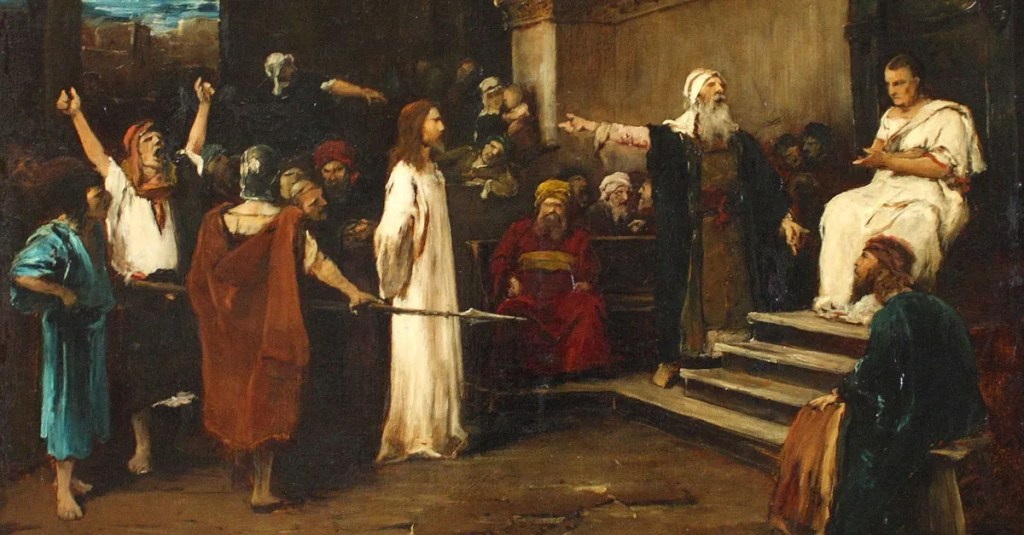
The lectionary has given us a rather odd Gospel reading. Do we read about Jesus in his kingly glory, transfigured and dazzling on a mountaintop? Did we hear about him rise from the waters of baptism with the heavens thundering? Do we hear about one of his more spectacular miracles? No, Jesus is not described in any majestic outfit. Instead, the Gospel of John offers us a picture of Jesus at his physical and emotional worst: arrested, hungry, abandoned, sleep-deprived and standing before Pontius Pilate for questioning. If we were going to write Jesus into a kingly scene, most of us would not have chosen this reading, would we? So, where did this title of ‘king’ come from?
I think that it came from Jesus thinking that he was the King of the Jews or, at the least, a ‘King’ in a kingdom ‘not of this world’. Was Pilate’s approach just a political charge, as anyone who claimed to be a king was seen to be a threat that had to be dealt with?
Did we pick up that Pilate does not ask Jesus whether he was claiming to be a divine man, or whether he thought he was the ‘Son of Man’, or whether he was opposed to the Jewish leadership, or whether he disagreed with the teachings of the Pharisees or Sadducees, or anything else. He is only recorded here as asking Jesus, “Are you the King of the Jews?”
Did Jesus considered himself to be the Jewish messiah, a king? Possibly, yes. But back in this story’s context, Jesus may have meant something very different and more specific than what we may read and link into it today. There were various views of what a messiah would be like among Jews of Jesus’s day. The messiah was expected to be a political ruler over Israel. He was to be a great priest who ruled God’s people through God’s law. And he was to be a cosmic judge of the earth who would destroy God’s enemies in an act of judgment. The common thread here is that the future messiah would be a figure of grandeur and might, who would come with the authority and with the power of God.
But this Jesus was just the opposite. An itinerant Jewish preacher from rural Galilee who challenged the law and religious sects. He lived out teachings of love, mercy, forgiveness and serving one another and who died for these efforts. I think that Jesus was only really considered the messiah by his followers after his death, as that is when the term ‘Christ’ became the most common designation for him.
According to our earliest Gospels and their sources, Jesus did not publicly proclaim that this was his self-understanding. He does not preach about himself as the future messiah or king – in Mark, Matthew, Luke, Q, M, or the L sources. He only seems to tell his disciples, in private. They know who he thinks he is and they know who he thinks they are. Namely, Jesus is the future king and they will be serving under him. Jesus is recorded in Matthew and Luke (Matt. 19:28; Luke 22:28-30) as telling his twelve disciples that in the future kingdom of God, they would themselves be seated on twelve thrones ruling the twelve tribes of Israel.
So, Jesus did think that he would be a future king and messiah of the coming kingdom of God in some way. Did his followers ever called him king and messiah? Nathanael declared, “Rabbi you are the Son of God, you are king of Israel.” (John 1:49) And after the feeding of the five thousand, Jesus, knowing that they intended to come and make him ‘king’ by force, Jesus withdrew again to a mountain by himself (John 6:15). In John 12:13, the crowd took palm branches and went out to meet Jesus, shouting, “Hosanna!” “Blessed is he who comes in the name of the Lord!” “Blessed is the king of Israel!”
So, this must have also been what those in the public arena heard and thought as well, and why Pilate used this as a political charge against him. Any talk of another king, in any sense, in the Roman empire was enough to order ultimate punishment. Could this be why Jesus really died?
In his time, was Jesus an apocalyptic-ist (?)? One who believed that God would soon intervene in the course of history, overthrow the forces of evil, and establish a good, and very real, political kingdom here on earth. Therefore, his listeners had to turn to God immediately and repent in preparation for this imminent end. But when Jesus ended up being arrested and crucified, did this completely and utterly destroy the disciples’ vision of what was to happen in the near physical future? Had they thought that they were going to be physically seated on twelve thrones ruling the twelve tribes of Israel, with Jesus as the King?
When Jesus was raised from the dead, and returned, it was the disciples who were the witnesses, so, did this make them change, adapt and shift how they understood who Jesus was and how the future kingdom may arrive? Is this why the term ‘messiah’ gained strength after Jesus’s resurrection?
Back at the Pilate scene, Jesus went on to say that “Everyone who belongs to the truth listens to my voice”. He implied to Pilate that he, Pilate, was looking at the truth. “I am the truth.” To unpack this, I would say that Jesus understood his power as different because he believed he was truth and was established in truth. What does it mean, in our post-truth era, then, to worship the King of Truth? What does it mean to ‘belong to the Truth’ in a culture that increasingly denies Truth’s validity? Perhaps most importantly, how can we bear witness to a complex truth, a truth like the incarnation story of birth, life, death and resurrection, in a world that prefers Instagram, Facebook, and Tweets, etc, or internet games and action hero movies?
One of the most urgent tasks facing the Church on this Christ-the-King Sunday is forging a robust and gracious, urgent and respectful, relationship to the Truth. If Jesus came to testify to the Truth, if he is the Truth, if he is the King of Truth, then what does our loyalty to Truth look like, here and now? I’m painfully aware of the Church’s long and miserable tradition of using ‘the truth’ to consolidate and abuse its own power. Religious institutions have excelled at using ‘truth’ to colonize, enslave, reject, abuse, and dehumanize those we conveniently call “Others”. And, who displayed more truth this week: the Treaty Principles Bill before parliament or the hīkoi mō te Tiriti? [A heated local constitutional issue – Ed]
Jesus calls us to belong to the Truth that he embodied in his life, death, and resurrection. His Truth was not self-centred in any way. It did not serve to bolster his own power and authority. His Truth was not and is not an instrument, a weapon, or a slogan. The Truth is Jesus.
Today we acknowledge the Reign of Christ the King. Can we stand for the Truth as Jesus did? Can we belong to the Truth as he did? Can we tell and keep telling the joy-filled, pain-filled and powerfully undeniable stories that we know to be the truth about Jesus? Next week, we will enter into Advent, a season of waiting, longing, and listening. A time for waiting for the Truth to reveal itself, in the first cries of a vulnerable baby that grew to redefined kingship. The Truth lives and we belong to the Truth. The Truth is Jesus.
(Based on Mark 13:1-8; Dan 12:1-3; Psalm 16; Heb 10:19-25)
The readings for today are all about ‘the end of the world as we know it’, and after I’ve shared the thoughts of others on the apocalypse I will add some thoughts on our current threat of climate change, one of the many changes threatening our lives. In Daniel, the archangel Gabriel announces that some will live and some will die in the apocalypse. In Psalm 16 the psalmist sings, “You, O Lord, are all I have and you give me all I need, and my future is in your hands.” And in Hebrews, the writer says, “Let us hold on firmly to the hope we profess, because we can trust God to keep His promises.”
Then we come to the Gospel: “As Jesus was leaving the temple, one of his disciples said ‘look teacher, what wonderful stones and buildings.’” Jesus answered, “You see these great buildings. Not a single stone will be left in place, everyone of them will be thrown down.” Which reminded me of how my John admired all the majestic mediaeval cathedrals we visited when we went to Europe, my two favourites being Wells and Vézelay.
And Jesus’s statement was prophetic. On the day of his crucifixion an earthquake caused the veil of the temple to be broken into two.
Later in this reading, Jesus was sitting at the Mount of Olives when Peter, James, John and Andrew came to him in private and asked, “Tell us when this will be. And tell us what will happen to warn us, that the time will come for all these things to take place.” Jesus replied, “Watch out’, don’t let anyone deceive you. Many men claiming to speak for me will come and say ‘I am He’, and they will deceive many people.” This was very true for the early church in 200-400 AD, and we have watched bemused in the past few weeks, as Donald Trump, a congenital liar, gets voted in as President of the USA. When I moaned to my John that Trump got in because of poor school education in the Midwest, he reminded me that my sister got her PhD in Kansas, and I always use Harvard for my medical cross checking. Politicians have always twisted the truth to their own advantage, and I was reminded of Disraeli’s words, that “there are lies, damned lies and statistics”.
But the readings also emphasize hope: there is always hope amongst the gloom and doom.
When this is over, May we never again Take for granted A handshake with a stranger; Full shelves at the store;: Conversations with neighbours; A crowded theatre; Friday night out; A routine check up; The school rush each morning; Coffee with a friend; The stadium roaring; Each deep breath; A boring Tuesday; Life itself.
When this ends, May we find That we have become More like the people We wanted to be, We were called to be, We hoped to be. And may we stay That way – better For each other, Because of the worst.
To return to the Mark Gospel, what a mix of topics in this chapter: the prophecy of the destruction of Jerusalem, linked with the announcement of Jesus’s second coming. Jesus warning us of false prophets and that the disciples will be handed over to the authorities …
The last words of the reading are “this is but the beginning of the birth pangs”, and my optimistic self immediately thought of what do birth pangs lead to? The joy of the arrival of a new child, with the attendant responsibilities, the interrupted nights, and the challenge of caring for a vulnerable child who in spite of having obviously inherited similar characteristics, has their own individual personality, that you have to learn to adapt to and accept.
People will never turn on each other And, golly, we have the utmost care for pregnant women, we’re safe. I’m glad. Imagine living in that type of upheaval; In that world justice isn’t abstract, but a daily commitment. In that world it’s necessary and hard to care for each other. Christians can’t stand by and see how it turns out. They have to be part of how it turns out. They have to bear witness daily – not by saying the right stuff, But by living lives of radical kindness and courage. They have to sacrifice for the sake of love, And dare to be kind to the wrong sort of people. They have to risk rejection, even persecution, For their unconditional kindness. They have to resist injustice and stand up against the Emperor. I mean, in that world they have no security but God. They have no defender but Jesus, no hope but Grace. They have to live lives of death and resurrection. And we might not want that, perhaps.
Our own current anxieties centre around climate change and I was pleased to read evidence in the New Scientist that corals can adapt to warmer seas: and elsewhere to read of community efforts to help others to minimize its impact, so …
Let us create a community that trusts both in God and in one another, and go out today with Hope in our hearts, planning to share more of ourselves with each other. Amen
Have you ever been to a casino? If you haven’t ventured through the alluring doors into a gambling den, perhaps, then, you have seen on a big screen the gambling in Monte Carlo and such places?
Have you heard the expression ‘I’m all in’? This is when a gambler decides that luck is finally on their side and will favour them with a big win. The phrase means, I am betting all the money I have. A pretty big deal – especially when playing games of chance. The expression has become a metaphor to mean total commitment to something. Today I am not using the term to encourage change in your gambling habits; instead I’m hoping it will describe the relationships that we can have for and with God.
Our first reading today, from Deuteronomy, came from a section subtitled “A Call for Wholehearted Commitment”. Hear again: Listen, O Israel! The Lord is our God, the Lord alone. And you must love the Lord your God with all your heart, all your soul, and all your strength. And you must commit yourselves wholeheartedly to these commands that I am giving you today. Repeat them again and again to your children. Talk about them when you are at home and when you are on the road, when you are going to bed and when you are getting up. Tie them to your hands and wear them on your forehead as reminders. Write them on the doorposts of your house and on your gates. [I continue to wear my 2014 Hope Project bangle on my wrist as a reminder of my commitment to God and His to me.]
Did we grasp the intensity that built through these few verses? Our love for God should be with all our heart, soul and strength. And our commitment to the commands that were given to us will be demonstrated by our attention to them – talking about them with our children, to each other, and strangers, every waking moment. And by sporting physical reminders of them and even decorating our homes with them!
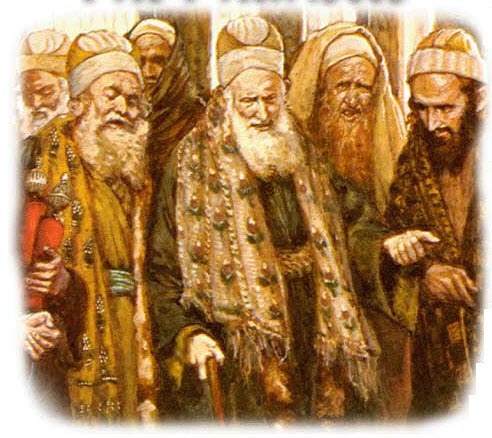
As we have been tracking through the Gospel of Mark we have encountered several accounts of Jesus’s ministry that have hopefully stuck in our minds. As I read and re-read the verses for today I was aware of the players in this account: Jesus and a teacher of religious law, a Sadducee (in one version). This teacher belonged to a group that Jesus variously labelled ‘hypocrites and vipers’. These were the guys that were big on rules and regulations, coming up with 613 of them, to keep the masses largely in tow. Sadly, because of their sheer number, the focus of the masses was always on how they were following them, seldom on the One they were supposed to be engaging with.
Anyway, I was struck by the opening gambit by the Sadducee (I’ll refer to this teacher as the Sadducee to avoid us muddling him with Jesus, who was often referred to as Teacher). We rarely hear Jesus being acknowledged positively by these guys but, in the first exchange between the two, Mark records that the Sadducee was impressed with how Jesus had just handled himself when quizzed by his group about whose wife the woman, who was hypothetically married to seven brothers in succession, would be at resurrection. In answering, Jesus steered the exchange, by Scripture references, to the declaration that God is the God of the living, not the dead, and so the question fades towards irrelevance. So, the Sadducee thought Jesus had answered well and proceeded to test him again by asking which of the commandments was the most important.
Because Jesus had absolute command of Scripture, he responded immediately with, “The most important is, ‘You must love the Lord your God with all your heart, all your soul, all your mind, and all your strength’. The second is equally important: ‘Love your neighbour as yourself.’ No other commandment is greater than these.”
Jesus had taken the first, to love God wholeheartedly, from Deuteronomy 6: 4-5, and the second came from Leviticus 19:18. What Jesus did was amalgamate the two separate components and present them as a ‘combo’. He didn’t go back to the Ten Commandments, which I have always thought of as the ‘standards’, to single out just one as most important.
Each of the Ten Commandments (see here) is worthy of its place in the list but none, singly or even grouped, convey the message that Jesus wanted to convey. He had come to do things differently; not to get us to work harder at our salvation but to transform our thinking and our hearts. He sought relationship. Loading another compliance issue on us would not have the right effect.
So, instead, Jesus offered a simple and effective alternative!
Consider in the exchange with the Sadducee the terms that each uses. In the first component of the answer, Jesus says we must love God with all of our heart, soul and strength (from the Deuteronomy verses) but adds ‘mind’, “putting the last piece of the human puzzle in place”, in the words of the Reverend Chelsey Harmon, a Canadian pastor whose work on this reading I consulted. She explained, the heart was thought to be the seat of our spiritual life, our inner being; the soul referred to one’s emotions and desires; and strength was understood as one’s power or ability to take action. And Jesus added to that the mind, which refers to our understanding and reasoning. While the Sadducee agreed in principle with the sentiments of Jesus’s response, his list of commitments was short. He stated we should love God with the heart, our understanding (mind) and strength. Missing was the soul, our emotions and desires. Straight away he had reduced the human response to God to less than what God expects and wants. Our emotional connection is a key component of the phenomenon of love.
Why is this important?
Think back to what a Jewish faith walk looked like a couple of millennia ago. Largely governed by compliance with those 613 rules and regulations, there was little focus on a personal relationship with God. Things were handled by intermediaries. You paid your money and purchased a variety of sacrificial offerings, depending upon what you were trying to gain restoration from. We have heard these ranged from small birds all the way through to the equivalent of the national intake of beef for several months!
The Hebrews reading argued that, to get right with God, such sacrifices only cleanse from ceremonial impurity. It went on to compare the sacrifice Jesus made for us. The sacrifice of the blood of Jesus purifies our consciences from sinful deeds.
What is the difference?
Ceremonial impurity relates to uncleanness that is without moral component. Ceremonial impurity could result from eating the wrong food, menstruation, sexual intercourse, certain skin conditions, and so on. When the sacrificial benefits of Jesus are highlighted alongside ceremonial impurity, the morality of the mind comes into consideration. The conscience of the sinner is taken into account. By his sacrifice Jesus is able to purify us when we confess and repent. There are no blood sacrifices other than his that can do this. His is the one true and perfect sacrifice for our sin. He is the only intermediary we need. He is the one who changes hearts.
The Sadducee was stuck in the old way. Jesus had come to launch the new way.
The second part of the “most important commandment” is that we should love our neighbour as we love ourselves. This, although derived from Scripture, put the Sadducee in a spot. He was a member of an elite group of wealthy upper-class men who made up what we could call the ‘Jewish aristocracy’, and would have benefitted from his position. The Sadducee would have been, in all likelihood, self-absorbed, self-focussed. The call Jesus is making in his “most important commandment” is about turning the God relationship into an other-focussed one. The change requires a turn from inward-focus to outward-focus.
So, for a number of reasons, Jesus perceives the response from the Sadducee to the most important commandment to be less than wholehearted. After praising the answer Jesus gave to his question, the Sadducee admits that to God, loving God and your neighbour matters more than performing any other religious duty or task, or keeping any specific law. It is this insight that Jesus takes note of, as a sign of the man’s wisdom and understanding. Jesus says to the man, “You are not far from the Kingdom of God.” “Not far from” implies to me, “Not quite there yet.” The Sadducee was not “all in”. Was Jesus offering a compliment, simply making a statement of fact, or was he giving a warning?
Mark’s Gospel has quite a few reminders about being ‘all in’. Remember the account of the rich man in Chapter 10 – he too was not far from the kingdom, and understood what Jesus was telling him, but he couldn’t do what was required of him. He was close, not far from the Kingdom, but he was not ‘all in’. In Chapter 8, after speaking of his coming crucifixion, Jesus tells the disciples that to follow Him they have to be ‘all in’, turning from their selfish ways by “taking up their crosses” and following Him. And there are repeated messages about how we should treat the marginalised and children; that our service to others is the way that we serve God. Taking these things together, the gospel message becomes clearer. Agreeing with and understanding the idea, or the law, or the commandment, gets us close to the Kingdom of God, but obeying it through action is what actually shows that we are part of God’s Kingdom. How we live shows whether we have gone ‘all in’ for the love of God, ourselves, and others.
So, what does it mean to love God and our neighbours all in? How can we be all in?
In answering this question I would highlight two references. The first is from Word for Today, 31 October 2024 (see here).
The second is from Reverend Doctor Selwyn Hughes, who concludes his series looking at ‘God’s story and the part we play in it’:
“On this last day of thinking together about God as the divine story writer, I would like to drop into your heart this thought: no matter how insignificant you may feel, if you believe in the Lord Jesus Christ and have been born again, the truth is that you are included in God’s big story. Your name is written into his universal epic. One day, when the whole story is unfolded in eternity, you will see what part you have played in the eternal scheme of things. You don’t have to spend your time scrupulously trying to figure out in what scene you appear. Trust that the Casting Director has given you a role that highlights not only your special talents and individuality but, more importantly, the way in which divine grace is at work in your life. Just to be part of God’s great epic, to be caught up in the narrative he is telling, is one of the highest privileges afforded any human being. A friend of mine says, ‘I don’t mind being just a spear carrier as long as I am part of God’s big story.’ How different life is when we realise that through all that happens to us a divine story, a bigger story, is being written. Drop your anchor into the depths of this reassuring and encouraging revelation. In the strongest currents of life it will, I promise, help to hold you fast.”
[And I love Selwyn’s prayer for that day: My Father and my God,how can I ever sufficiently thank youfor the priceless privilege of telling in my own voice your story?Help me from this day forwardto see all things from your point of view. In Jesus’ name. Amen.]
And if you are still not sure about how to be “all in”, perhaps think about this idea promoted by Joyce Meyer: that we do everything for God, and with God. A sure-fire way to start changing our thinking. And you know that our thoughts determine our words, and our words determine our actions, and our actions determine our character! If we determine to think of everything in terms of being for God then we will find that he is right there with us providing the wherewithal for us to be successful for him. Not about us any more, but “all in” for and with Him!








 stfrancischurchtairuanz