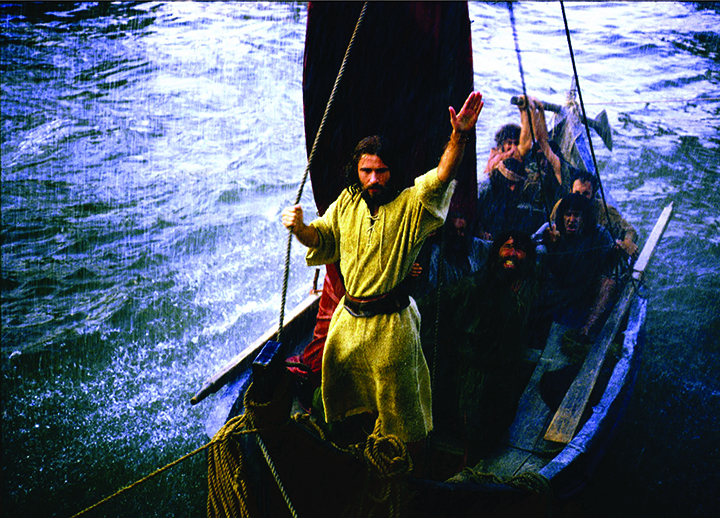
Have you ever thought of your Christian faith as a last resort option? Not a very flattering confession when so much more is promised from the walk of faith.
But it’s a position in which many former saints found themselves, and many still do. Have you read about Job? David? Elijah? Peter?
At the top end of the walk, there’s an immense, other-world pleasure in following the Lord Jesus Christ: joy and peace are readily present, love abounds, and victory is promised. But there’s a bottom end too, inevitably experienced once established on the narrow Christian path. The top end is cast temptingly by many a pastor and fisherman of the faith, wanting to make the lure appealing; the bottom end is more often gilded, or buried under pretence.
Job (the Book of) gilds no pretence. Scholars have spun Job (pronounced ‘Jobe’, apparently, according to those earnest scholars) as a parable of suffering and the folly of construing suffering as a consequence of sinful behaviour.
Perhaps they’re right; there is some truth in what they write. But if you read Job it just feels like an endless complaining monologue punctuated by pious, self-righteous platitudes from misguided friends; at the end of which the poor, innocent and unfairly-suffering Job gets seriously scolded by the Lord God Himself. It’s almost enough to put you off LGH altogether. Except that the parable (if that’s what it is) is bookended by (in front) the affirmation that Job was, indeed, a very faithful, godly man and by (in the end) the record that everything was eventually doubly restored to him (42:10). A very happy ending. LOL.
If unfamiliar with the story of Job, here’s a brief summary. And here’s an even briefer one: God allows Satan, the ‘accuser of the brethren’, a crack at Job, a certifiably good man. Job’s prosperous life and family are destroyed, and the poor man himself bottoms out in the gutter, diseased and bereft and wishing he was redacted (3:4-6) altogether. Four friends come and give him relentless sappy advice, little of which is helpful or relevant. God eventually shows up in person, belittles Job et al, and draws cries of awe and humility from the suffering man; and they all live happily ever after.
It’s all very well for me to be facetious and satirical – actually, the story itself seems to set that tone – but deep things come out of it. Don’t miss them. Even when Job is in the pits of despair, even when he wants his life to be expunged, even when his wife urges him to “curse God and die”, Job digs in like a falling man clawing at a crevice in a rock, like a fishing line – hook and sinker – wedged stubbornly in sunken rocks. Resolute and immovable in his ultimate confidence in God. Why? It’s the cleft of last resort. The alternative to hanging in there is unthinkable, regardless of pain. Some verses in Job, once you’ve waded through those relentless passages of bad advice and values instruction, are jewels if you can find them.
Here are three such, nay, four: (To his wife, advising that he commit suicide) “You’re talking like a foolish woman. Shall we accept good from God, and not trouble?” (2:9-10) And, “Though he slay me, yet will I hope in Him.” (13:15) “Oh that … God would be willing to crush me. Then I would still have this consolation – my joy in unrelenting pain – that I had not denied … the Holy One.” (Extracts from 6:8-10) “I know that my redeemer lives, and that in the end he will stand on the earth. … [And] I myself will see him with my own eyes. … How my heart yearns within me.” (Extracts from 19:25-27)
There is so much more to reflect on, but let me thumb over to the Gospel of John. At a particularly challenging time in Jesus’s journey, it seems that his followers were leaving his caravan. ‘The twelve’ are gathered for – who knows – a liquidation meeting, and Jesus says to them, “What about you guys, will you leave me too?” [paraphrasing!] Peter – grunty, earthy, Everyman Peter – answered him, “Lord, to whom shall we go? You have the words of eternal life.” (John 6:66-69)
And, that’s the point of Job, yes? That’s the bottom line! No matter how dark things look, there is no viable alternative. Where else can we go, what else can we do, but cling in here to the ‘cleft in the rock’, and weather whatever circumstance throws at us?
This is the true gutsy stuff of the faith journey, where we find ourselves more often than we like to admit. And some Christians get way more than their fair share of suffering. Why? We can’t know. Job didn’t. It simply seems to suit the God of Creation – of galaxies and oceans, leviathans and behemoths – to allow some of his faithful to suffer.
If you’re feeling bottomed out (and this is written with the sense that someone out there needs to read this today), channel Job and Peter. Don’t complain (beyond practical problem-solving). Read Job through without reading the advice from his shallow friends – just the words of Job himself – and you’ll find perspective on how to process anguish and suffering. Read it and draw strength. That’s the bottom line. From there the direction is wearily, warily upwards.
(Based on John 20:19-31; Acts 4:32-35; 1 John 1:1-2:2)
In this second Sunday of the Easter season, we have thrilled at the resurrection of Jesus and now we are examining the time before his ‘ascension’.
Pondering Good Friday, did you grasp the depth of despair that the disciples were feeling? Their Lord and teacher had been crucified, raising not even a finger in self-defence, instead sticking to the plan that he came to fulfil. This man, who had patiently spent three years or more showing them who He really was, was gone. And then, on Easter morning he wasn’t in the tomb – he had risen from the dead!
With no radio, TV, internet or social media to get the message out quickly, the news of his resurrection was by word of mouth. Not everyone heard it at once. And following his resurrection, he was slow to reveal himself to his followers. Followers that were in hiding, on the fringes, grappling with all they had seen and heard.
Last week we heard about ‘the Marys’ and how they came across the open tomb, learned from an angel that Jesus had risen from the dead, but went away “trembling and bewildered”. You will recall the walk to Emmaus (Luke 24), where Jesus walked and talked, unrecognised, with two sad travellers who told him all about the events of his crucifixion. He withheld his identity until they were breaking bread together at their journey’s end.
And it was similar for his disciples. His closest followers, the disciples, those who had come to grasp that Jesus was more than a man, were meeting behind closed doors because of their fear of the Jewish leaders. If it had happened to Jesus, surely they were next! For these followers, their foundations had been rocked, to say the least. At stake was their belief.
In the Gospel encounter, Jesus was suddenly standing among his disciples, offering peace, restoring their joy and “breathing” the Holy Spirit into them, preparing them to go, to take the Good News out to the world. But not everyone was there. Thomas was absent – who knows where. And, of course, when he is told that the others have met with the risen Jesus already, condemns himself, probably forever, to be known as Doubting Thomas: “I won’t believe it unless I see the nail wounds in his hands, put my fingers into them, and place my hand into the wound in his side.”
Can you imagine what would have been said in the group over the next eight days?
At the next gathering, of the whole group this time, Jesus again is suddenly in their midst, again offering peace. Then, turning to Thomas, Jesus invites him to satisfy himself that he is indeed alive! “Put your finger here, and look at my hands. Put your hand into the wound in my side. Don’t be faithless any longer. Believe!”
Leendert van der Cooghen (1654)
Thomas’s response is profound, indicating a monumental restoration of his belief, acknowledging Jesus as his Lord and God. And Jesus concludes by saying, “You believe because you have seen me. Blessed are those who believe without seeing me.”
As we consider ‘belief’, our theme for today, I’d like to explain how we often consider such concepts. We humans are very good at thinking in terms of degree. We find that a continuum is a good way to visualise what we are thinking about. Take ‘good and bad’, for example. We probably all locate our behaviour, attitudes, tastes, etc, on this continuum. I know as a small child, desperate to please my hard-working Mum, I tried hard to be good at times – to the point of coercing my little sister and brother to clean and tidy (dry up) the bathroom following our communal bath, put on pyjamas and march out singing, “Are we good children?” Yes, we were right up the good end of the continuum! But you may be surprised to know I haven’t always been up that end! Truth be told, I have a rap-sheet that stretches from pre-teen to adult! For every instance of ‘indiscretion’ I had what I thought were reasonable excuses and justifications. In my mind I was simply sliding down the goodness scale a little. After all, there were a lot of people a whole lot worse than me (weren’t there?).
But is that the way Jesus expects us to be? Many concepts and states simply don’t fit on a continuum. Jesus was more about absolutes, which he referred to as truth. Continuum-thinking can fool us!
Take for instance John’s explanation (from the First John reading): “If we claim we have no sin, we are only fooling ourselves and not living in the truth. [And how often do we do that!] But if we confess our sins to God, he is faithful and just to forgive us our sins and to cleanse us from all wickedness. If we claim we have not sinned, we are calling God a liar and showing that his word has no place in our hearts.”
So, if you are not sure, yes, we are all sinners. But the great thing is, God allows for our humanness. And there is a way of getting right with God. We just need to confess our sins and seek God’s forgiveness (and forgive others as we expect God to forgive us – remember the Lord’s Prayer).
Jesus is our advocate, supporter and saviour. He has already atoned for our sins, once and for all time. But we struggle with this, don’t we. In our liturgy, in one of our prayers of confession, we seek forgiveness for the sins we cannot even bring ourselves to acknowledge: We need your healing, merciful God; give us true repentance. Some sins are plain to us; some escape us; some we cannot face. Forgive us; set us free to hear your word to us; set us free to serve you. Some comfort may lie in the fact that, in absolute terms, if you admit your sinful nature and seek forgiveness you surely can be counted as a believer! If you didn’t believe, why would you bother?
A question I suspect you may be sitting here asking is, “Do I really believe?” Technically, if you harbour any doubt, however small, you have fallen into disbelief. If you disbelieve, you don’t believe. Sometimes we ask ourselves, “What do I believe?” But doesn’t this just open the continuum door again and gives rise to ‘schools of thought’ and different theologies?
I assume Thomas (the Doubter) would have called himself a believer. He had spent a great deal of time listening to and living with Jesus. He would have heard the teachings first-hand and seen the miracles and signs Jesus performed in person. It must have had a huge impact on him. When Jesus said to him, “You believe because you have seen me”, I think that statement applied equally to the time Thomas had spent in the company of Jesus prior to the crucifixion. But Thomas’s belief was sorely tested by the crucifixion. His belief wavered. He did what a lot of us do, he applied conditions. “I’ll believe if I see and touch.” Because we too waver, we need to consider ways to remain steadfast and faithful.
Think about the Acts example we have heard this morning. “All the believers were united in heart and mind.” What unified them? The binding force can only have been Jesus. For them, their outlook on everything was changed. Now they understood about stewardship, sharing, caring for the needy, spreading the Good News.
Can we, Church family, learn anything from that?
Perhaps this recent example will stir something in us: The other day sister Sharon came into the shop to check on us, to make sure we were doing okay. And we appreciate this, of course. But this was while she was doing some shopping to keep her home running, as her hubby recovers. Her first concern was for others. In the course of the conversation, she spoke about the strength she was able to draw from the knowledge that there was a large group of pray-ers out there upholding them both at a time when they were unable to do it for themselves. The conclusion we drew from our chat was that everyone in our Church family is involved in shared ministry when they stop to pray for others in need. Bless you, Sharon and co, for all that you do.
So there’s a simple and manageable thing that we can all do to shore up our belief, and experience that unity of heart and mind – pray for and with each other. You have all heard, the family that prays together, stays together! And you don’t need to have the special words, dripping of high church. When you pray, you just need to speak to God from your heart. Sometimes we can’t find the words to say at all, we just weep and moan. In Romans 8 verse 26 it says, “And the Holy Spirit helps us in our weakness. For example, we don’t know what God wants us to pray for. But the Holy Spirit prays for us with groanings that cannot be expressed in words.” If God can interpret the Spirit’s groanings, he can surely interpret ours.
To develop and strengthen belief we need to know Scripture. Every prop and shield we could ask for can be found in the written Word of God. We can have faith that what we read and absorb has been tested and approved for our use. We have the accounts of eye witnesses who speak to the things we grapple with and give assurance that our belief is justified.
From the First John reading again: “We proclaim to you the one who existed from the beginning, whom we have heard and seen. We saw him with our own eyes and touched him with our own hands [even Thomas!]. He is the Word of life.” Going on, “God is light, and there is no darkness in him at all.” And, “If we are living in the light, as God is in the light, then we have fellowship with each other.” Our belief cements our relationships. We belong to the light. We are brothers and sisters together.
The last thing Jesus said to Thomas in the Gospel encounter was, “Blessed are those who believe without seeing me.” If you struggle with finding relevant Scripture that applies to you, then understand: this was addressed to you (and the rest of us). Jesus knew that he was soon to ascend to be with the Father. He was entrusting his ministry to the disciples and finalising the preparations before departure. He broke down their fears and with his breath he filled them with the Holy Spirit. They were ready to go out as his witnesses so that we could believe.
Apostle John wraps up the Thomas episode, stating that his Gospel was written so that we will “continue to believe that Jesus is the Messiah, the Son of God, and that by believing in him we will have life by the power of his name”.
Are you convinced? In evangelical settings the preacher would call for an “Amen” at this point. Can I hear an Amen?
Psalm 133 speaks about harmony. Listen: How wonderful and pleasant it is when brothers and sisters live together in harmony! For harmony is as precious as the anointing oil that was poured over Aaron’s head, that ran down his beard, and onto the border of his robe. Harmony is as refreshing as the dew from Mount Hermon that falls on the mountains of Zion. And there the Lord has pronounced his blessing, even life everlasting.
We have much to be gained from being family together. Being honest with one another, encouraging one another, praying for one another, sharing with one another, caring for one another, bringing the light to one another. Belief will be solidified and lived out in the company of like-minded others. Our friends at Elim Church call it “doing life together”.
May we go from here today rejoicing in the risen Christ, solid in our belief that he is our Lord and Saviour, and shining our light in every way for one another.
Christ is risen! He is risen indeed. Alleluia! These words will resound and be passed on in churches all around the world this very day. Bells will ring, hymns of praise will be sung, rafters will be lifted and eggs will be shared. There is a universal deep joy and gratefulness for the saving message of Good News for all people — that there is peace with God, through Jesus Christ, who is Lord of all. There is no greater story of God’s power and love. The tomb is empty!
In this morning’s gospel reading we find the three woman disciples wending their way to the tomb carrying the burial spices. They want to anoint their beloved Christ’s dead body. It will be their last act of love toward the one who showed them such love. But how? As they headed to the tomb that morning, that was foremost on their minds. They kept asking each other: “Who will roll away the stone for us?” For it was a very large stone.
Apparently, which surprises me because I think they were very practical women, they weren’t thinking about whether the guards would let them approach the tomb. They weren’t worried about being arrested, as followers of Jesus. They weren’t concerned with how they would react to seeing Jesus’s dead body, their Christ, crucified and laying dead in a tomb. No. All they were really thinking about was, who would roll away the stone for them? And as it turns out what they saw as the big problem was not a problem at all! When they arrived the stone had already been rolled aside! I can imagine them approaching the tomb very cautiously once they saw that, and when they saw the young man in a white robe sitting there they would have stopped in their tracks. “Shocked” the narrative says, but I think that would be an understatement; indeed, the angel hastens on to say, “Don’t be alarmed, you are looking for Jesus of Nazareth, who was crucified. He isn’t here! He is risen from the dead! Look, this is where they laid his body.” At this stage I’m sure they were all looking at the empty tomb, dumbstruck. There it was – an empty tomb! And, the angel continues, “Go and tell his disciples, including Peter, that Jesus is going ahead of you to Galilee. You will see him there, just as he told you before he died.”
And the Gospel of Mark abruptly finishes with the women fleeing from the tomb, trembling and bewildered, and, it says, they said nothing to anyone because they were too frightened! And if that were so, it could have been the end of the story. But, praise God, it isn’t. We know from the other Gospels that the frightened silence of the women on that Easter morning eventually gave way to proclamation and passed on words from the angel. Their fear from the empty tomb did not hold them. Their alarm subsided, their courage deepened, their trauma healed, and their amazement grew. They learned how to choose hope. They learned how to tell the story, to pass it on, and as they did, the story blossomed and grew. Joy came. Faith came. Peace came. Love came. And slowly the glorious truth of a conquered grave and a risen Messiah made its way from their emboldened faithful witness lips to every corner of the world. The story didn’t depend on them. But it changed them, and as they changed, the world around them changed too.
Easter was my mother’s most favourite time of the year. It was the culmination of all she believed and, as a family, because of her, it has become ours. She was our first witness. It was from her lips the Easter story was passed on to us. Can you remember who first passed on the Good News to you?
The Good News needs to be ’embodied’ to pass it on. As Rowan Williams (recent Archbishop of Canterbury) explains: “The believer’s life is a testimony to the risen-ness of Jesus: he or she shows that Jesus is not dead by living a life in which Jesus is the never-failing source of affirmation, challenge, enrichment and growth.”
God loved us so much he sent his Son that we might have life and live it abundantly. (John 10:10) We are anchored in that love; changed by that love. It does not protect us from harm, illness, or from hard decisions, or from emotional ups and downs, or anger at the pain of the world. It simply assures us that there is, ultimately, no contest between God’s love and the forces that bring turmoil and loss of unity in the world, and in the human spirit.
That is the Good News for today: Easter, God’s great love story … it doesn’t end in defeat, sorrow or loss; or an empty tomb. It is full of hope, love and joy! The grave is empty, love is eternal and death’s defeat is sure. Christ is risen. Alleluia!
Psalm 51 was written after King David’s transgressions in the taking of Bathsheba and sending her husband and his soldiers to die in frontline of the battle. So, how many notable mistakes might we have made this week and even this morning?! Anyone make a really big mistake and want to confess? We are in the best place to do this.
I had a gut wrenching incident at the beginning of Lent. It took me low and I had to work through it. It happened on a Thursday, so I had to carry it until Monday! My principle was ok, in my opinion, but not so much the opportunity I took to deliver it. I took my time with careful consideration about why I was attempting to do this, as it was an opportunity to be heard and it was for the persons concerned to understand that things are not the way they talk about them. Also I was really aware of who I was doing this for, which was not myself. I felt as if I was a plant that had been cut down. My apologies followed and it all worked out, with some slight improvements. However I gave myself quite a reflective jolt that I had not anticipated; but that can happen in the life of emails!
I guess I was spitting out to myself “Create in me a clean heart, O God, and put a new and right spirit within me”, just like David. Psalm 51 is an individual lament in which there is a single psalmist voice speaking about a man who is crying out to God for deliverance from what he felt was a life-threatening situation. The Psalmist records David’s confession of his sin and his pleas to God to have mercy, to ‘blot me out, to wash and cleanse me’ from “my transgressions”, “iniquity”, and “sin”. David had made a big mistake against God and against humanity. Against his family, friends, staff, and community.
The root meaning of transgression is ‘to go against, to rebel’, iniquity means ‘to bend, to twist’, and sin means ‘to miss a mark’. They are all words that really acknowledge the gravity of a situation and are well suited for us all to contemplate in this Lenten season.
And while we are on mistakes, there’s a big theological misinterpretation in this psalm. This is one of the most misinterpreted verses in the Old Testament, in my and many scholars’ opinion. David is in the depths of remorse, absolutely gutted, and he is personally declaring that his ‘missing the mark’ feels as though it is all part and parcel of his conception and birth, since he did something so wrong! Many interpreters have understood and used these words to reflect the concept of ‘original sin’, a depraved nature that is intrinsic to every human being, which was passed down to us by the first human pair. Of course, you will have your own theological understanding and may very well hold to the ‘original sin’ doctrine (formed by Augustine of Hippo in the third century). However, a more plausible interpretation, is that within the psalm it is expressing with these words the all-encompassing quality and quantity of the guilt that accompanied David’s sense of wrongdoing.
Yet the psalm, rather than dwelling on transgression, guilt and wrongdoings, turns its focus towards a God who delights in truth, who bestows wisdom and seeks the creation of a clean heart, with a right spirit placed within. Out of the depths of total remorse, David longs to be forgiven in some way and to hear joy and gladness and be able to rejoice and be renewed.
Consequently he requests a few things of God to assist in his renewal:
David longs for inward purity with a clean heart, with pure thoughts, pure emotions, and pure motives. He wants to gain a deeper strength of character. David has felt some of his weaknesses and vulnerability and wants to be strengthened so that he might be established in the ways of righteousness. He desires to be blessed and he knows that this type joy and happiness can only be experienced from being in fellowship with God. He wants to be restored knowing the joy of God’s salvation and he finally desires to be sustained in his walk with God, with a strong desire to do things the right way.
With these requests, then, he commits himself to a life of service and, eventually, he gains an interest in the people around him. David becomes willing to move beyond his own problems towards thinking of others. Sometimes our wrongs paralyse and consume us. We don’t want to think of others, we just want to lick our own wounds and sink into ‘woe is me’. I know in my experience that it really took an effort to concentrate on the meetings with others, before Monday finally arrived.
David experienced that with forgiveness there was a restoration to usefulness again. David believed God and accepted that he was forgiven, and could then turn his mind to others’ needs.
Likewise, the season of Lent is about attending to what needs to be done and reflecting on past experiences. Some mistakes may have been committed against God, against humanity, against our family, friends and community. Lent is a time to be honest with ourselves, access what changes need to happen in our own lives, try to make our world a better place and to stretch and grow spiritually. Lent is meant to be a time out of time; a piece of life dedicated to rethinking. It’s time to ask where we were last year at this time and where we are now. Or, most of all, where we want to be? And what do we need to do to get there? Lent calls us to take the space and time we need to make the changes in life that we need. It’s about plotting our own renewal into a more placid, a more regular, a less hectic self. It’s about sinking into the kind of personal reflection that brings us to confront the self for which we seek. Lent is not a spiritual competition, a kind of ‘no pain, no gain’ exercise of the soul. Lent is the time to renew the best in us. It is a summons to live anew and be refreshed.
The process that David followed in Ps 51 aligns well with a Lenten season and it is also the liturgical process we follow every communion service. David sinned big, repented big, and the Bible remembers him (in 1 Samuel 13 and Acts 13) as “a man after God’s own heart”. Our mistakes may not be as public as David’s, but we all fall short of living well, in the steadfast love and mercy of God.
David of ancient Israel petitioned for the creation of a pure heart, and the renewal of a right spirit within himself. If these words were fitting for him then, then they are just as fitting for us in this twenty-first century.
[Editor: Megan has asked that the intercessory prayer from the Lenten service at which she delivered this reflection accompany this post. The script of that prayer follows …]