by Sharon Marr
(Based on Luke 14:25-33; Philemon 1-21)
My reflection this morning comes from Phillip Garside, a lay preacher, publisher and a member of Wesley Methodist Church in downtown Wellington, who created for us this series of worship resources celebrating Creation:
Today we stand at a swirling meeting place of currents from Scripture and ocean, of discipleship and ecology, of the personal and the planetary. It is Ocean Sunday, the first Sunday in the Season of Creation, and we are drawn together by the call to look deeper: into Scripture, into our own hearts, and into the ocean’s hidden depths.
Our two readings today come from Philemon and Luke. They seem quite different on the surface, but I believe they share a deep challenge. Both ask us to go beyond surface appearances. Both ask: What does it really mean to follow Jesus? And both call us to costly transformation.
Let’s start with Philemon.
This is one of Paul’s shortest letters, but also one of his most subversive. He’s writing from prison, with Timothy alongside him. It’s addressed to Philemon, a church leader, and to co-leaders of the church that met in his home. Notice that Apphia, a woman, is named as an equal partner in leadership. From the earliest gatherings of Jesus-followers, women were also leaders.
Paul is asking Philemon to do something really radical: free Onesimus, his slave. But it’s more than just a plea for releasing to freedom. Paul says, “Receive him no longer as a slave, but as more than a slave – as a beloved brother.” This is a relational revolution. In a society reliant on slavery, Paul doesn’t explicitly condemn the system, but he undermines it by reframing the relationship between Philemon and Onesimus. And the implications are seismic. Paul is saying, in effect, you cannot follow Jesus and treat another believer as property.
What would it mean for us to act on that same conviction today? We don’t operate slave economies, but we live in a world that tolerates exploitation in many forms. Are we prepared to disrupt the status quo, as Paul did, for the sake of love, equality, and justice? There’s a cost here. Philemon will lose the economic advantage of Onesimus’s labour. His community might question his choices. It’s messy. But love often is.
Now to Luke. Here, Jesus delivers a shocking line: “Whoever comes to me and does not hate father and mother, wife and children, brothers and sisters, yes, and even life itself, cannot be my disciple.”
Let’s be clear. I don’t believe Jesus is telling us to literally hate our families. This is rhetorical overstatement – hyperbole – a way to jolt us his listeners into paying attention. And we need this sometimes. The writer of Luke uses strong language here to underscore a real point: following Jesus isn’t just a lifestyle tweak. It requires reordering our values. It costs us something.
Jesus goes on to speak of taking up the cross, of counting the cost. Discipleship is not about comfort; it is about transformation.
And so today, Ocean Sunday, we turn to the ocean as both symbol and teacher.
The oceans cover three-quarters of the earth’s surface. From space, they dominate the planet and from New Zealand’s perspective, we know it intimately. We are an island nation – cradled, protected and challenged by the Pacific. Pasifika spirituality offers us a profound lens here. The Tongan concept of Va describes the sacred relational space between people, a space that must be honoured and tended. It reminds us that the ocean doesn’t divide the Pacific Islands. It connects them. The sea is the sacred space that links us, that carries our stories, that shapes our identities.
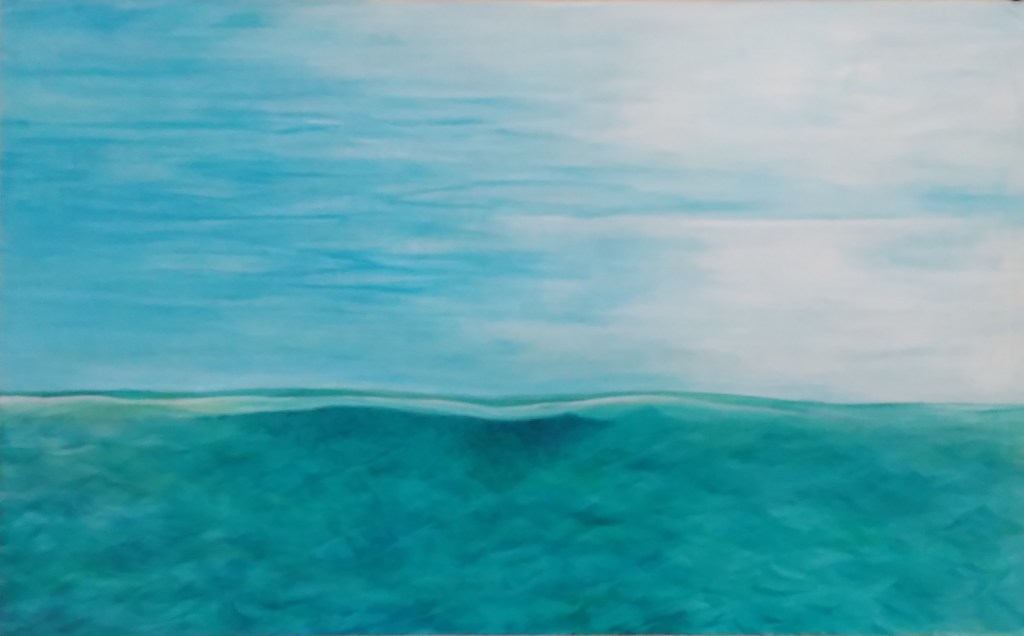
Siosifa Pole, a Tongan Methodist minister, in his book A Tongan Migrant’s Way, wrote of the ocean as a space of freedom and connection. Each island may be autonomous, but the ocean touches every shore. Likewise, each person is unique, but the Spirit of God connects us in a shared ocean of being. Tauhi-va – keeping the in-between space sacred – is how we live well together.
What might it mean to “count the cost”, not just as individuals, but collectively, for the sake of our shared oceans?
The ocean offers us food – kai moana. It sustains ecosystems. It shapes climate. It reflects the interconnectedness of all life. But it is also under threat. Rising temperatures, plastic pollution, overfishing: these are the modern equivalents of slavery and exploitation, this time not of people, but of creation.
As Christians, we cannot say we follow The Way of Jesus and ignore this. So we ask: What’s below the surface?
Beneath the calm blue, there are currents of crisis. But there are also currents of hope. I recommend David Attenborough’s film Ocean, which makes us aware of our many challenges; but at the end David leaves us with the thought that all is not lost, if … and that “if” is up to us.
As Paul challenges us to change how we relate to one another, the ocean calls us to change how we relate to the planet. If Jesus says discipleship must cost us something, our discipleship today must include climate action, ecological repentance, and learning to live more simply.
How do we, as followers of Christ, live out a transformed ethic of love? How do we treat the Onesimuses of our day with full dignity? How do we enter the va with creation itself – honouring our relational space with the ocean, the land, the creatures?
Let me offer two examples.
First: A small coastal community in Fiji has moved their whole village inland, to escape rising seas. They sing hymns as they go. They weep for the ground they leave behind. They pray for those who will one day follow.
Second: Here in this place, Tairua residents block access to their main wharf after seeing “wholesale slaughter” of an elusive and unprotected fish species, pink Maomao. This is still being followed up, and because of their action, there is hope.
Discipleship. Cost. Transformation.
Following Jesus doesn’t mean escaping the world’s problems. It means stepping into them with love. It means standing with Onesimus. It means seeing the sacredness of the ocean, not as something to cross or control, but as something to respect, protect, and learn from. This Ocean Sunday, may we take up the challenge of Paul and the warning of Jesus.
Let us:
– Release what binds others.
– Reorder our lives to reflect God’s deep values.
– Honour the sacred space between us and the earth.
– And listen to what lies beneath the surface.
For there, in the deep, the Spirit moves.
 stfrancischurchtairuanz