by Barry Pollard
(Based on Mark 12:28-34; Deut 6:1-9; Heb 9:11-14)
Have you ever been to a casino? If you haven’t ventured through the alluring doors into a gambling den, perhaps, then, you have seen on a big screen the gambling in Monte Carlo and such places?

Have you heard the expression ‘I’m all in’? This is when a gambler decides that luck is finally on their side and will favour them with a big win. The phrase means, I am betting all the money I have. A pretty big deal – especially when playing games of chance. The expression has become a metaphor to mean total commitment to something. Today I am not using the term to encourage change in your gambling habits; instead I’m hoping it will describe the relationships that we can have for and with God.
Our first reading today, from Deuteronomy, came from a section subtitled “A Call for Wholehearted Commitment”. Hear again:
Listen, O Israel! The Lord is our God, the Lord alone. And you must love the Lord your God with all your heart, all your soul, and all your strength. And you must commit yourselves wholeheartedly to these commands that I am giving you today. Repeat them again and again to your children. Talk about them when you are at home and when you are on the road, when you are going to bed and when you are getting up. Tie them to your hands and wear them on your forehead as reminders. Write them on the doorposts of your house and on your gates.
[I continue to wear my 2014 Hope Project bangle on my wrist as a reminder of my commitment to God and His to me.]
Did we grasp the intensity that built through these few verses? Our love for God should be with all our heart, soul and strength. And our commitment to the commands that were given to us will be demonstrated by our attention to them – talking about them with our children, to each other, and strangers, every waking moment. And by sporting physical reminders of them and even decorating our homes with them!
As we have been tracking through the Gospel of Mark we have encountered several accounts of Jesus’s ministry that have hopefully stuck in our minds. As I read and re-read the verses for today I was aware of the players in this account: Jesus and a teacher of religious law, a Sadducee (in one version). This teacher belonged to a group that Jesus variously labelled ‘hypocrites and vipers’. These were the guys that were big on rules and regulations, coming up with 613 of them, to keep the masses largely in tow. Sadly, because of their sheer number, the focus of the masses was always on how they were following them, seldom on the One they were supposed to be engaging with.
Anyway, I was struck by the opening gambit by the Sadducee (I’ll refer to this teacher as the Sadducee to avoid us muddling him with Jesus, who was often referred to as Teacher). We rarely hear Jesus being acknowledged positively by these guys but, in the first exchange between the two, Mark records that the Sadducee was impressed with how Jesus had just handled himself when quizzed by his group about whose wife the woman, who was hypothetically married to seven brothers in succession, would be at resurrection. In answering, Jesus steered the exchange, by Scripture references, to the declaration that God is the God of the living, not the dead, and so the question fades towards irrelevance.
So, the Sadducee thought Jesus had answered well and proceeded to test him again by asking which of the commandments was the most important.
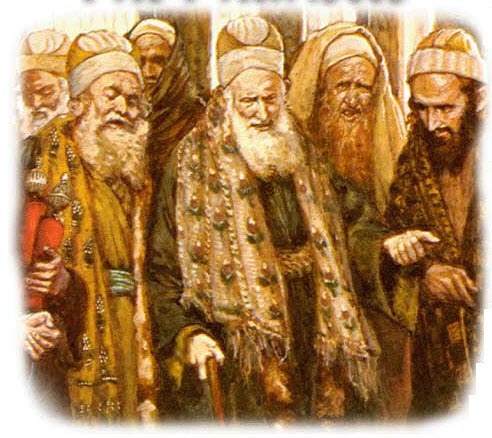
Because Jesus had absolute command of Scripture, he responded immediately with, “The most important is, ‘You must love the Lord your God with all your heart, all your soul, all your mind, and all your strength’. The second is equally important: ‘Love your neighbour as yourself.’ No other commandment is greater than these.”
Jesus had taken the first, to love God wholeheartedly, from Deuteronomy 6: 4-5, and the second came from Leviticus 19:18. What Jesus did was amalgamate the two separate components and present them as a ‘combo’. He didn’t go back to the Ten Commandments, which I have always thought of as the ‘standards’, to single out just one as most important.
Each of the Ten Commandments (see here) is worthy of its place in the list but none, singly or even grouped, convey the message that Jesus wanted to convey. He had come to do things differently; not to get us to work harder at our salvation but to transform our thinking and our hearts. He sought relationship. Loading another compliance issue on us would not have the right effect.
So, instead, Jesus offered a simple and effective alternative!
Consider in the exchange with the Sadducee the terms that each uses. In the first component of the answer, Jesus says we must love God with all of our heart, soul and strength (from the Deuteronomy verses) but adds ‘mind’, “putting the last piece of the human puzzle in place”, in the words of the Reverend Chelsey Harmon, a Canadian pastor whose work on this reading I consulted. She explained, the heart was thought to be the seat of our spiritual life, our inner being; the soul referred to one’s emotions and desires; and strength was understood as one’s power or ability to take action. And Jesus added to that the mind, which refers to our understanding and reasoning.
While the Sadducee agreed in principle with the sentiments of Jesus’s response, his list of commitments was short. He stated we should love God with the heart, our understanding (mind) and strength. Missing was the soul, our emotions and desires. Straight away he had reduced the human response to God to less than what God expects and wants. Our emotional connection is a key component of the phenomenon of love.
Why is this important?
Think back to what a Jewish faith walk looked like a couple of millennia ago. Largely governed by compliance with those 613 rules and regulations, there was little focus on a personal relationship with God. Things were handled by intermediaries. You paid your money and purchased a variety of sacrificial offerings, depending upon what you were trying to gain restoration from. We have heard these ranged from small birds all the way through to the equivalent of the national intake of beef for several months!

The Hebrews reading argued that, to get right with God, such sacrifices only cleanse from ceremonial impurity. It went on to compare the sacrifice Jesus made for us. The sacrifice of the blood of Jesus purifies our consciences from sinful deeds.
What is the difference?
Ceremonial impurity relates to uncleanness that is without moral component. Ceremonial impurity could result from eating the wrong food, menstruation, sexual intercourse, certain skin conditions, and so on. When the sacrificial benefits of Jesus are highlighted alongside ceremonial impurity, the morality of the mind comes into consideration. The conscience of the sinner is taken into account. By his sacrifice Jesus is able to purify us when we confess and repent. There are no blood sacrifices other than his that can do this. His is the one true and perfect sacrifice for our sin. He is the only intermediary we need. He is the one who changes hearts.
The Sadducee was stuck in the old way. Jesus had come to launch the new way.
The second part of the “most important commandment” is that we should love our neighbour as we love ourselves. This, although derived from Scripture, put the Sadducee in a spot. He was a member of an elite group of wealthy upper-class men who made up what we could call the ‘Jewish aristocracy’, and would have benefitted from his position. The Sadducee would have been, in all likelihood, self-absorbed, self-focussed. The call Jesus is making in his “most important commandment” is about turning the God relationship into an other-focussed one. The change requires a turn from inward-focus to outward-focus.
So, for a number of reasons, Jesus perceives the response from the Sadducee to the most important commandment to be less than wholehearted.
After praising the answer Jesus gave to his question, the Sadducee admits that to God, loving God and your neighbour matters more than performing any other religious duty or task, or keeping any specific law. It is this insight that Jesus takes note of, as a sign of the man’s wisdom and understanding. Jesus says to the man, “You are not far from the Kingdom of God.” “Not far from” implies to me, “Not quite there yet.” The Sadducee was not “all in”. Was Jesus offering a compliment, simply making a statement of fact, or was he giving a warning?
Mark’s Gospel has quite a few reminders about being ‘all in’. Remember the account of the rich man in Chapter 10 – he too was not far from the kingdom, and understood what Jesus was telling him, but he couldn’t do what was required of him. He was close, not far from the Kingdom, but he was not ‘all in’.
In Chapter 8, after speaking of his coming crucifixion, Jesus tells the disciples that to follow Him they have to be ‘all in’, turning from their selfish ways by “taking up their crosses” and following Him.
And there are repeated messages about how we should treat the marginalised and children; that our service to others is the way that we serve God.
Taking these things together, the gospel message becomes clearer. Agreeing with and understanding the idea, or the law, or the commandment, gets us close to the Kingdom of God, but obeying it through action is what actually shows that we are part of God’s Kingdom. How we live shows whether we have gone ‘all in’ for the love of God, ourselves, and others.
So, what does it mean to love God and our neighbours all in? How can we be all in?
In answering this question I would highlight two references. The first is from Word for Today, 31 October 2024 (see here).
The second is from Reverend Doctor Selwyn Hughes, who concludes his series looking at ‘God’s story and the part we play in it’:
“On this last day of thinking together about God as the divine story writer, I would like to drop into your heart this thought: no matter how insignificant you may feel, if you believe in the Lord Jesus Christ and have been born again, the truth is that you are included in God’s big story. Your name is written into his universal epic. One day, when the whole story is unfolded in eternity, you will see what part you have played in the eternal scheme of things. You don’t have to spend your time scrupulously trying to figure out in what scene you appear. Trust that the Casting Director has given you a role that highlights not only your special talents and individuality but, more importantly, the way in which divine grace is at work in your life.
Just to be part of God’s great epic, to be caught up in the narrative he is telling, is one of the highest privileges afforded any human being. A friend of mine says, ‘I don’t mind being just a spear carrier as long as I am part of God’s big story.’
How different life is when we realise that through all that happens to us a divine story, a bigger story, is being written. Drop your anchor into the depths of this reassuring and encouraging revelation. In the strongest currents of life it will, I promise, help to hold you fast.”
[And I love Selwyn’s prayer for that day:
My Father and my God, how can I ever sufficiently thank you for the priceless privilege of telling in my own voice your story? Help me from this day forward to see all things from your point of view.
In Jesus’ name. Amen.]
And if you are still not sure about how to be “all in”, perhaps think about this idea promoted by Joyce Meyer: that we do everything for God, and with God. A sure-fire way to start changing our thinking. And you know that our thoughts determine our words, and our words determine our actions, and our actions determine our character! If we determine to think of everything in terms of being for God then we will find that he is right there with us providing the wherewithal for us to be successful for him. Not about us any more, but “all in” for and with Him!

 stfrancischurchtairuanz