by Sharon Marr
(Based on Mark 2:23-3:6)
The gospel reading today could suggest laws and rules that to our ears sound petty and unreasonable, so before we proceed I thought I would remind you of some laws in the world that are still enforceable today!
In England the 1854 Metropolitan Police Act states anyone knocking on doors and scarpering for fun could land themselves with £500 fine. Wow! Hands up those who, along with me, have been guilty of this heinous crime in their childhood.
Meanwhile, in California: Nobody is allowed to ride a bicycle in a swimming pool and … it is also illegal to set a mouse trap without a hunting license. Enough said!
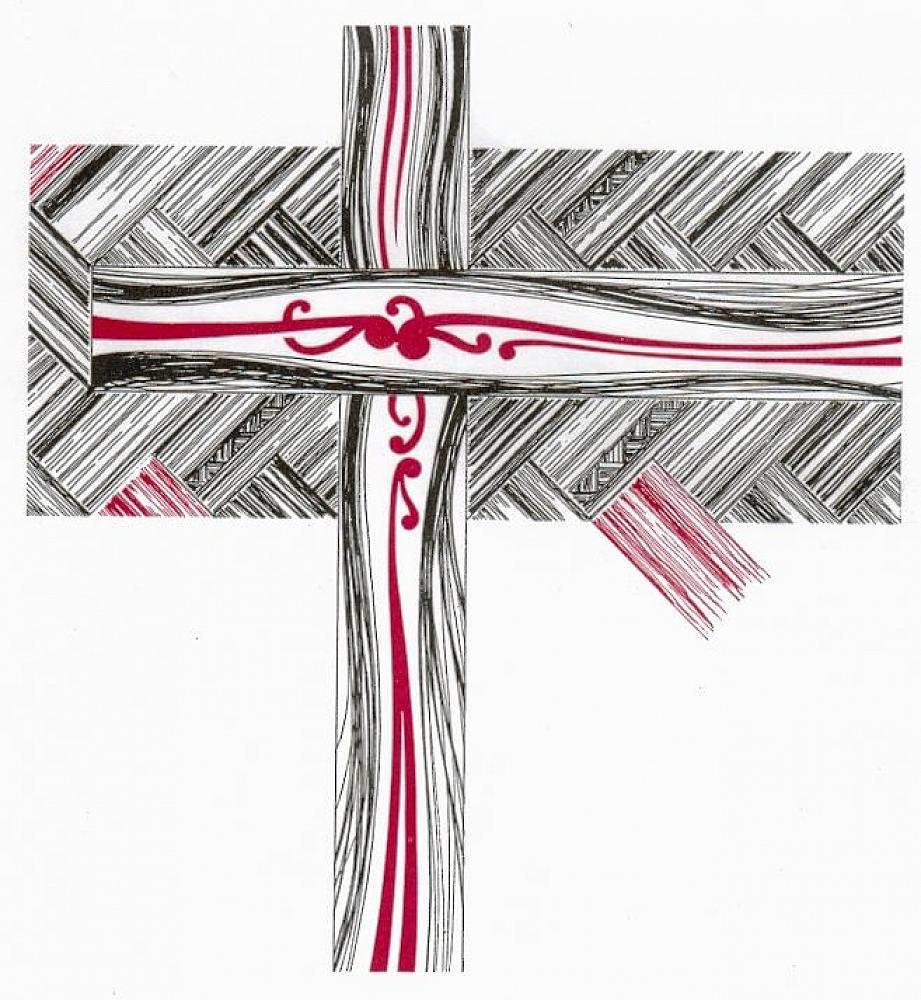
Today we are recognizing Te Pouhere Sunday. “Pou” is a post and “here” means to tie. The imagery is that of an anchor. A place where we could anchor our “waka”, “va’a”, or boat. Te Pouhere is a Sunday put aside to celebrate the Anglican Church constitution – the “post” of the Anglican Church in Aotearoa New Zealand and Polynesia, in which there is provision for three equal partners. Today we celebrate our identity of working alongside each other, praying with and for each other, and listening to one another.
The three equal partners are Tikanga Māori, Tikanga Pakeha and Tikanga Pasifika. Tikanga means ‘the right way of doing things in one’s own culture’. So Pakeha have their own right way of getting things done through the Pakeha culture, and so also do Māori and Pasifika through theirs.

Our Tikanga church is to be celebrated, and constantly worked upon, so that there truly is equal partnership.
‘Their own right way of getting things done’ leads us onto this week’s reading in which Mark describes a two-part confrontation between Jesus and the Pharisees. In part one, Jesus and his disciples are walking through a grain field on the Sabbath. When they get hungry, the disciples pluck a few heads of grain to munch on. Jesus doesn’t stop them, and the Pharisees pounce, asking Jesus why he’s allowing his followers to break the Sabbath. Jesus answers, “The Sabbath was made for humankind, and not humankind for the Sabbath; so the Son of Man is lord even of the Sabbath.”
In part two, Jesus enters the synagogue and meets a man with a withered hand. Knowing that he’s being watched, Jesus asks the Pharisees whether it’s lawful to “do good or to do harm on the Sabbath, to save life or to kill.” But the Pharisees refuse to answer. Angered and grieved by their hardness of heart, Jesus heals the man. The story ends, predictably, with the Pharisees leaving the synagogue to plot against Jesus’s life.
Traditional interpretations of this incident pit a rigid, legalistic Judaism against Jesus. But that reading (in addition to being harmful and inaccurate), lets us off the hook way too easily.
The Pharisees in this story are not a stand-in for Judaism. They are a stand-in for all convictions, values, traditions, commitments, doctrines, absolutes, preferences, and essentialisms — no matter how cherished, noble, or well-intentioned — that stand between us … and compassion. In other words, the question this story asks is not, “What was wrong with first century Judaism?” but rather, “What have we — here and now — become hardened too, at our peril?”
What mortal, broken thing have we deified … instead of love? Who or what have we stopped seeing because our eyes have been blinded by our own best intentions?
What are we clinging to that is not God?
We do an injustice to the Pharisees if we write them off as bad people. They were good people — good people trying to preserve and protect those things — laws, rituals, traditions, habits — that mediated faith for them. Don’t we do exactly the same thing when we hold fast to our favourite worship practices, our cherished spiritual disciplines, and our beloved daily rituals? Don’t we just as readily decide what is sacred in our own lives, and then refuse to budge even when those things become obsolete and lifeless? The Pharisees were not wrong to uphold the Sabbath. They were absolutely right. But rightness is not love. Rightness is not compassion. Rightness will never get us to Jesus, the Lord of the Sabbath. Only compassion will do that.

This is an unnerving story. It’s a story about Jesus walking through the sacred fields in our lives, and plucking away what we hold dear. It’s a story about Jesus seeing people we’re too holy to notice, and healing people we’d just as well leave sick. It’s a story about a God who will not allow us to cling to anything less bold, daring, scary, exhilarating, or world-altering … than love.
Why would anyone bring the business of a synagogue to a grinding halt on a Sabbath morning? Why would a man risk his own life to heal a stranger’s withered hand?
Apparently, nothing is more sacred than compassion. The true spirit of the Sabbath — the spirit of God — is love. Love that feeds the hungry. Love that heals the sick. Love that sees and attends to the invisible. If we truly want to honour the Lord of the Sabbath, then we have to make relevant all practices, loyalties, rituals and commitments we hold dear — even the ones that feel the most ‘Christian’. There is only one absolute, and it is love.
Pastor Steve Garnas-Homes says this of today’s reading in a piece titled Do good or do harm?:
In all our discerning what is right or lawful or acceptable, it comes down to this: the choice to be kind or to be unkind.
The ‘right’ thing to do is always kind; cruelty is never right.
I am wary that what may feel like ‘justice’ to me is actually revenge; I renounce it …
The goal is not to be right but to be loving.
Life is complicated; kindness is not.
Dear Family, Rules and Laws are important but, as Jesus tells us, everything we do must be weighed by the greatest of all commandments: You shall love the Lord your God with all your heart and with all your soul and with all your mind. This is the greatest and first commandment. And a second is like it: You shall love your neighbour as yourself. On these two commandments hang all the Law and the Prophets.
Nothing is more sacred than compassion.
Only with this costly love embedded deep within us will our beloved three Tikanga church truly flourish. Only with this costly love embedded deep within us will we become capable of following the way Jesus came to show and truly see that which is sacred in our lives.

 stfrancischurchtairuanz