by Joan Fanshawe and Debie Thomas
(Based on John 1:43-51; Ps 139:1-6, 13-18)
Faithful friends, the following excerpt(s) from Debie Thomas’s essay on Journey with Jesus, on ‘seeing’, resonated for me in this season of Epiphany.
Debie wrote her commentary on the readings for today three years ago – at a very challenging time. Just two days after the violent, seditious mob stormed the US Capitol building in Washington DC – some carrying Christian signs and symbols into the building: “Jesus Saves”, “God, Guns & Guts Made America, let’s keep all three” …
This attack occurred at the incitement of America’s sitting president – an almost predictable outcome of a long and reckless disregard for the truth.
Debie lamented that she herself, along with the ‘progressive church’ in America, appear to simply disavow, then move on as if to ignore these views. Failing in their prophetic duty to represent the Jesus of love, hope and justice, allowing Christianity to be co-opted in violent and hateful ways that grieve the heart of God.
“This is what happens when a leader and his people desecrate reality. This is what happens when human beings worship falsehood for their own convenience and gain. I know that it has become a cliché to say we live in a post-truth society — as if “post-truth” is a viable option for our survival, going forward. But the fact is, it matters what our eyes see. It matters what we apprehend as the real, the genuine, and the faithful. When truth dies, people die, too.”
Find Debie’s full essay here.
Epiphany is a season of light and revelation, a season of searching, discovering, finding, and knowing. I wonder what we can learn from the penetrating and grace-filled vision of God in these days. If Jesus were here right now, looking at what we’re looking at in the world today, what would he see?
In our reading from John’s Gospel, we encounter a sceptic named Nathanael who thinks he knows exactly who God is and how God operates. God’s Messiah, he is sure, can’t possibly come from a backwater town like Nazareth.
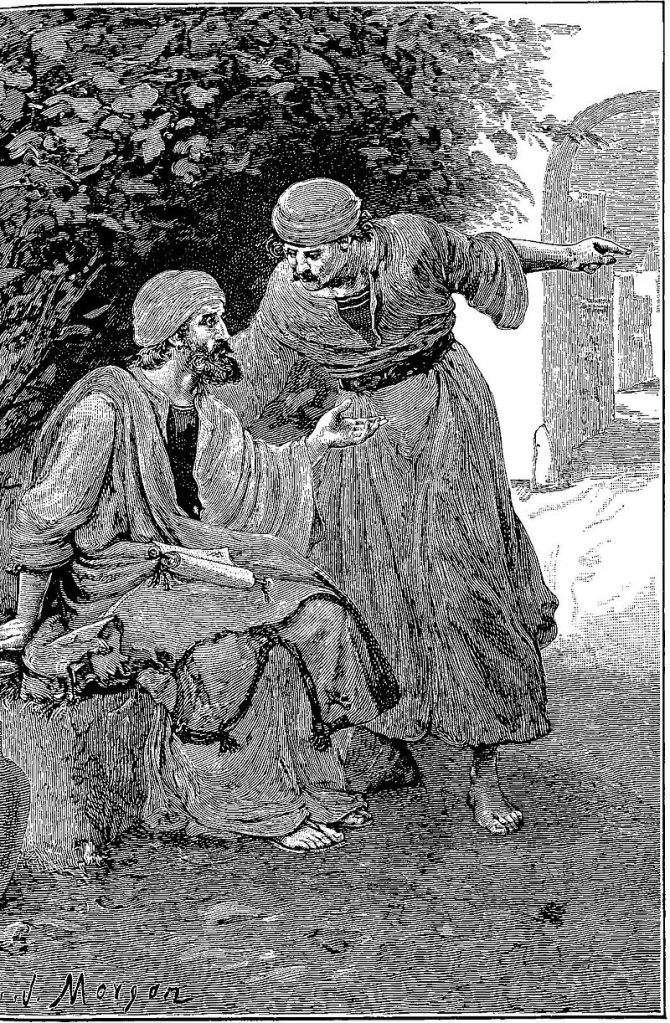
The lection begins with Jesus going to Galilee, finding Philip, and inviting him to “follow me”. Philip accepts the call without hesitation, and then, brimming with excitement, runs off to find his friend, Nathanael. He finds him sitting under a fig tree. “We have found him about whom Moses in the law and the prophets wrote, Jesus son of Joseph from Nazareth!” Philip tells Nathanael. But his friend under the fig tree isn’t impressed; his religious assumptions won’t allow him to see anything fresh or surprising in a simple carpenter from the wrong side of the tracks. Instead of arguing with Nathanael though, Philip simply tells his doubtful friend to “come and see”.
When Nathanael does so, he receives the shock of his life. As soon as he and Jesus see each other, before they exchange a single word, Jesus says, “Here is truly an Israelite in whom there is no deceit!” And, “I saw you under the fig tree.”
Immediately, Nathanael moves from doubt to faith, from ignorance to knowledge. He experiences an epiphany.
But this story at its core is not about what Nathanael sees; it’s about what Jesus sees. It’s a story about Jesus’s way of looking and seeing, and about what becomes possible when we dare to experience his gaze. In this story, what makes salvation possible is not what Nathanael sees in Jesus, but what Jesus sees in Nathanael.
Seeing, of course, is always selective. We have choices when it comes to what we see, what we prioritize, what we name, and what we call out in each other. The selves we present to the world are layered and messy, and it takes both love and patience to sift through those layers and find what lies at the core of who we each are. But there is great power in that sifting, too. Something healing, something holy, something life-changing happens to us when we are deeply seen, known, named, and accepted.
Note the words in today’s wonderful psalm: “O God you have searched me and you know me …..”
Jesus had a choice when it came to seeing Nathanael. I wonder what would have happened if, instead of calling out Nathanael’s purity of heart, Jesus had said, “Here is a cynic who is stunted by doubt,” or “Here is a man who is governed by prejudice,” or “Here is a man who is blunt and careless in his words,” or “Here is a man who sits around, passive and non-committal, waiting for life to happen to him.”
Any one of those things might have been true of Nathanael. But Jesus looked past them all to see an honesty, a guilelessness, a purity of thought and intention that made up the true core of Nathanael’s character. Maybe the other qualities were there as well, but would Nathanael’s heart have melted in wonder and joy if Jesus saw and named those first? Or would Nathanael have withdrawn in shame, fear, despair and embarrassment? Jesus named the quality he wanted to bless and cultivate in his would-be follower, the quality that made Nathanael a person of beauty, an image-bearer of God.

Is it possible for us to see our present moment as Jesus sees it? Instead of deciding that we know everything there is to know about the political “others” in our lives, can we ask God for fresh vision?
Instead of assuming that “nothing good” can come of the cultural mess we find ourselves in, can we accept Philip’s invitation to “come and see”?
What would happen if we left our comfortable vantage points, and dared to believe that, just maybe, we have been limited and hasty in our original certainties about each other, about God, and about the world? To “come and see” is to approach all of life with a grace-filled curiosity, to believe that we are holy mysteries to each other, worthy of further exploration. To come and see is to enter into the joy of being deeply seen and deeply known, and to have the very best that lies hidden within us called out and called forth.
Debie concludes,
I write these words in hope. In fragile hope, but hope nonetheless. Not because we’re capable of clear vision on our own, but because we are held by the eternal promise of Jesus who said: “You will see greater things than these.”
We will. We will see heaven open. We will see angels. We will see the love and justice of God.
So don’t be afraid. Don’t hide. Don’t despair. Live boldly into the calling of Epiphany.
See. Name. Speak. Bless.
God is near and God is speaking.
Many good things can come out of Nazareth.
 stfrancischurchtairuanz